Mohammed

3361. That was the current tally on Mohammed’s personal tour-counter for Monday, February 18th. In his thirteenth year of giving tours through Jordan’s Wadi Rum Protected Area, we were tour #3361.

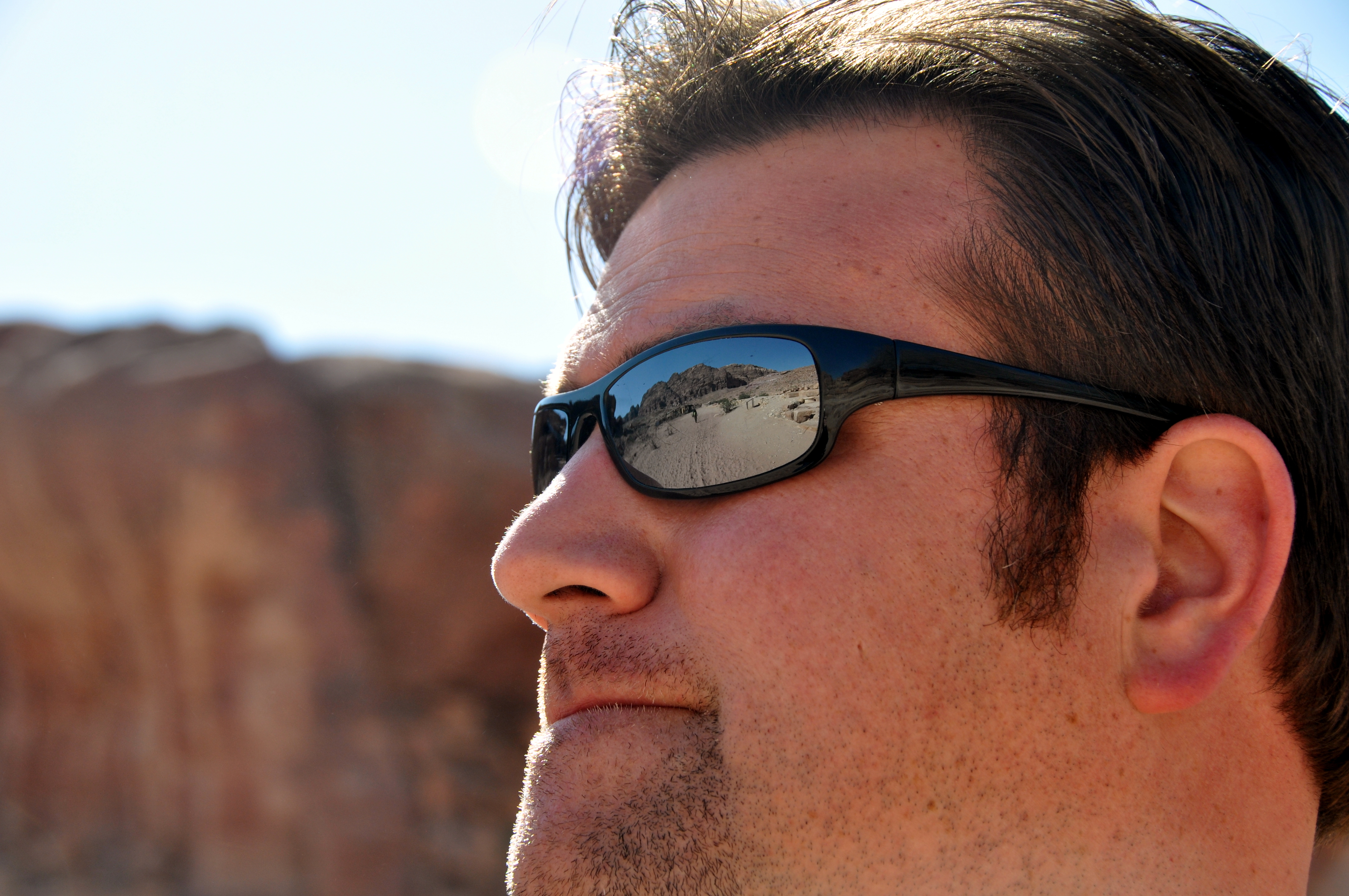
Ultimately, this post is about our picture-perfect day in Wadi Rum, but really it is about Mohammed. It is the people that make a country. It is the people that make an experience. Mohammed gave us quite an experience.
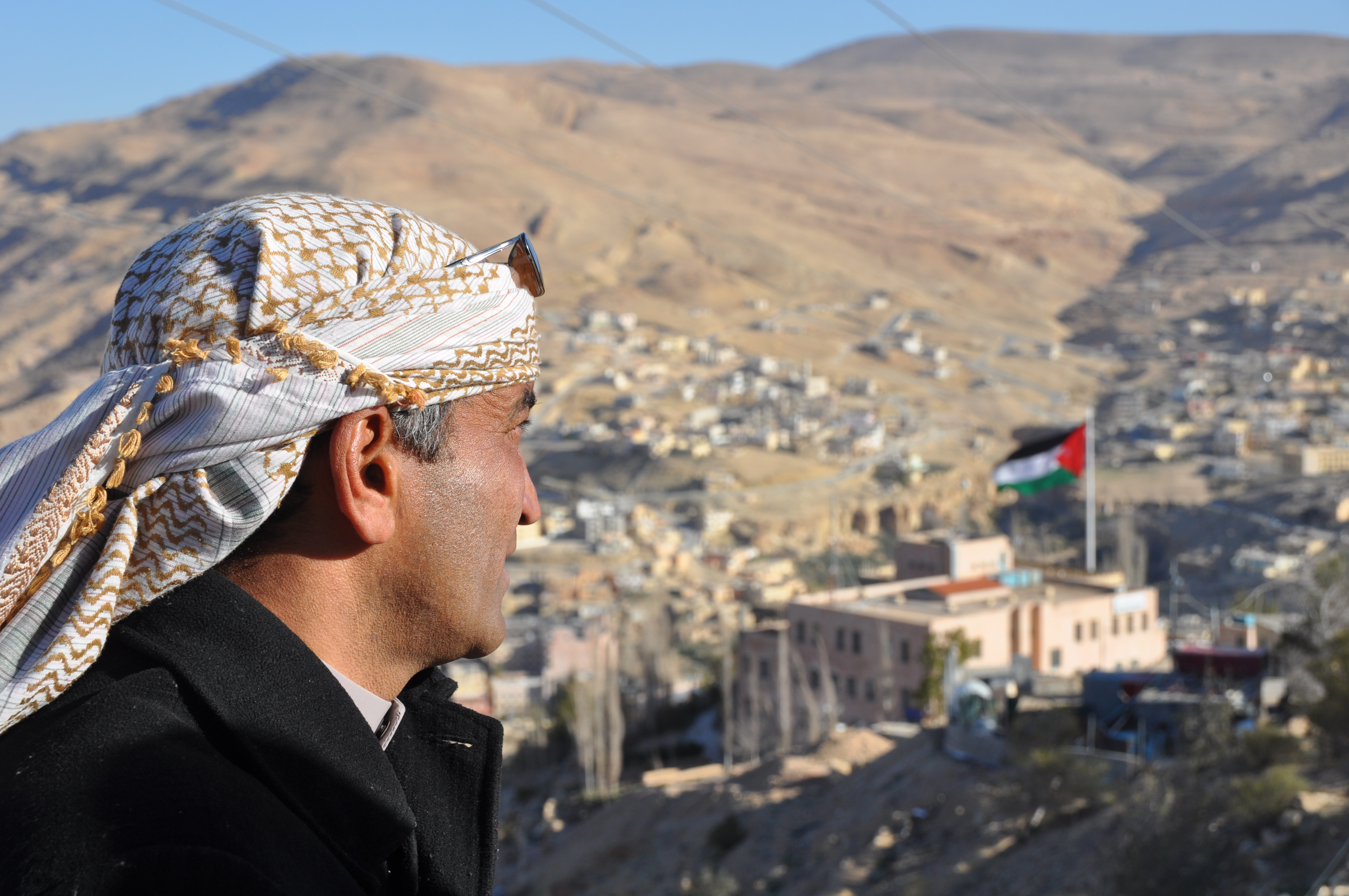
Mohammed looking over Petra town and the Jordanian flag.

Mohammed looking over Petra town and the Jordanian flag.

Mohammed is a Bedouin who grew up in the caves of old Petra, before UNESCO declared it a World Heritage Site and moved all of the Bedouins to other locations. As a child, he used to walk 17km (one way) from his cave to school every day. He made a joke about how his 4 children now only have to walk 100m to school, have Internet with Facebook, satellite TV, etc. and are still not happy. Classic.

Wadi Rum, is a 720 km2 desert mentioned in the Koran for its beauty. It is the largest protected area in Jordan, contributing to around 439 viable populations of plants and animals, and the back drop of the true-life Lawrence of Arabia before World War I. Mohammed released the air in the tires (supposedly down to “15”, but I am unsure of the units here, as 15 psi sounds dangerously low, even for desert driving!) and off we went.

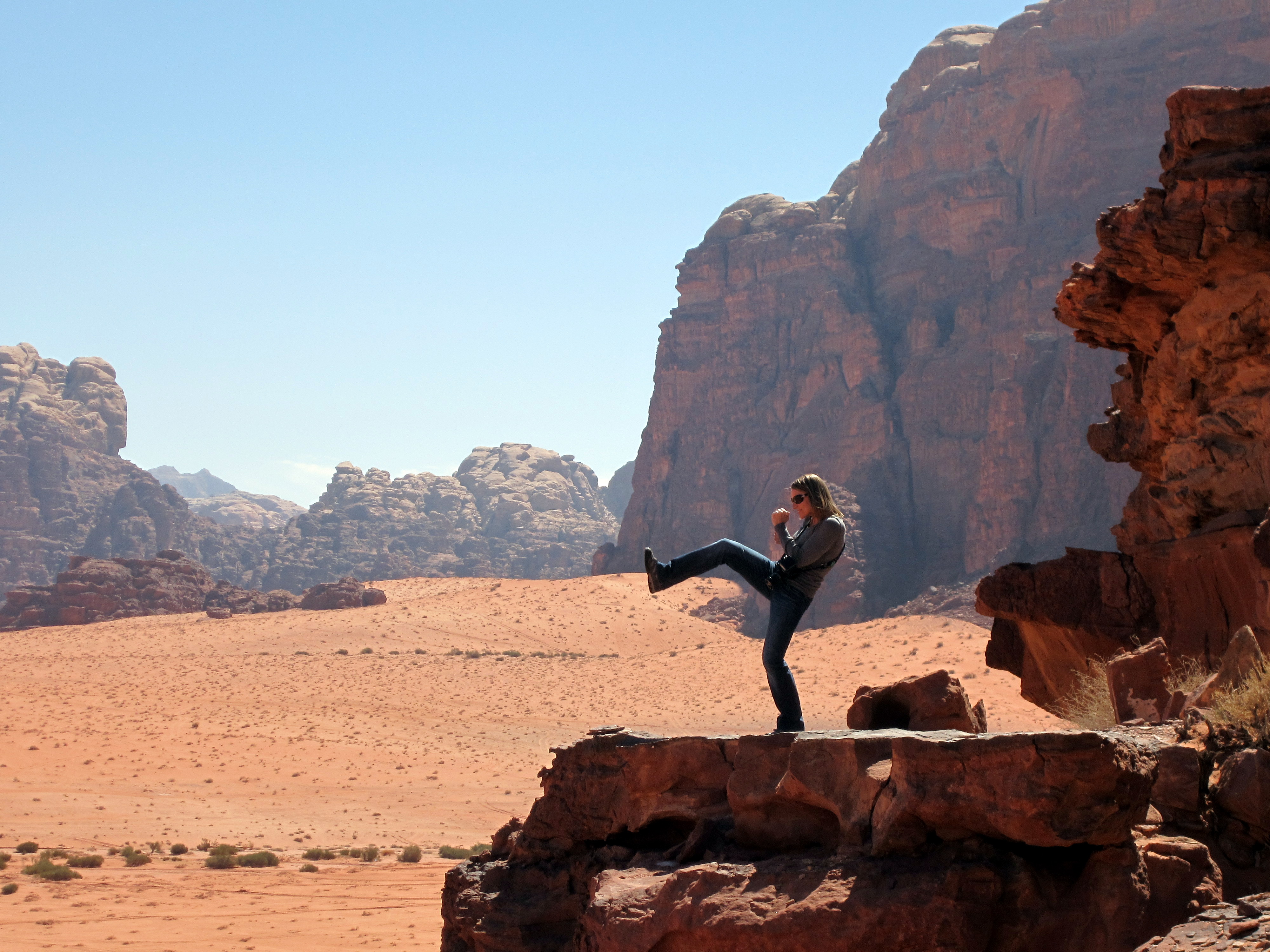
I want to say that I performed no “color pumping” on any of these pictures. The reds were really that red. The blue sky was really that idyllic. The Jordanian desert was really that amazing!
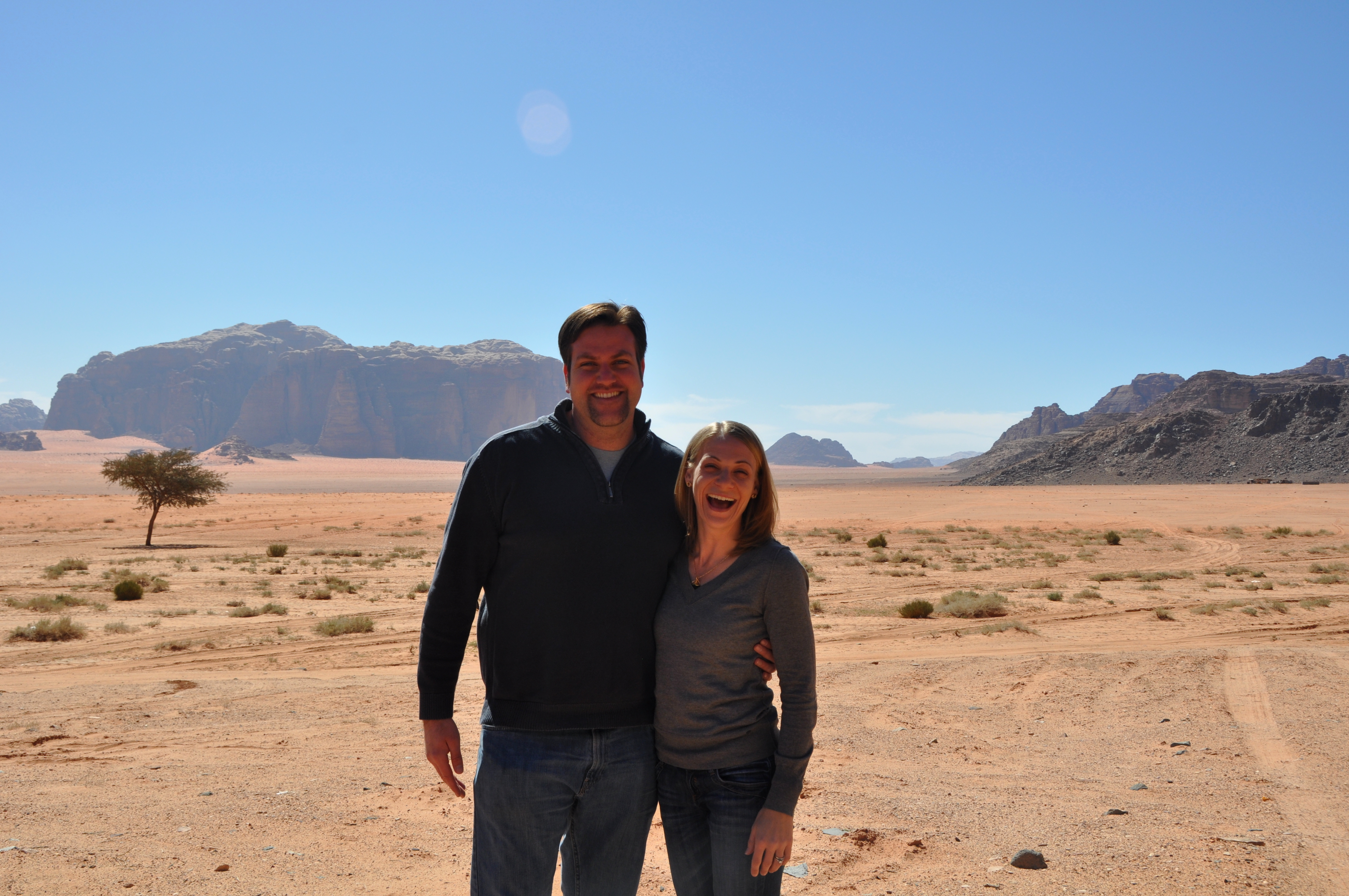
Welcome to Wadi Rum

Welcome to Wadi Rum

First stop, climbing some sand dunes…
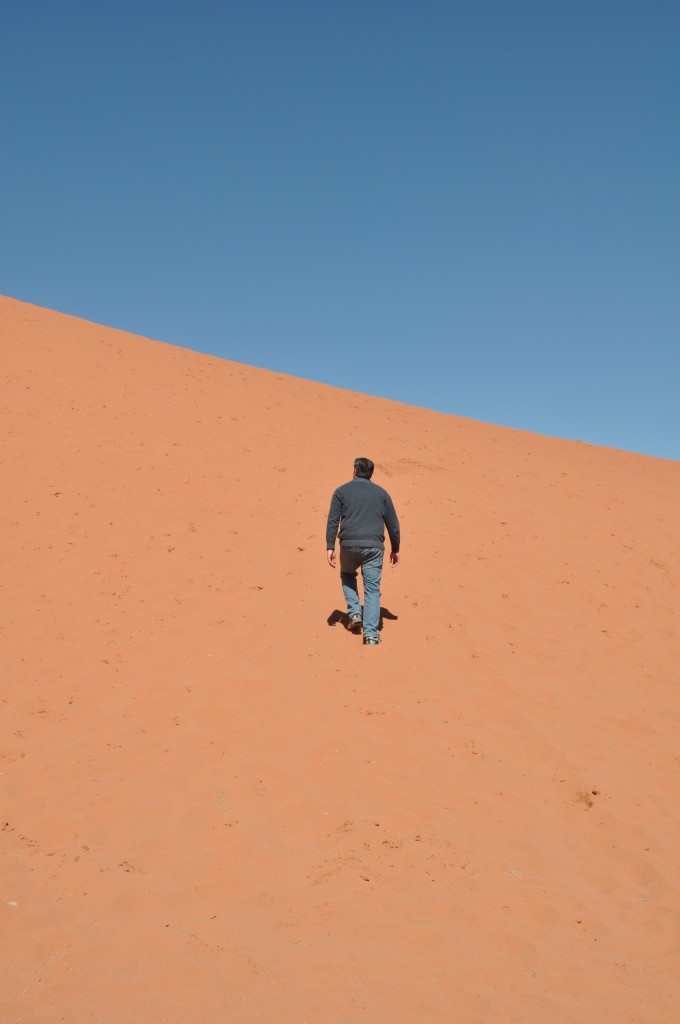
Joe walking dunes

…for an amazing view!

P90X

I’ll P90X the crap out of this desert!

Next, we stopped for a walk through the Burrah Canyon. The rock structures within Wadi Rum are made of either sandstone or granite. At the end of every “winter”, the sandstone has a completely different facade because it is so susceptible to wind and water erosion. Even the desert can receive up to 25cm of rain in one day, giving a lot of the sandstone a very “Dali” look.
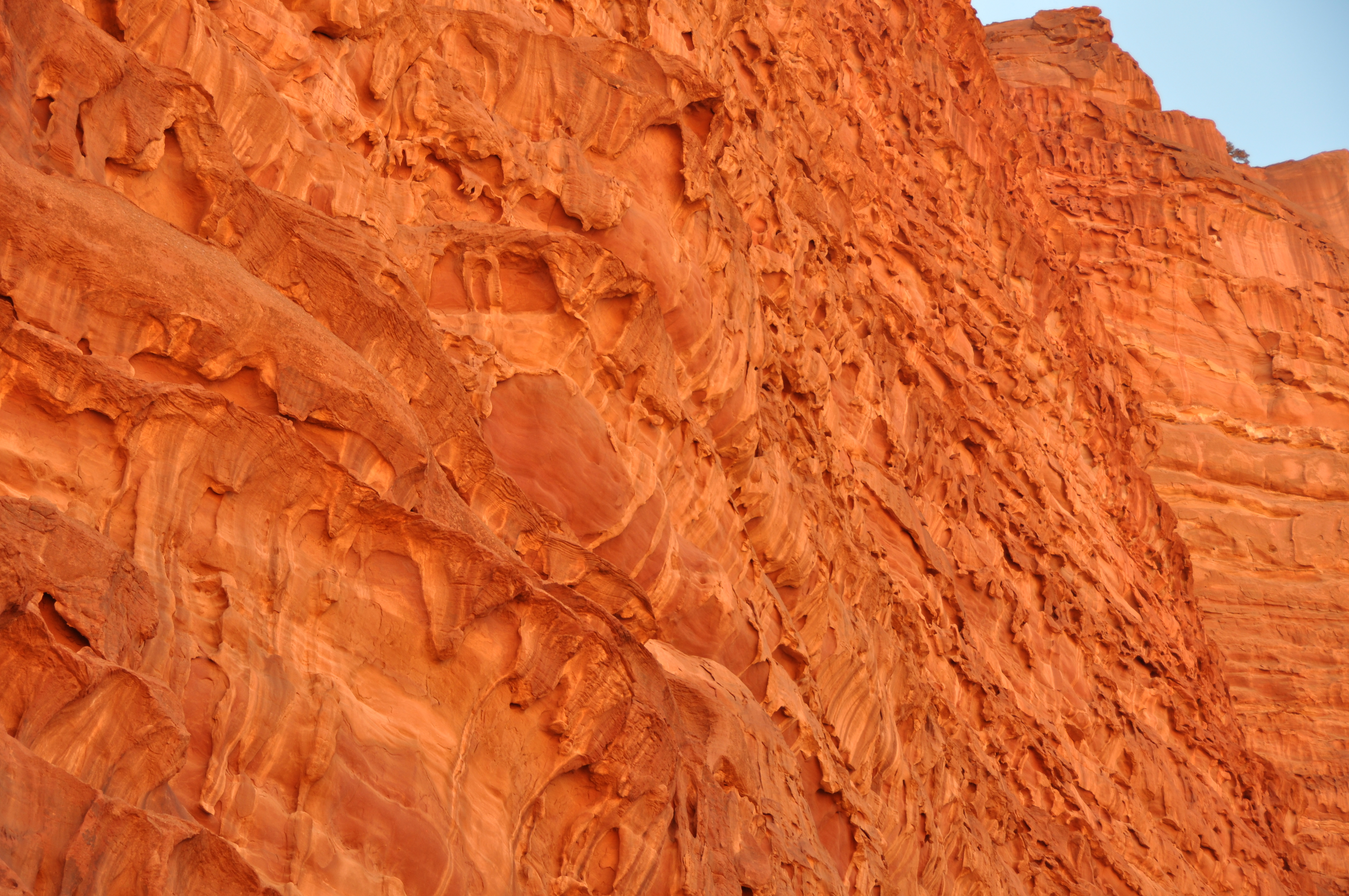
dripping sandstone
dripping sandstone

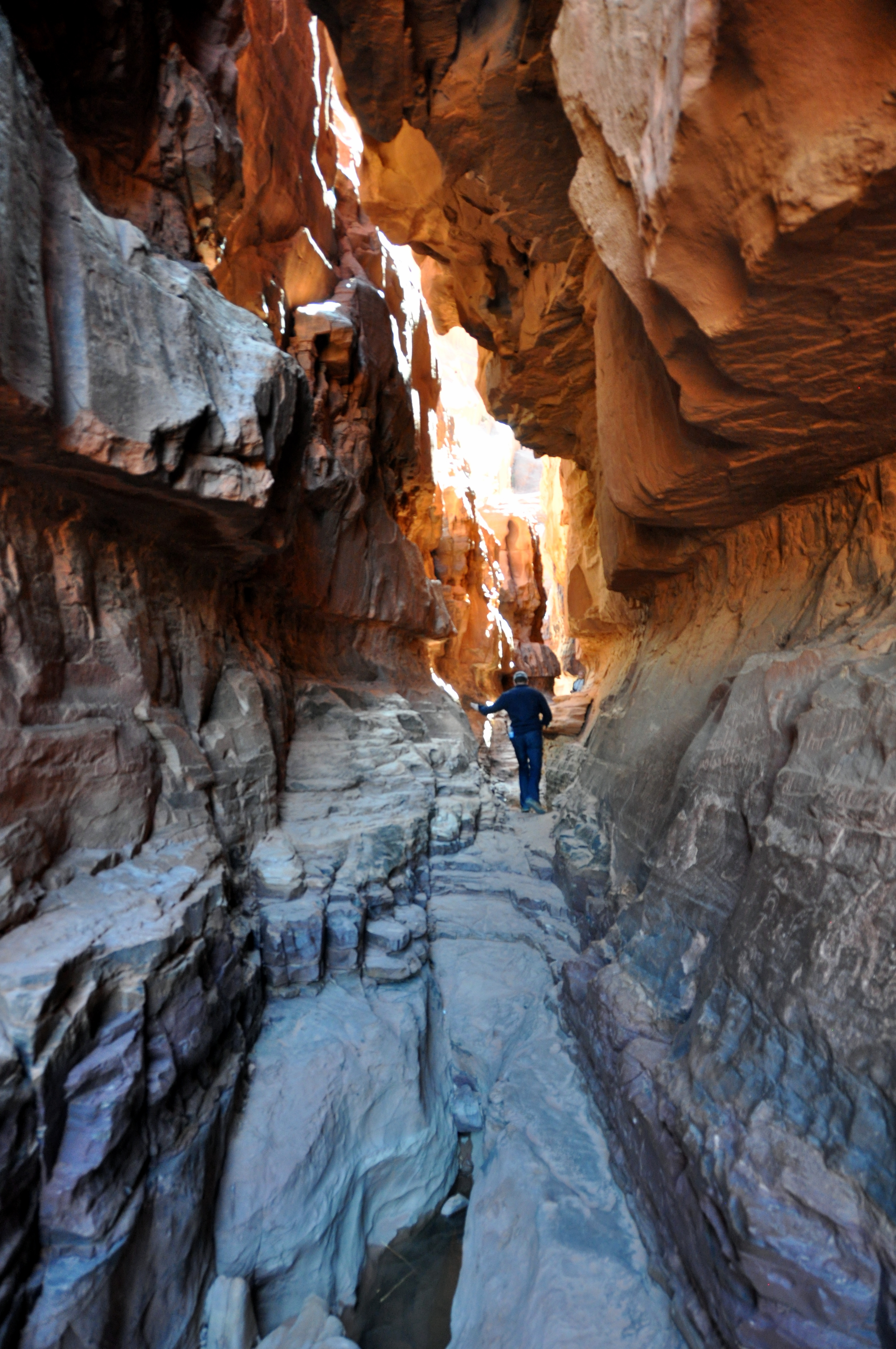
Inside Burrah Canyon

Inside Burrah Canyon

Sandstone is also very vulnerable to the troddings of tourists, making our trek a bit challenging.
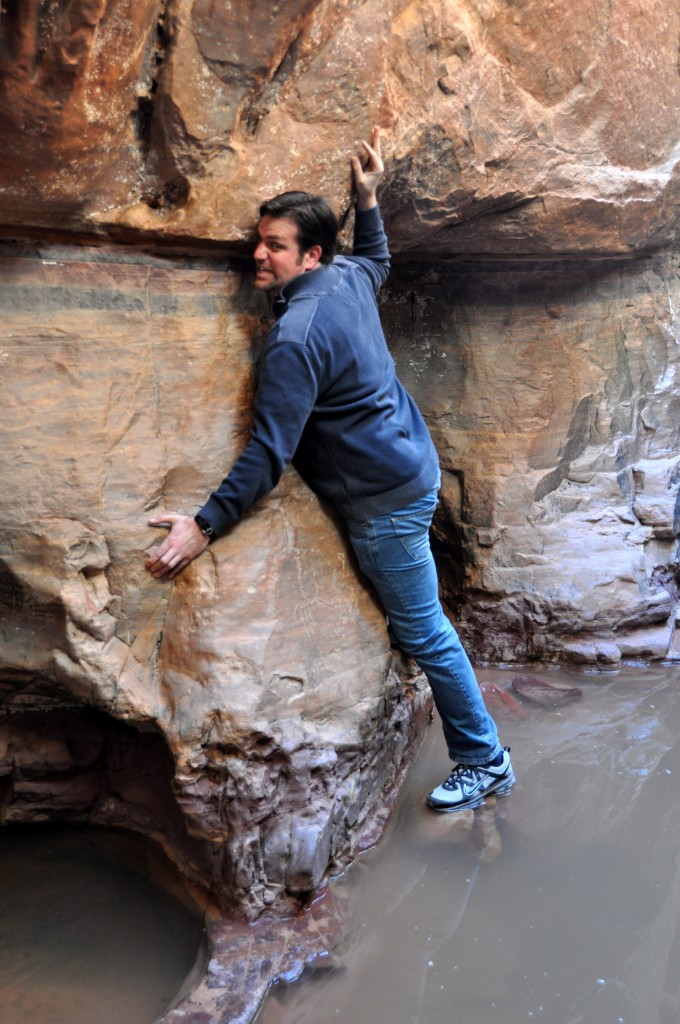
Joe in canyon

Mohammed, on the other hand, is apparently part spider-monkey and was jumping and climbing high above our heads.
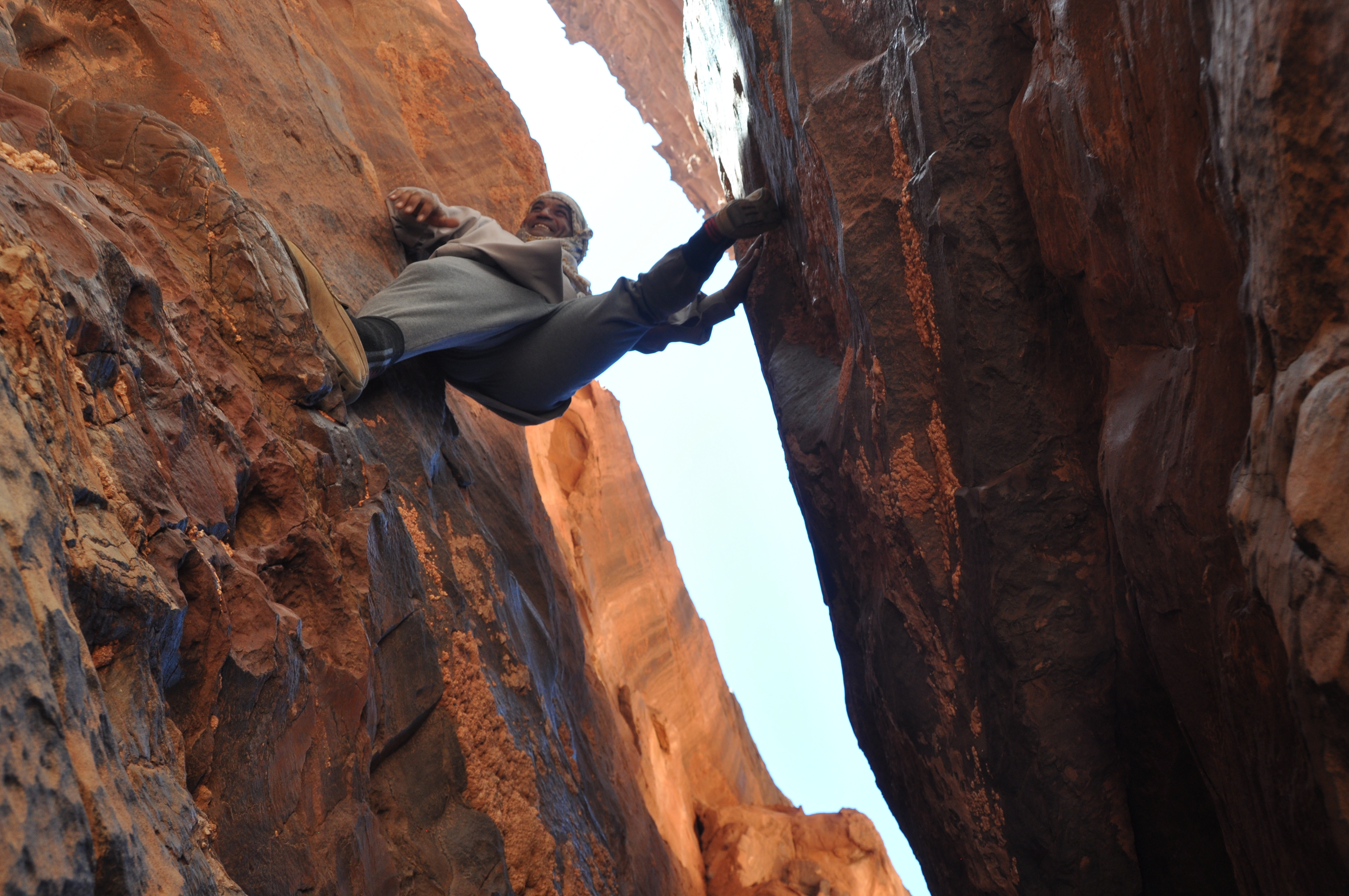
climbing mohammed

After the canyon, we drove (and by “drove”, I mean seriously off-roaded through dust-fine sand with continual gear shifting by Mohammed) to the Burdah rock bridge.
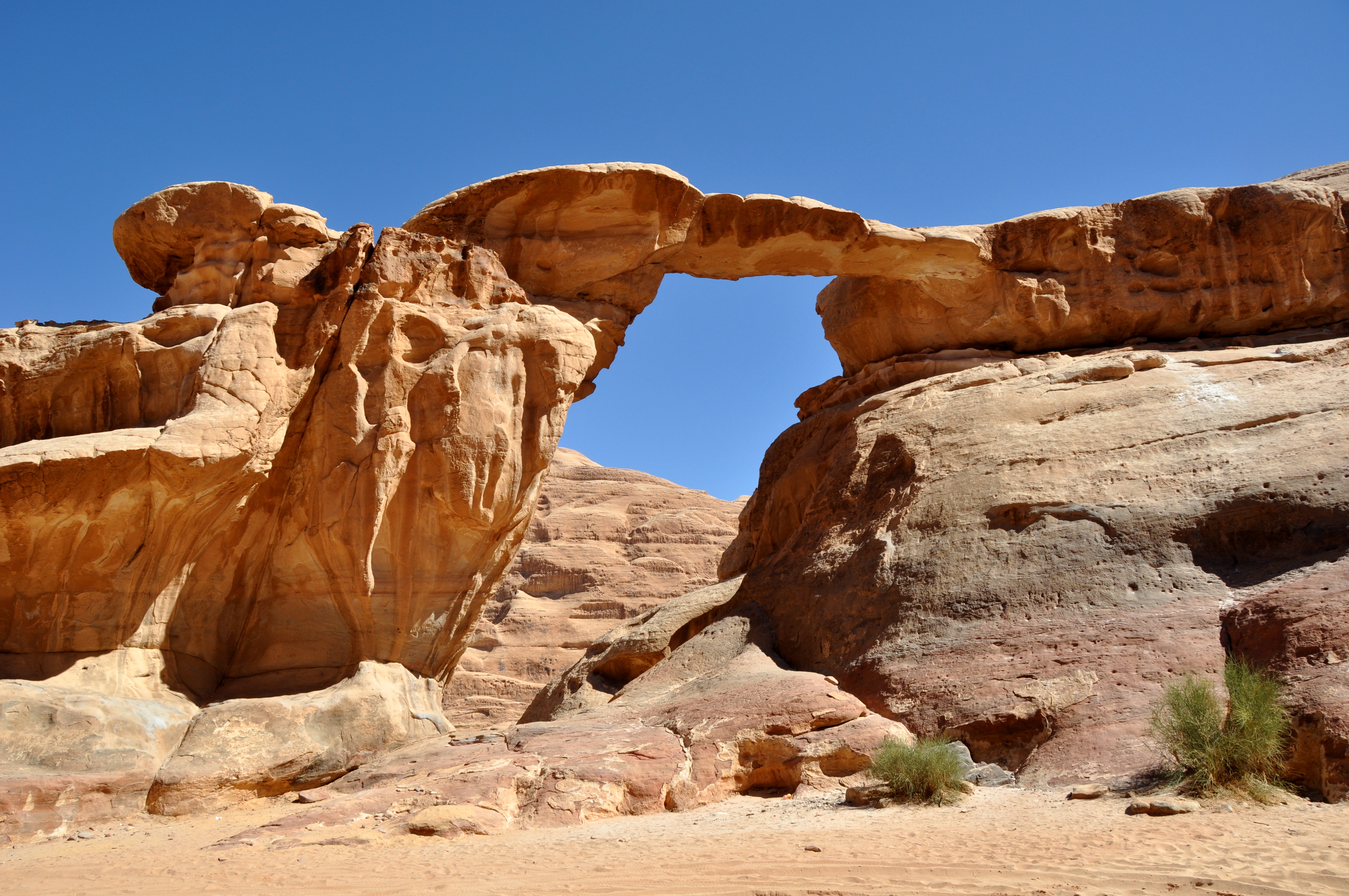
Burdah rock bridge

Burdah rock bridge

Whilst catching my breath from the climb to the top of the bridge and enjoying the view, Mohammed is suddenly standing right in front of me. He is draping my head with his keffiyah and telling Joe what a nice wife he has, thanking him for “sharing” me. I need to brush up on my Jordanian/Muslim wedding-customs, but there may be a small chance that I am now married to Mohammed. Hopefully “sharing” doesn’t have a loose translation in Arabic!
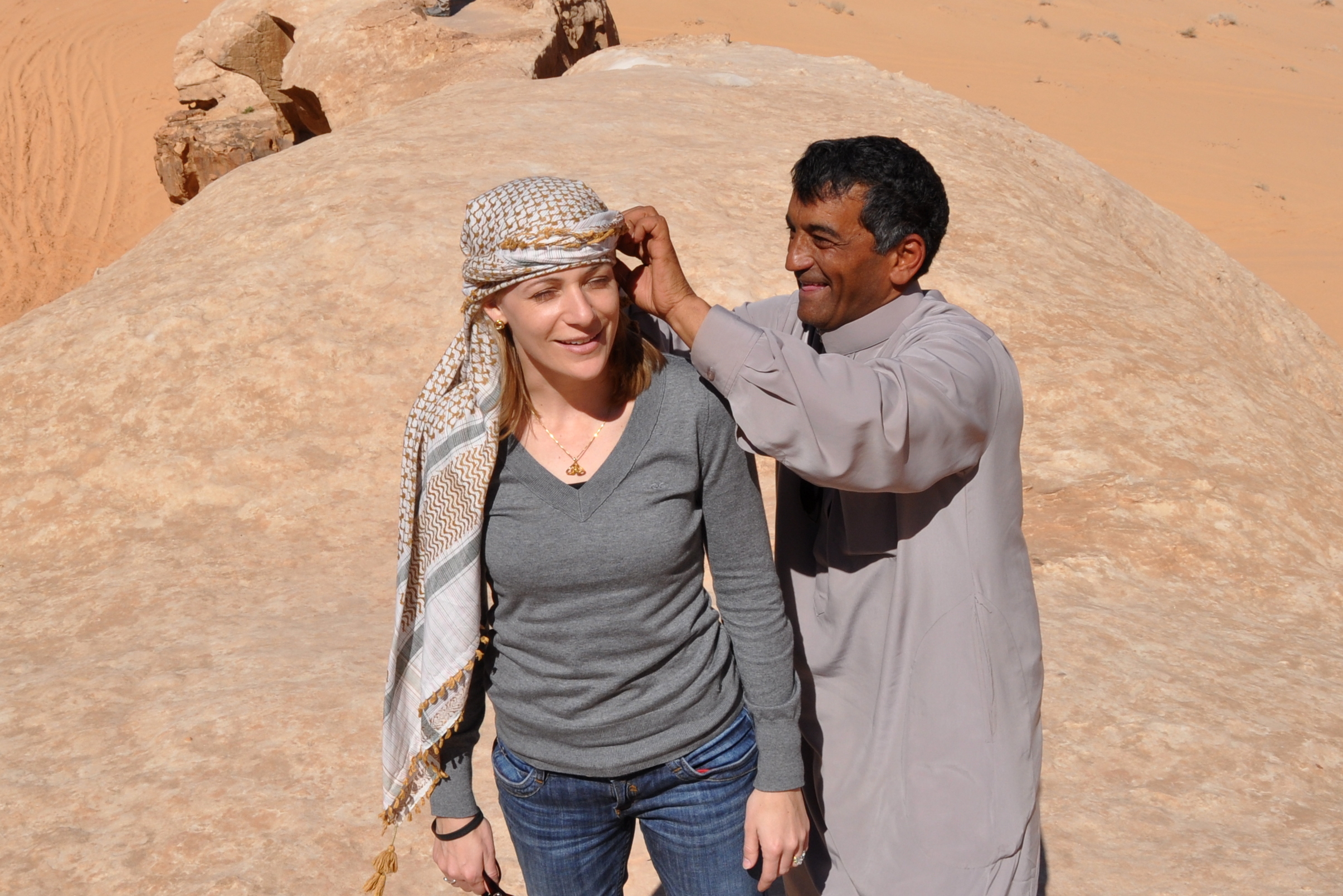
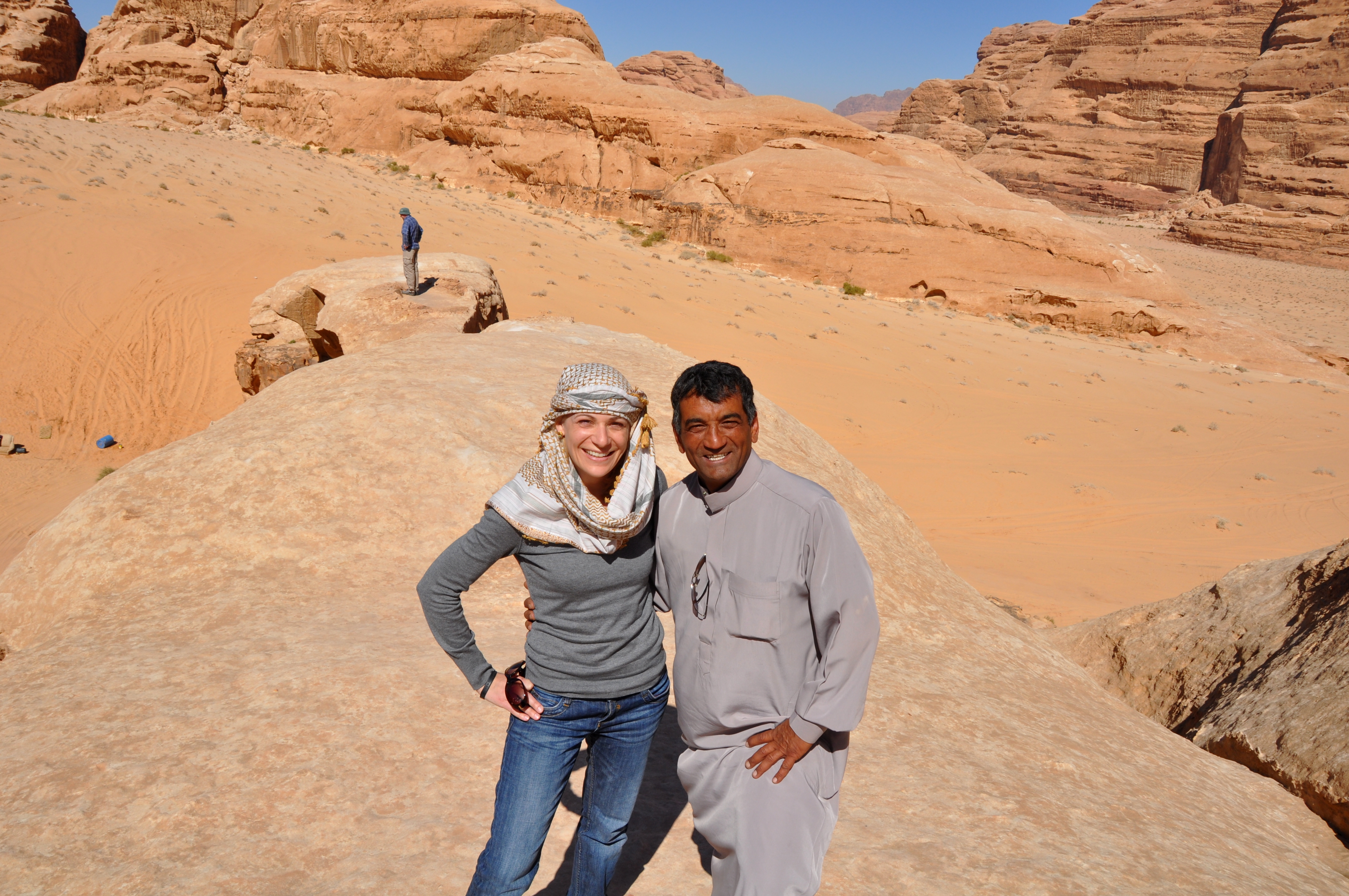
getting wrappedTrysta & Mohammed

Next was lunch. Mohammed drove us to a shaded area and began to gather kindling in order to cook up our meal.
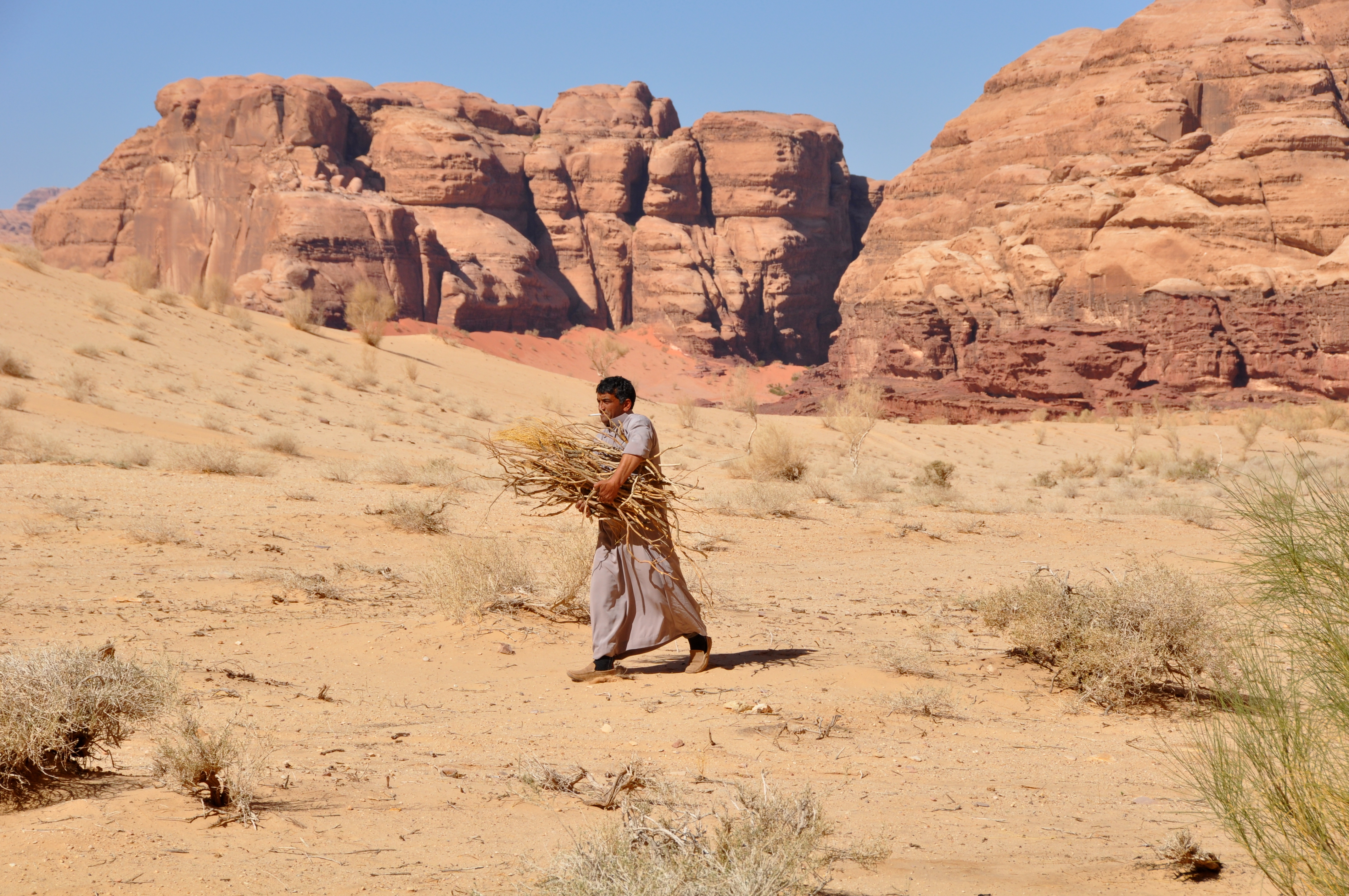
Mohammed and his pre-lunch cigarette, in the desert, with some dry kindling. Hmmm...there are so many things wrong with that sentence.

Mohammed and his pre-lunch cigarette, in the desert, with some dry kindling. Hmmm…there are so many things wrong with that sentence.

Lunch entailed chicken, white onions, peppers and tomatoes, all cooked on the fire; cucumber & tomato salad, green onion & arugula salad, and hummus & pitas. Here is the catch: Mohammed grew all of the vegetables in the garden outside his house in Petra, his mother baked the pitas, and his father grew the olives that were used to make the olive oil. Just wait though. Mohammed also has a chicken farm, from which 3 of the chickens were used to make our lunch. We jokingly/lovingly referred to it as the “12-hour” chicken, as less than 12 hours prior to lunch, the chickens were enjoying life on Mohammed’s farm. It doesn’t get any fresher than that!
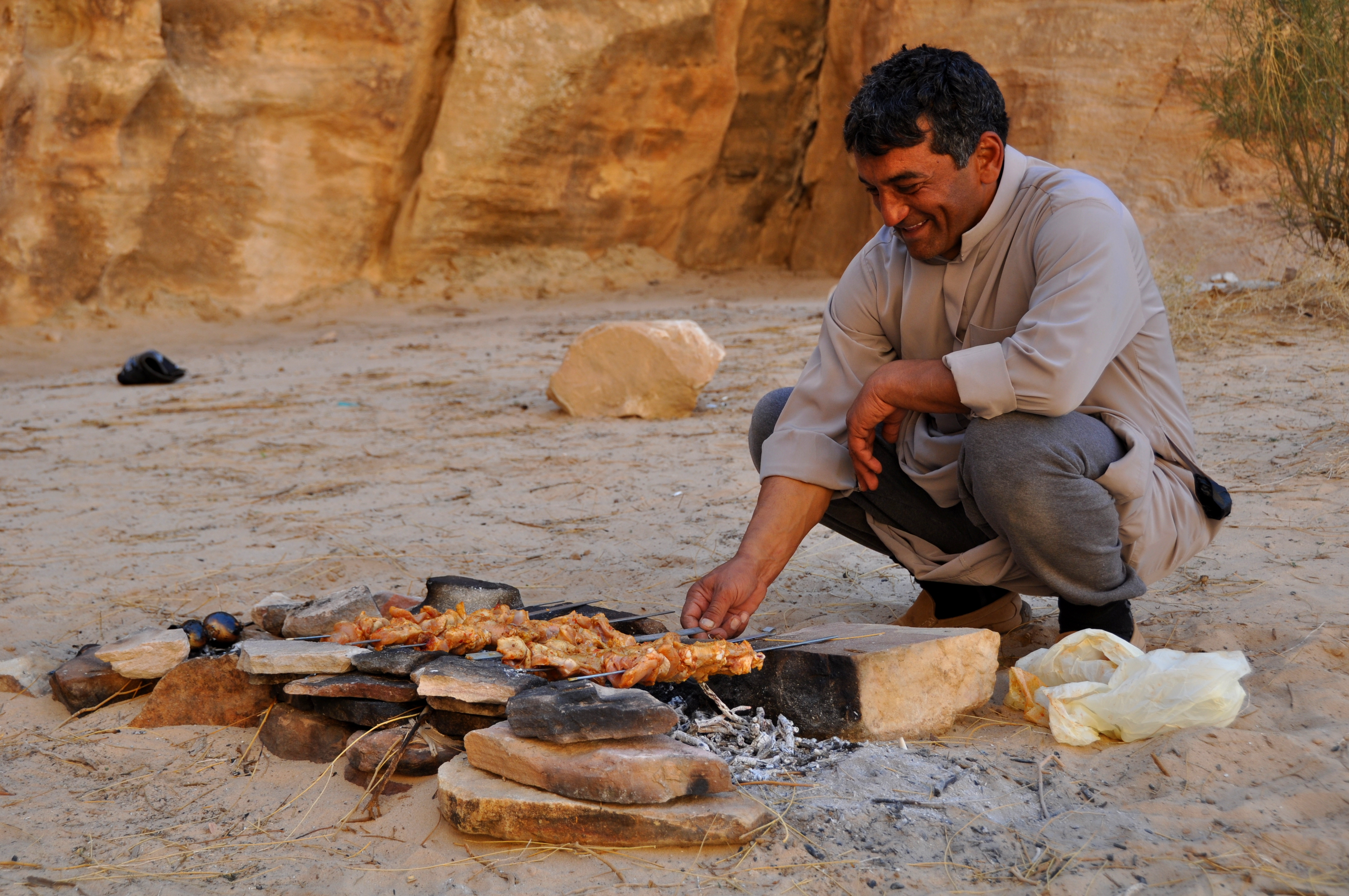
12 hour chicken

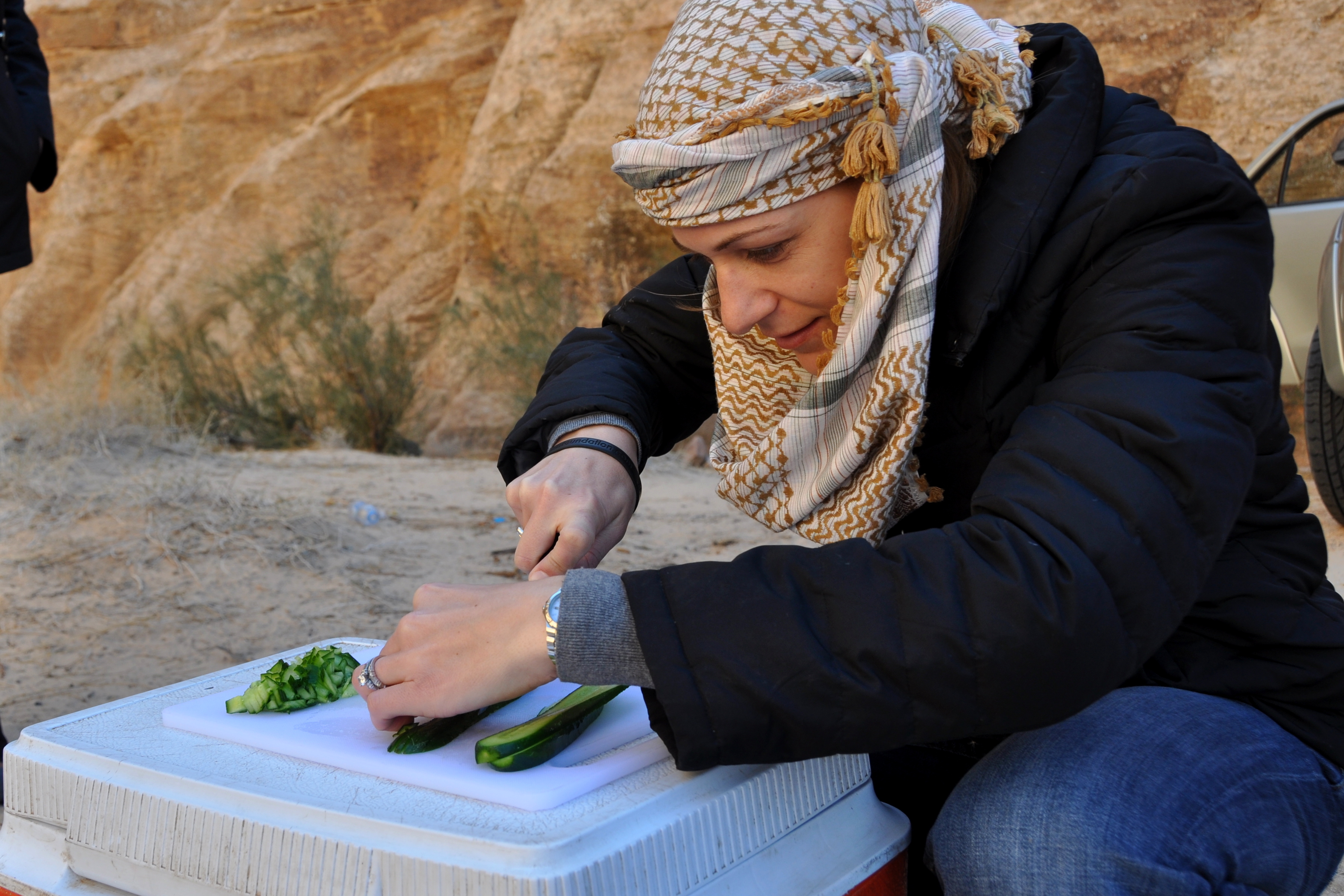
What was really surprising was listening to Mohammed talk about the behavior of different tourist groups during lunch time. Some just sat around and made demands, some took thousands of pictures, some just refused to eat. We only got this information because I requested a task or two to help out. I’m sure we slowed the process down, but I think he appreciated the gracious attitudes.
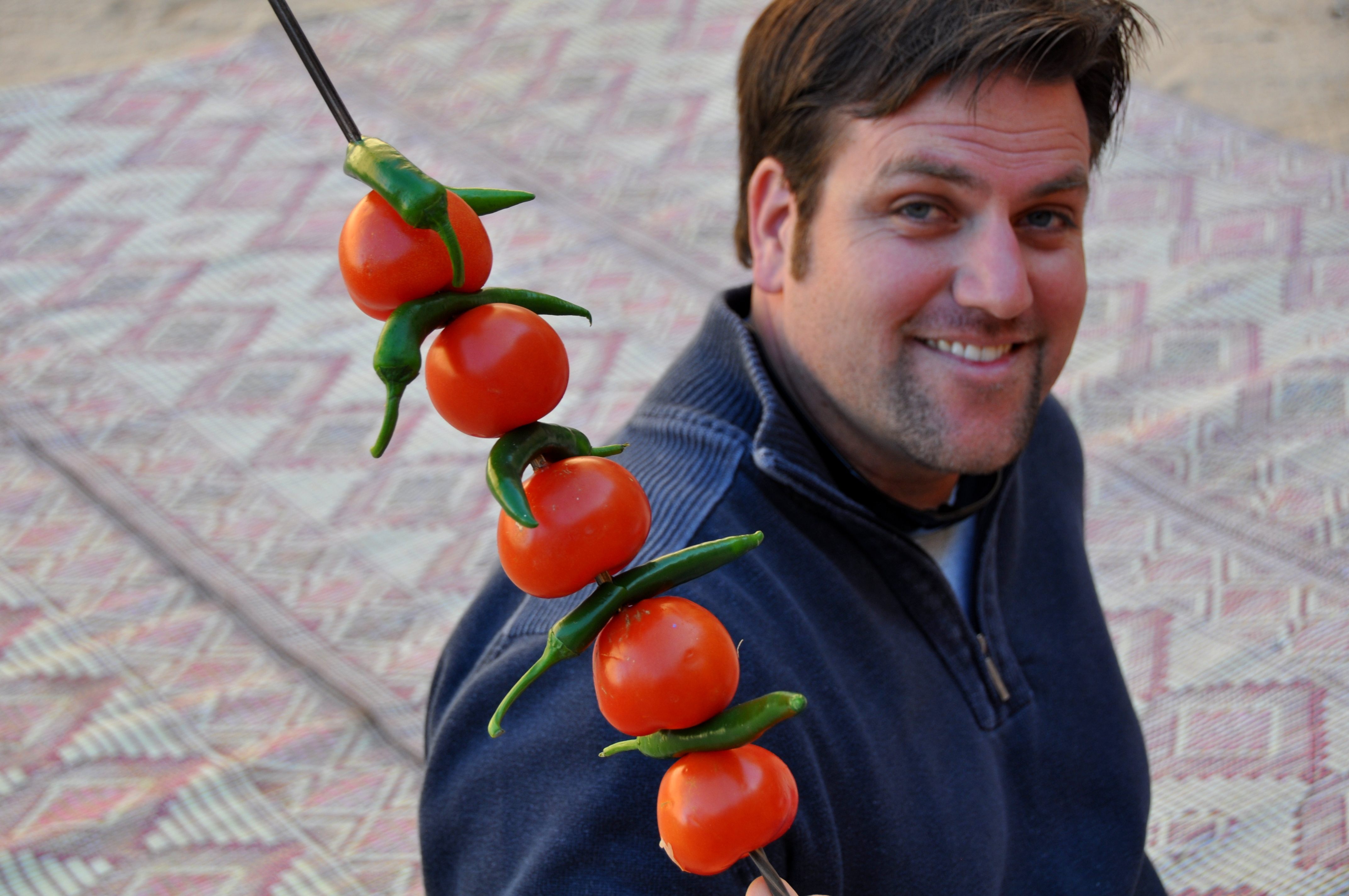
Joe’s job was to spear the tomatoes and peppers.
Joe’s job was to spear the tomatoes and peppers.

Still sporting the keffiyah!
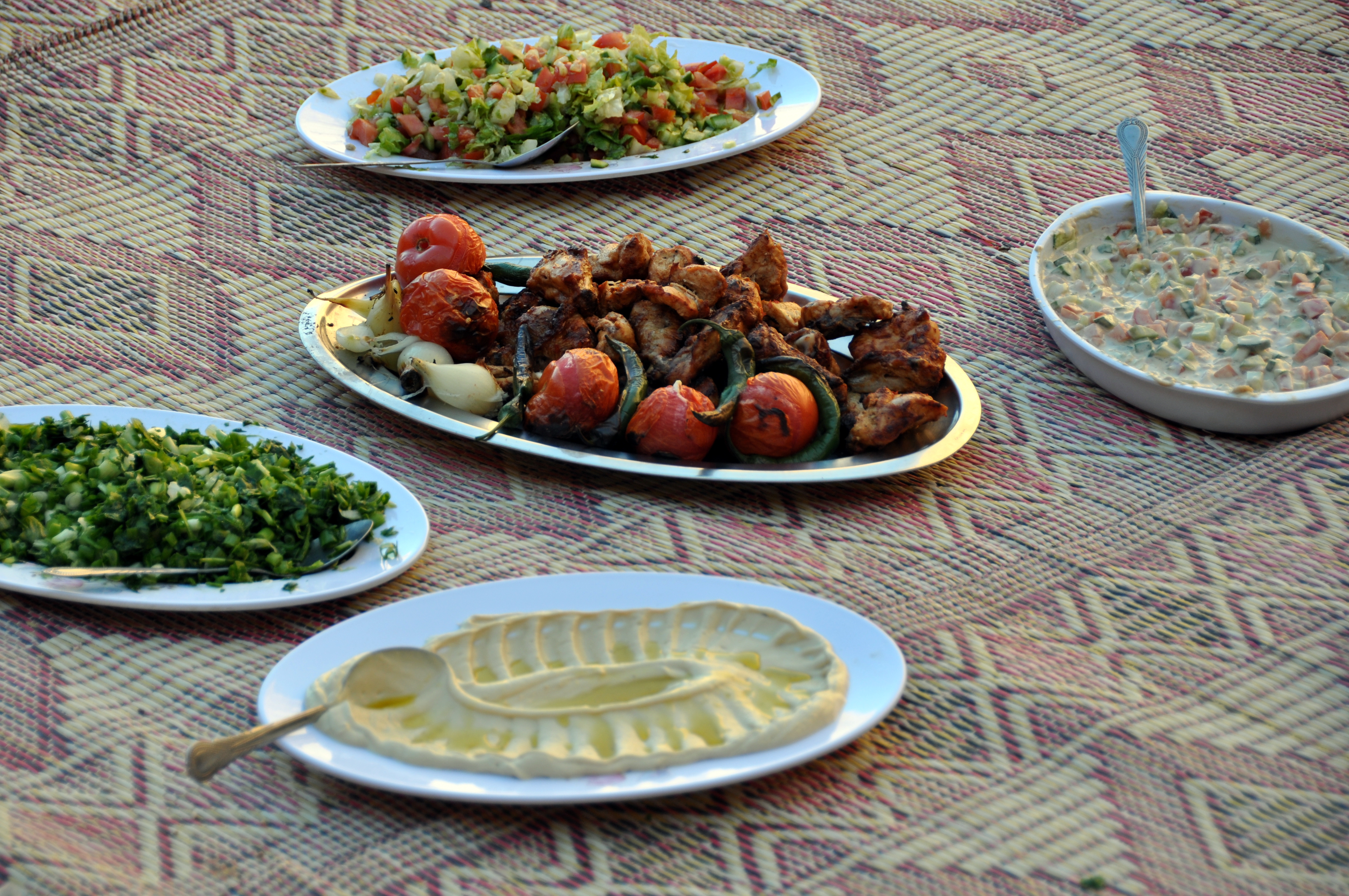
Still sporting the keffiyah!

lunch

After lunch we drove around the desert some more, stopping to enjoy the sights, and then at a Bedouin camp for tea.
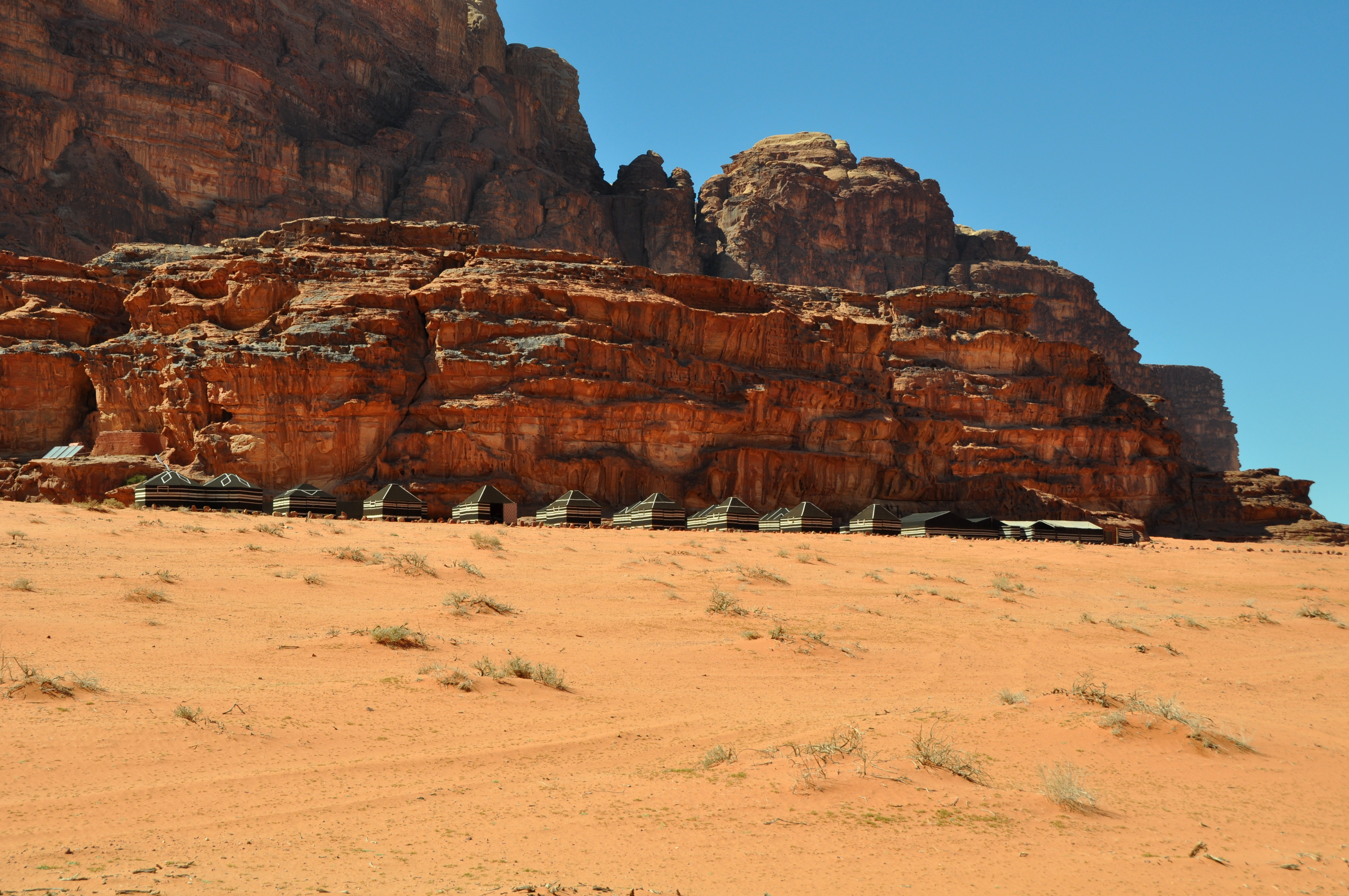
Bedouin camp

Bedouin camp

So, I’m not quite sure if it was my Scandinavian skin, my willingness to try anything, or the fact that I was already Mohammed’s “second” wife, but I was asked to put down my tea and walk over to a different side of the tent. Mohammed then proceeded to dress me in a burka. He said that on some of his tours he actually takes tourists (including Americans) across the border into Saudi Arabia to shop. The women must be dressed in these burkas and are not permitted to speak. There was a short conversation with Joe about my worth in camels. I think the final number was 200. Based on that agreement, the guy on the right may also be my new husband.
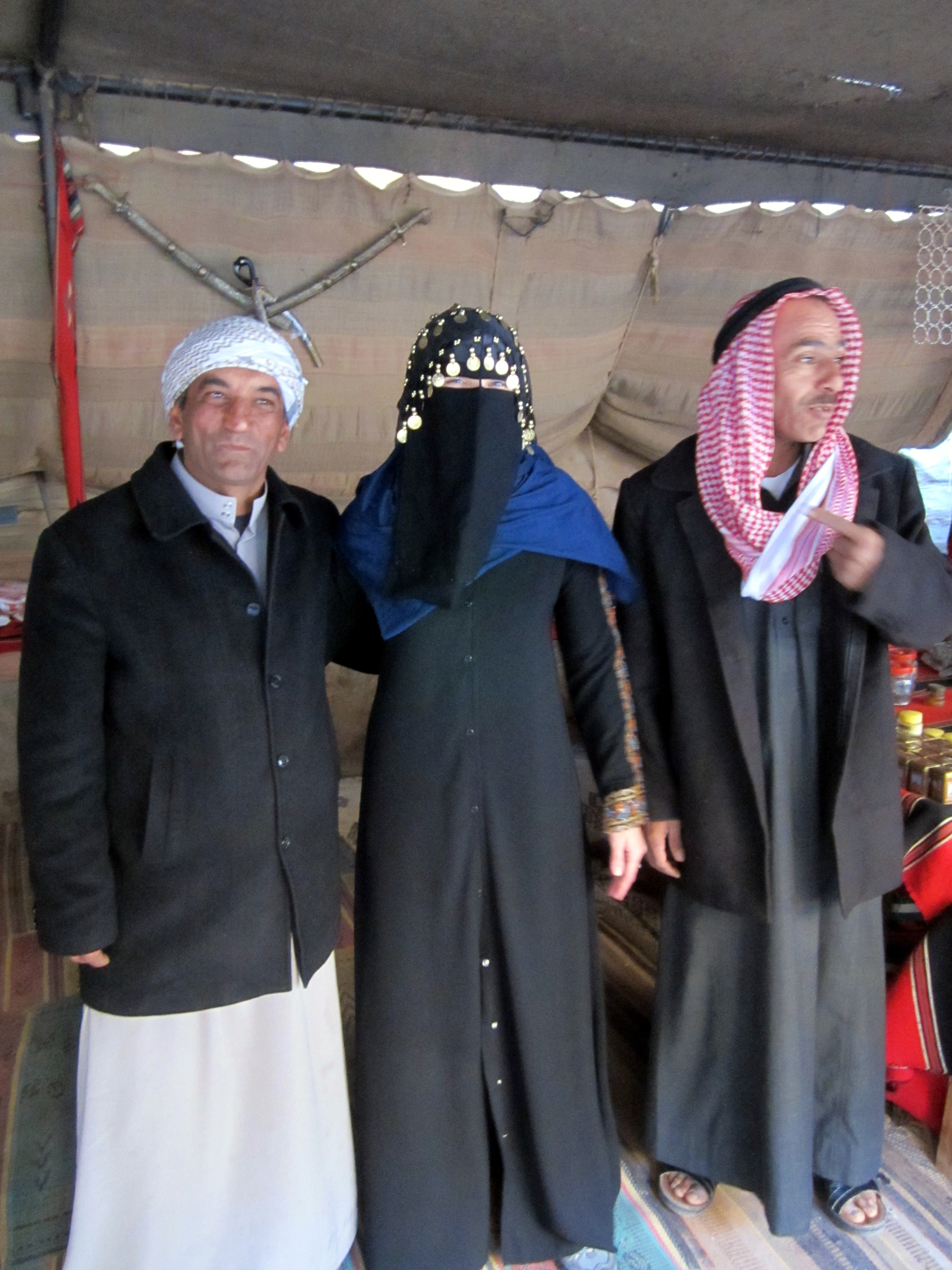
Yes, that is me in the middle.

Yes, that is me in the middle.

Well, that pretty much wrapped up our day. As we left the Wadi Rum Protected Area, Mohammed stopped to fill the tires with more air. There was a lot of talking, and bit of confusion, and we left without air. Apparently the entire area was without electricity. Oh well. We’ll just drive 60mph on the “highway”, with minimal air, until we find something else. No biggie! It’s all in good fun!
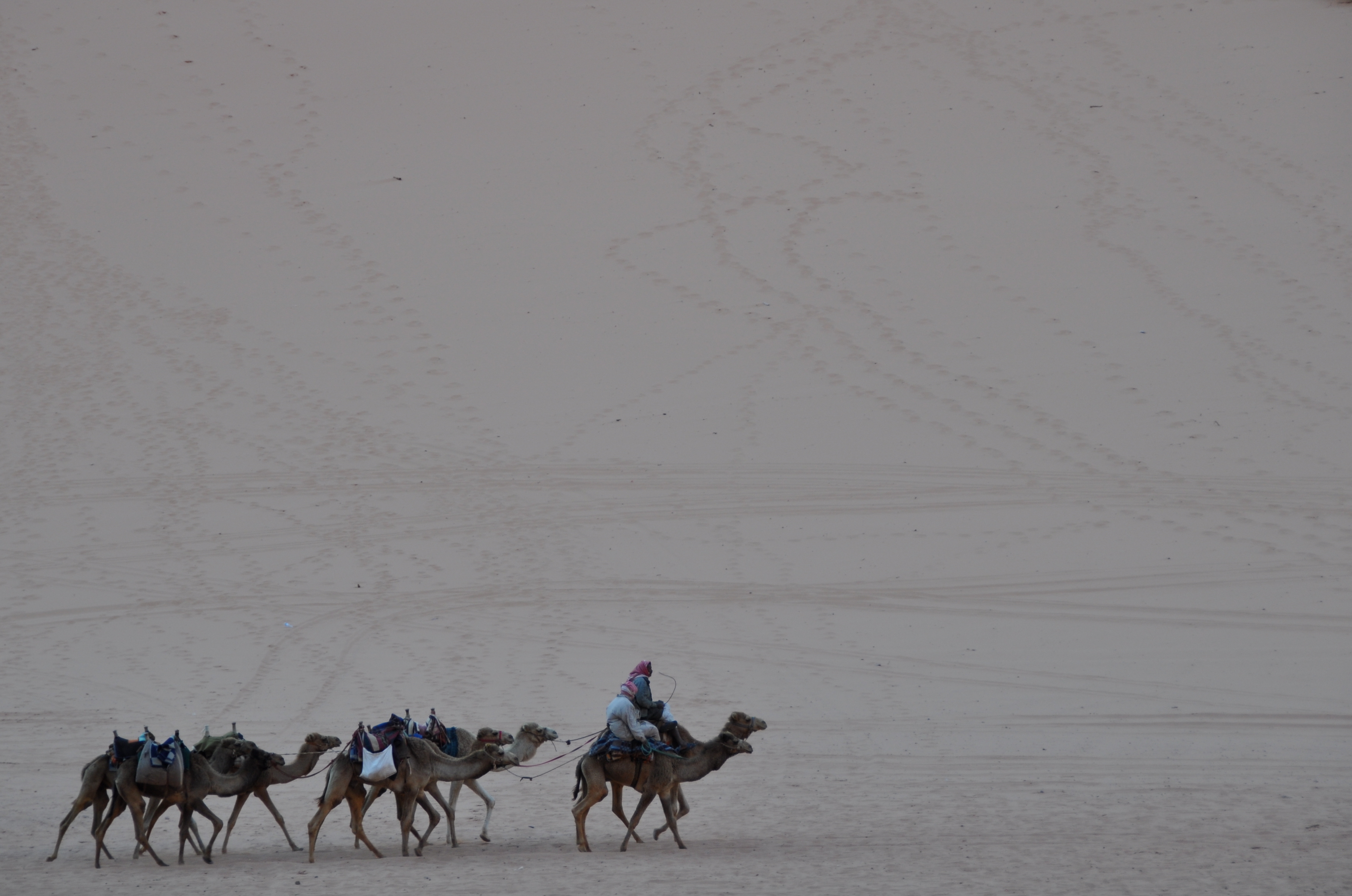
walking camels

It was really an amazing day. One of my favorites in this Olmsted journey, thus far. By the way, Mohammed has 6000 friends on Facebook. If he accepts me, (and those 200 camels arrive in Freiburg) my relationship status might just turn into “It’s Complicated”!
Petra

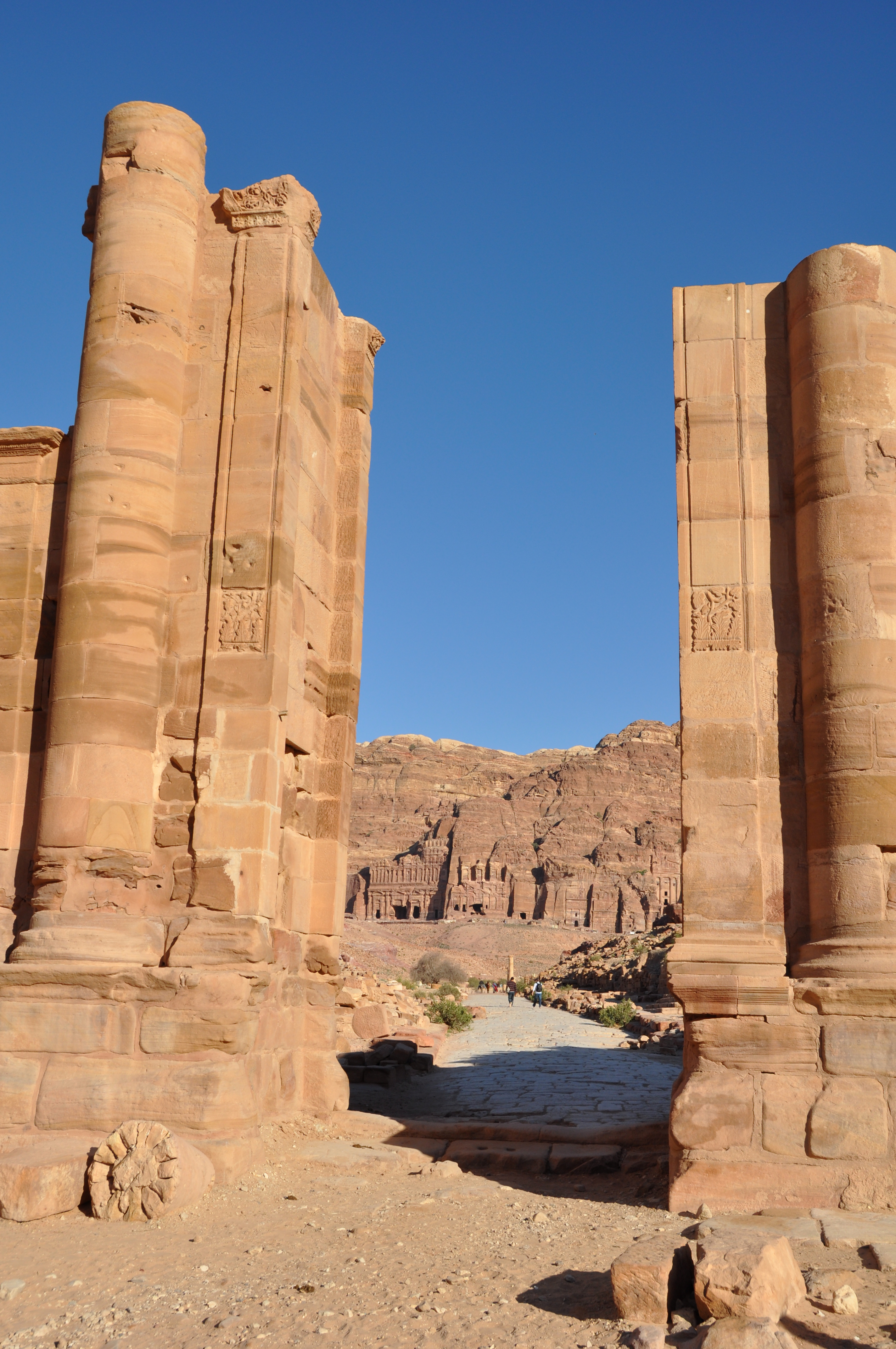
You’ve seen it a million times before: Indiana Jones and the Last Crusade, Arabian Nights, Sinbad and the Eye of the Tiger, Transformers: Revenge of the Fallen (ok, maybe only in Indiana Jones). Regardless, Petra in real life is just as amazing as the movies make it out to be. Great weather never hurts either!

beautiful Petra

Petra was built by the Nabataeans sometime between 60 BC and 50 AD and discovered in 1812, by a Swiss explorer. What I found to be the most interesting thing about Petra, is that back in its heyday, it was actually not a desert at all. It was lush and green, with trees and flowing rivers. Clearly climate change has defined how this natural wonder is iconized in the minds of the modern world.

In order to get to Petra’s most famous site, you have to walk through the “As Siq”, a large narrow gorge.

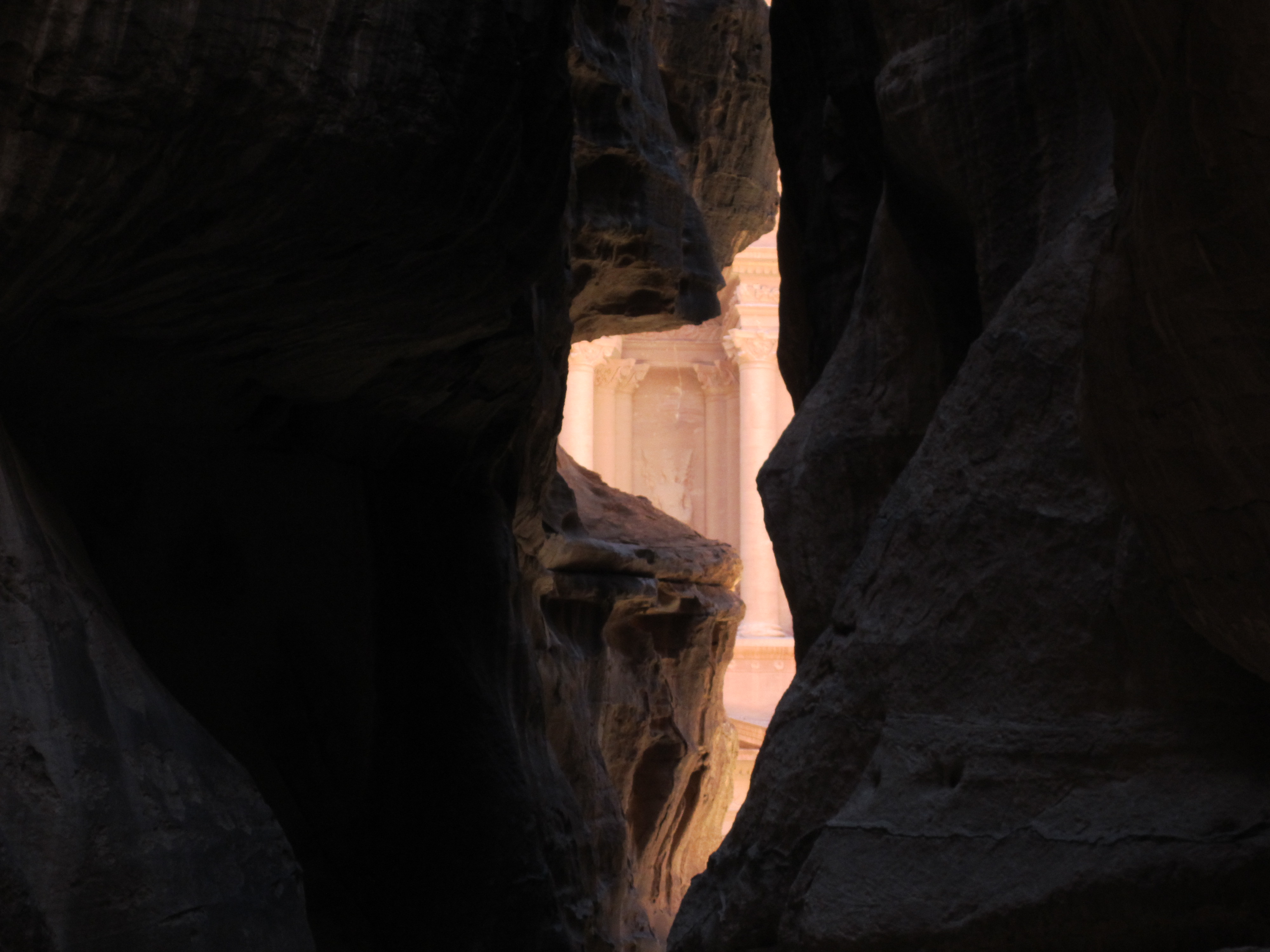
Amazing light in the Siq

Amazing light in the Siq

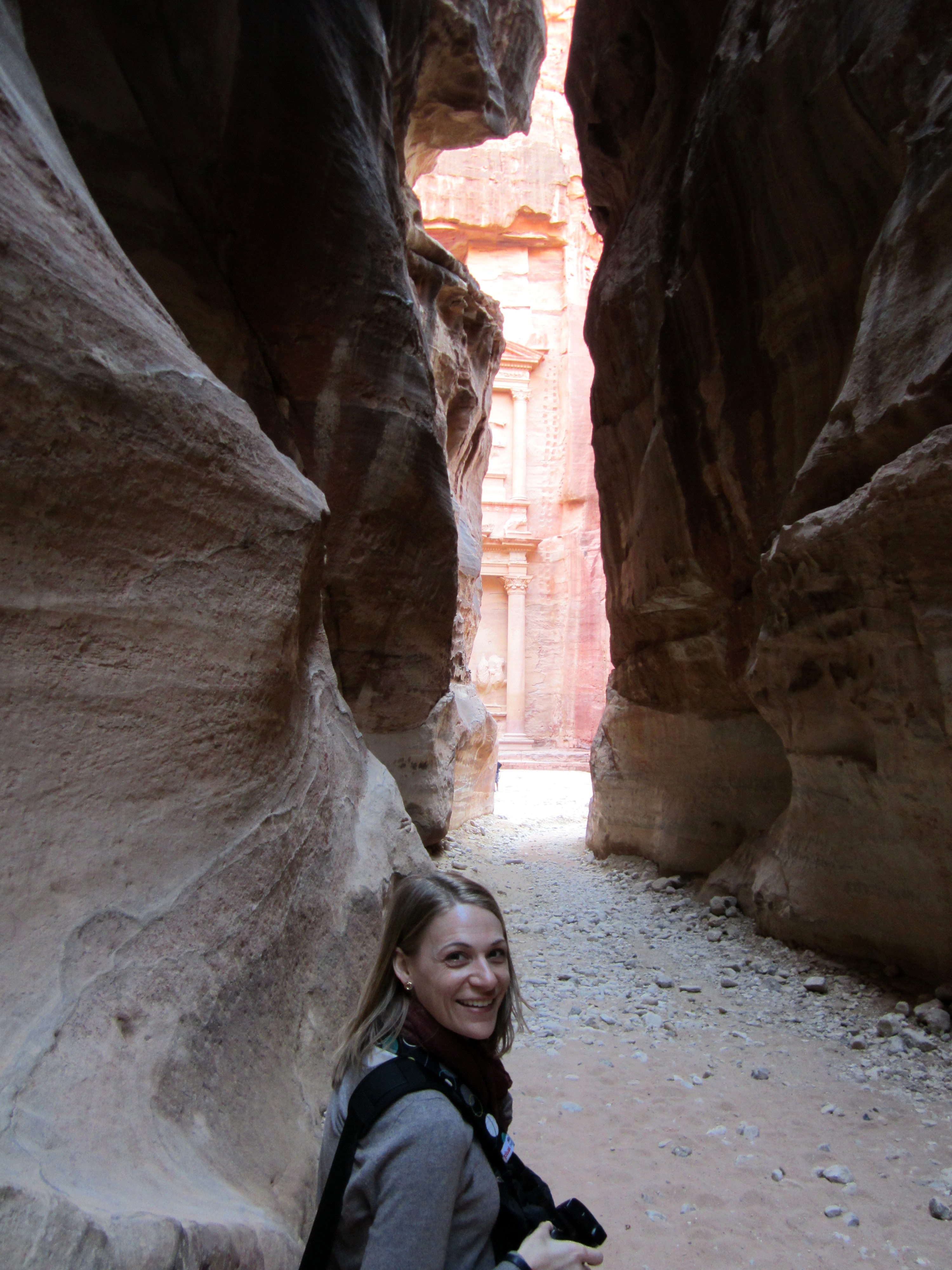
What’s fun about walking through the Siq is that it builds up so much anticipation. It is great to learn about all the interesting rock formations and evidence of ancient sculptures, but really, let’s just get to it all ready! Our guide called it “the moment before the moment”. When the Treasury is just peeking out between the canyon walls.

wait for it 1

Wait for it…

wait for it 2

Wait for it…

wait for it 3

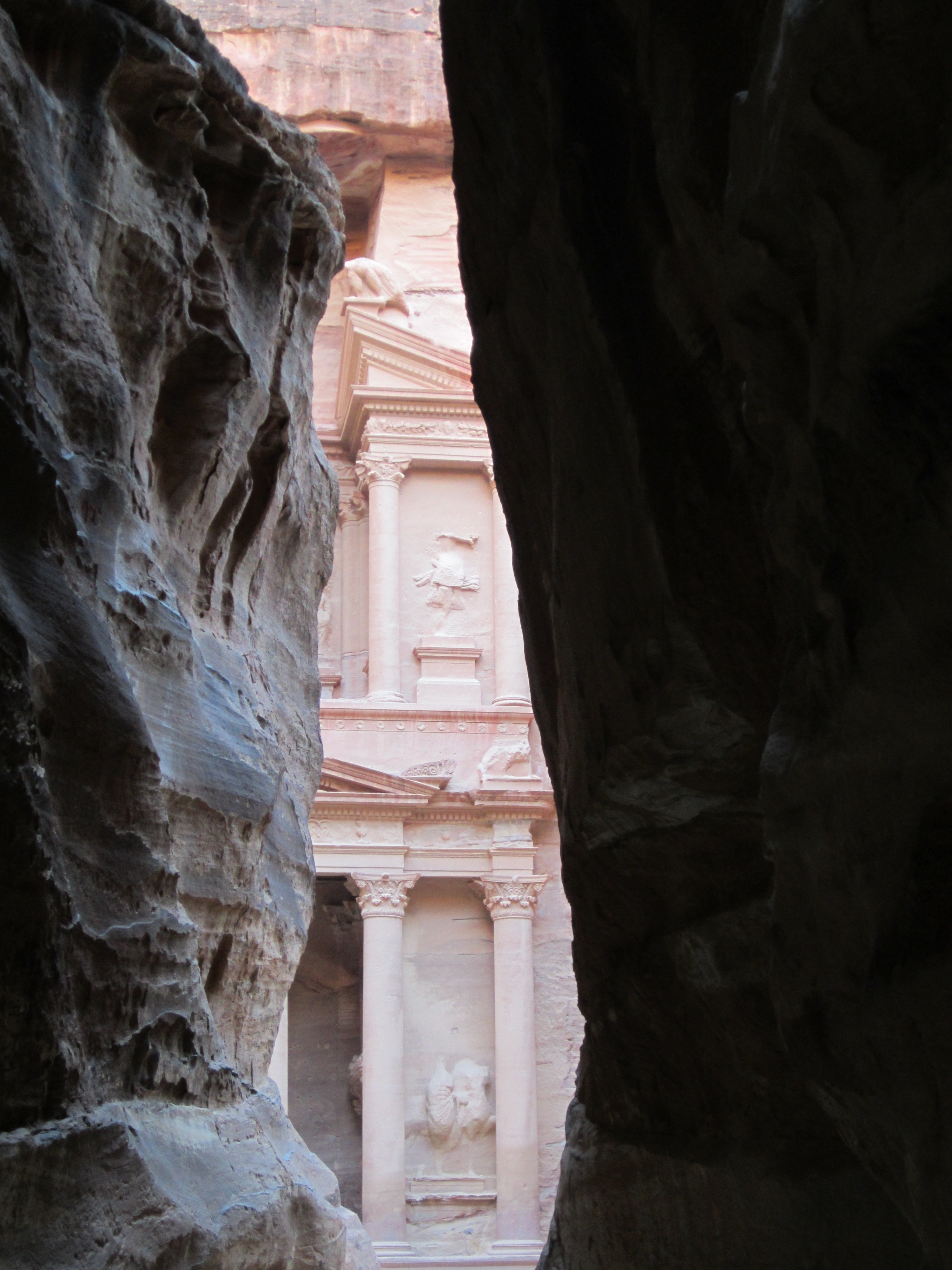
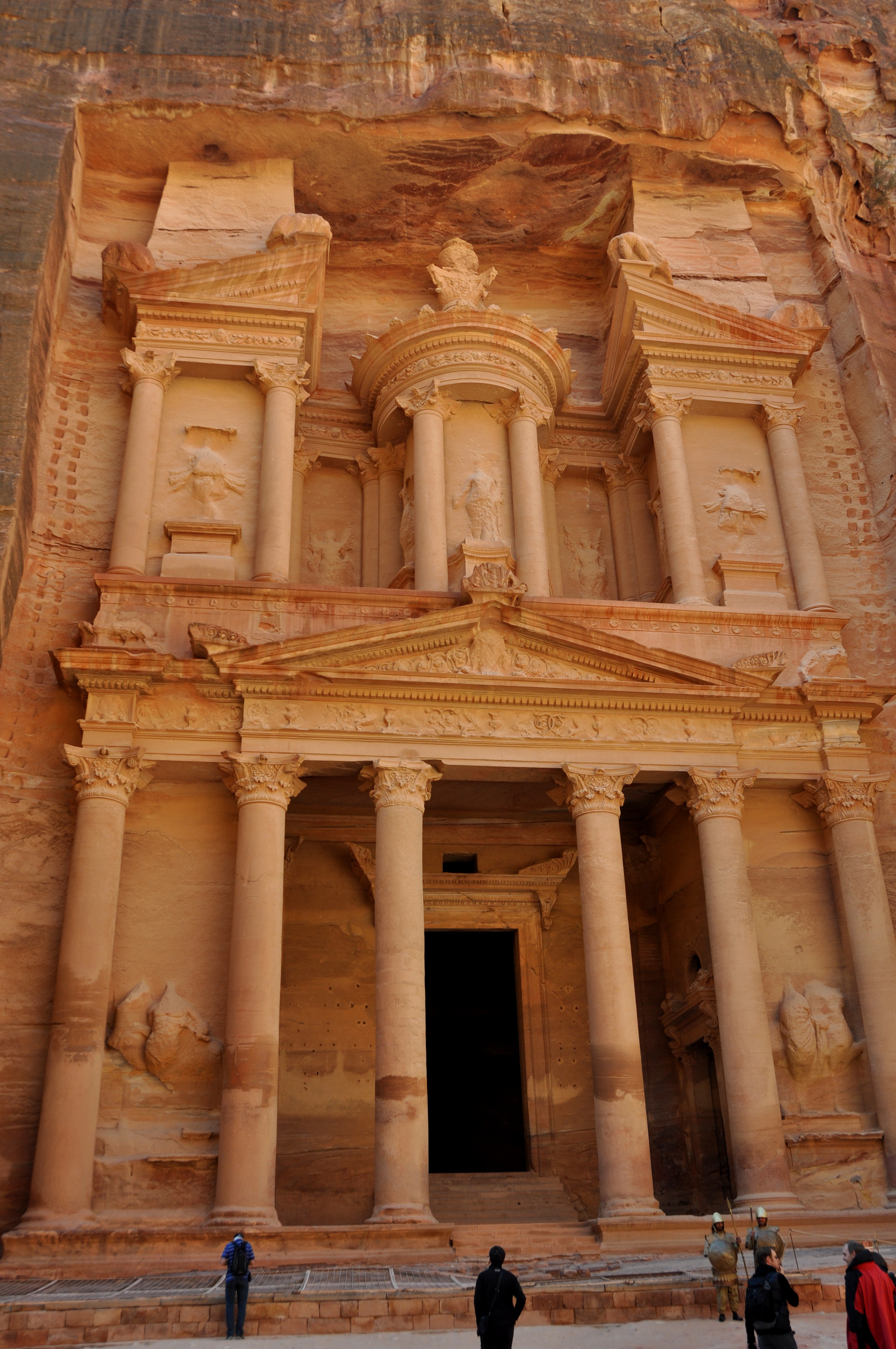
There she is! Al Khazneh, the Treasury, in all her glory…finally!

wait for it 4

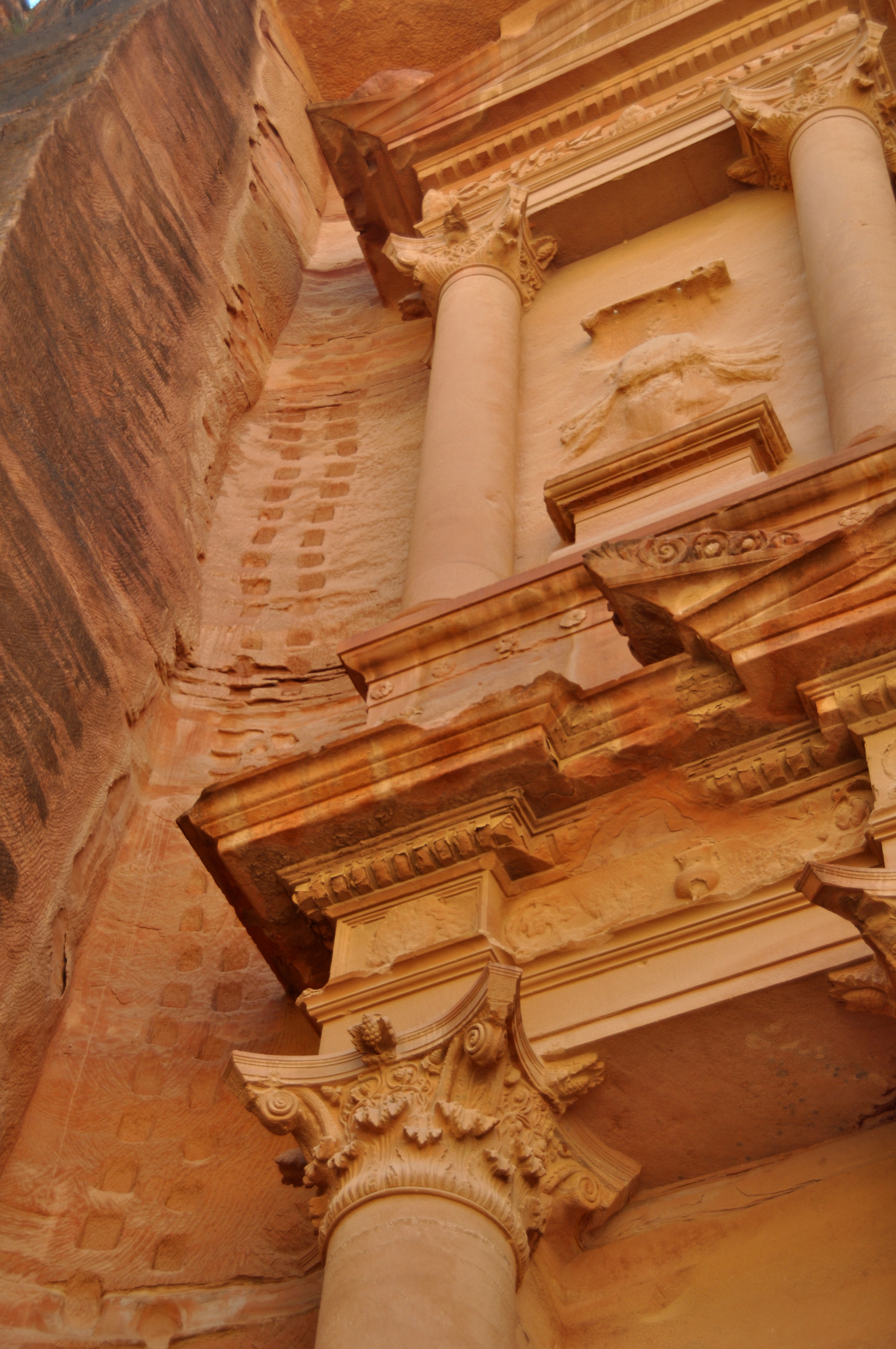
The Treasury is carved out of one block of sandstone, which means that is really easily eroded by wind and rain. Amazingly, the only portion of this structure that has been re-constructed is the third column from the left, from the dark band to the capital. The site where the Treasury is located was so well protected from erosion, that the structure is still standing thousands of years later. How cool is that?!

Due to the fragile nature of sandstone, the structure actually had to be built from the top down. To the right and left you can see “ladders” that were used by workers to carve out the beautiful facade.

ladder

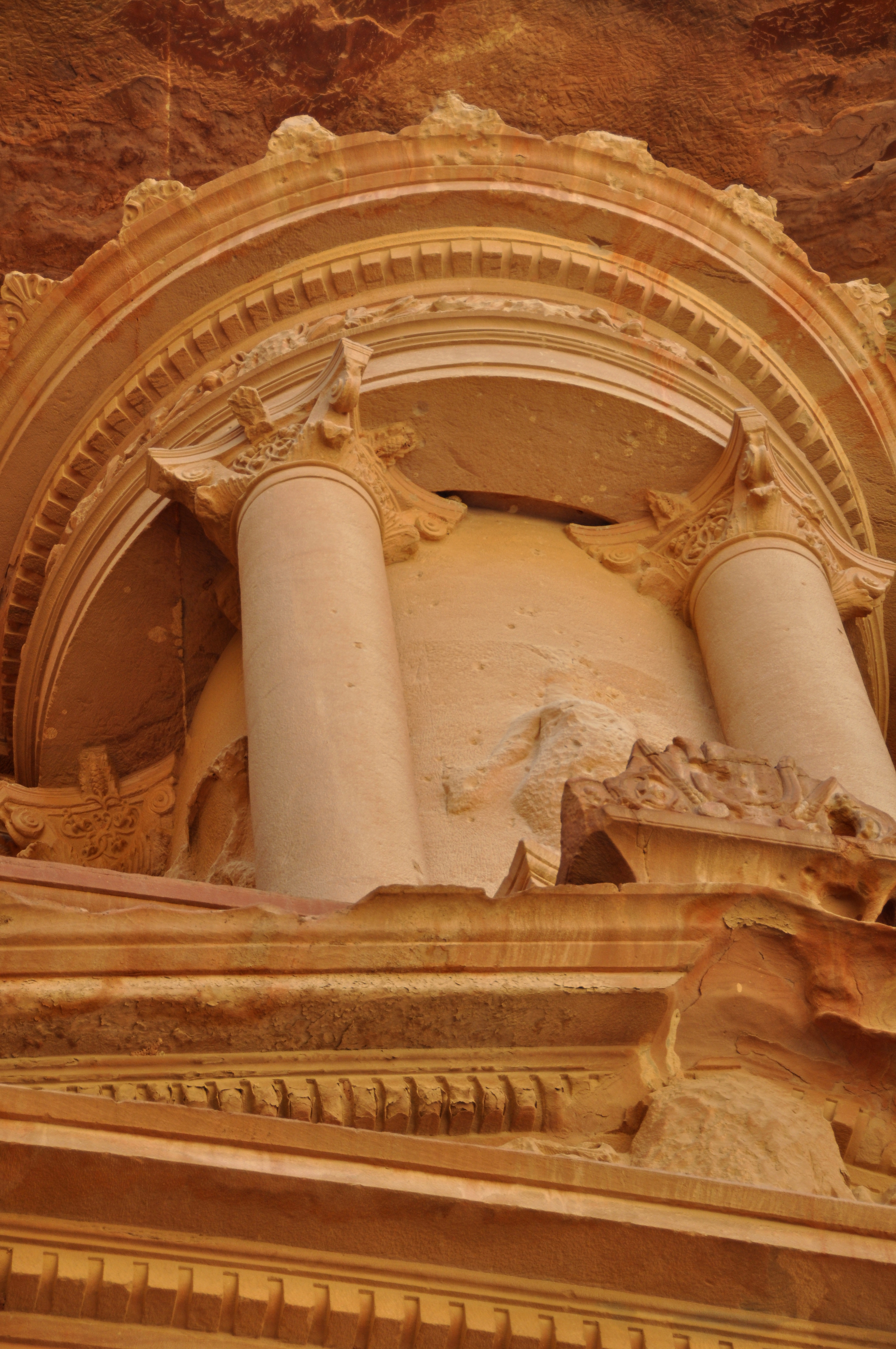
The name “Al Khazna” comes from a Bedouin legend that a pharaoh hid a treasure in the urn at the top, which looters tried to confiscate. The “bullet holes” are still visible from their attempt.

bullet holes

In all reality, the Treasury was used as a mausoleum for royals, hence its elaborate friezes and detailed carvings.

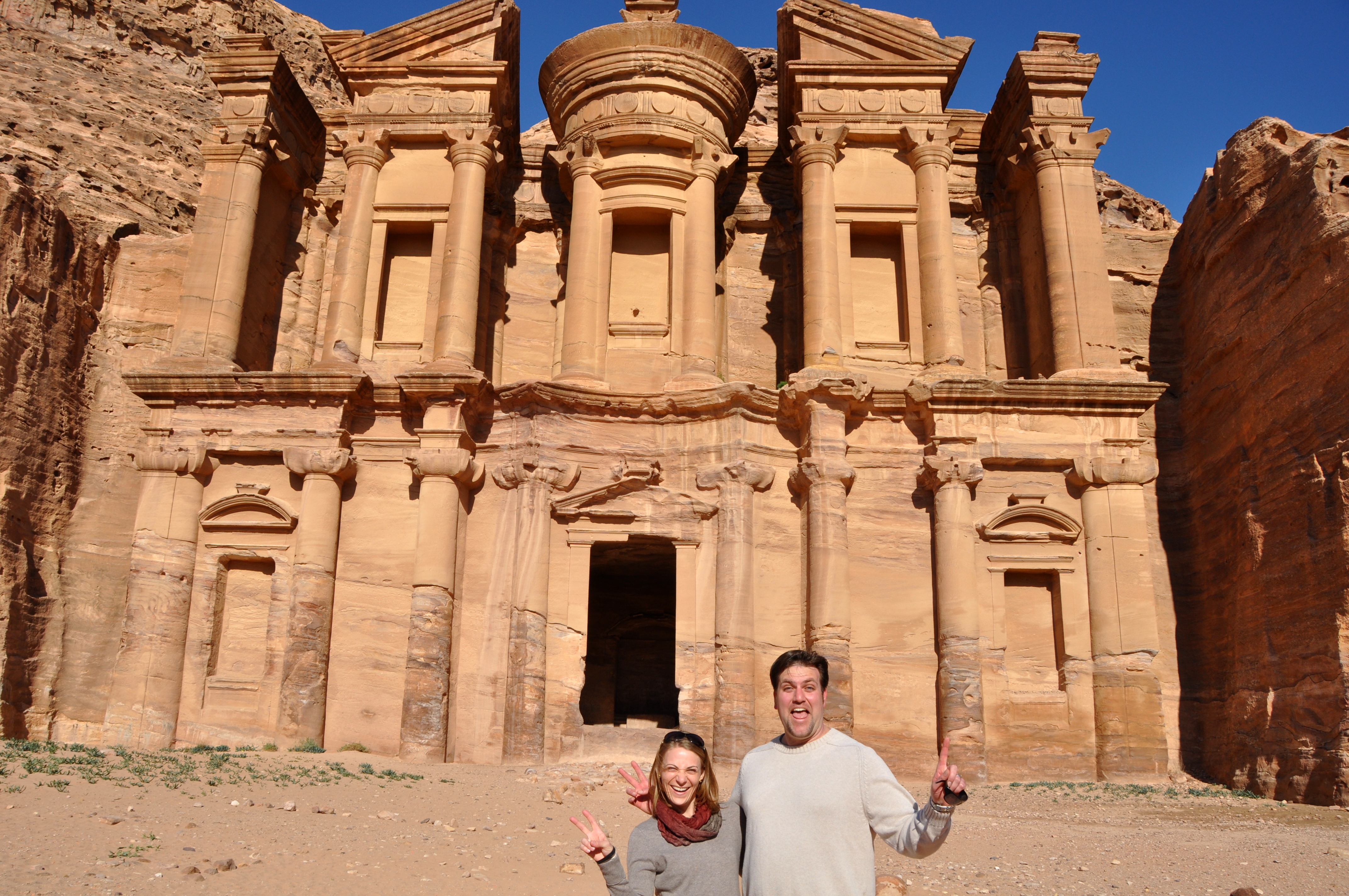
After the Treasury, we walked deeper into Petra and climbed 800+ steps to Ad Deir, the Monastery. Although not as beautiful as the Treasury, or as well known, it is the largest monument in Petra, measuring 47m wide and 51m high. It is also younger, thought to be created around 110 AD.

Monastary

It was quite a hike back and forth to the Monastery, but well worth it. Especially after meeting “Noel Christmas”, who was trying to sell us her wares. Noel Christmas – yeah, that sounds like a real authentic Jordanian Bedouin name if I ever heard one.

Joe, du bist mein Held.

Joe, du bist mein Held.

Jordan, not just for movie makers!

Friends in Israel

Just minutes before departing for Israel I was talking to my oldest (from the 4th grade!) and dearest friend on the phone. After telling her our plans, she asks, “Who has friends in Israel?!” With a laugh, I answer, “Joe Wall does. Of course.” We had a good chuckle over that one.

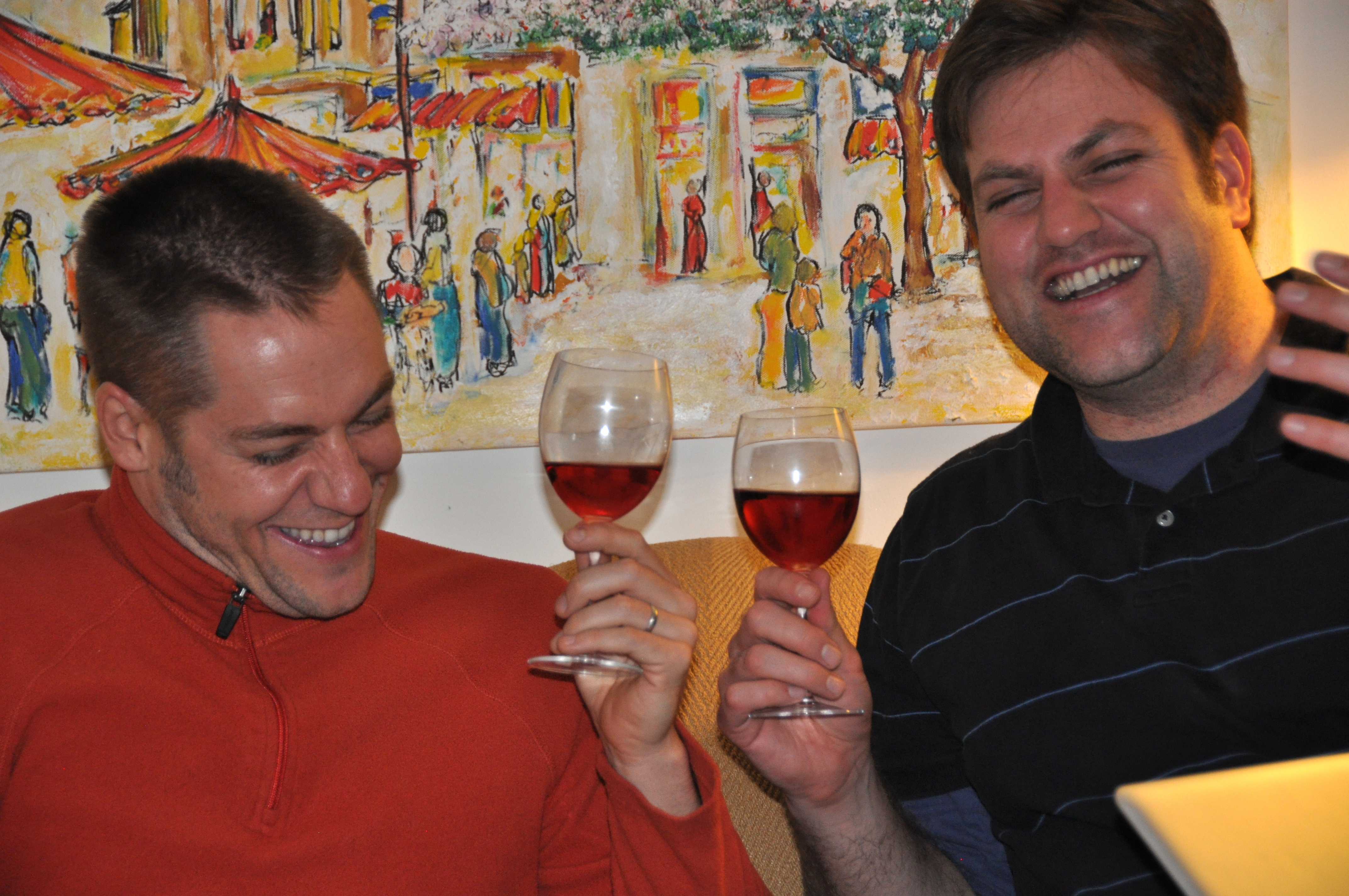
Ironically, Joe and Stew met in the United Arab Emeritus in 2006 and developed their bromance flying over the rolling vineyards of Northern California in the KC-10 together. Sounds romantic, right? Seven years later, once again in the Middle East together, the boys enjoyed a toast and declared one another their Valentines. Now that is romance!
the boysElizabeth (Stew’s wife) and I just sat back and watched the hilarity.

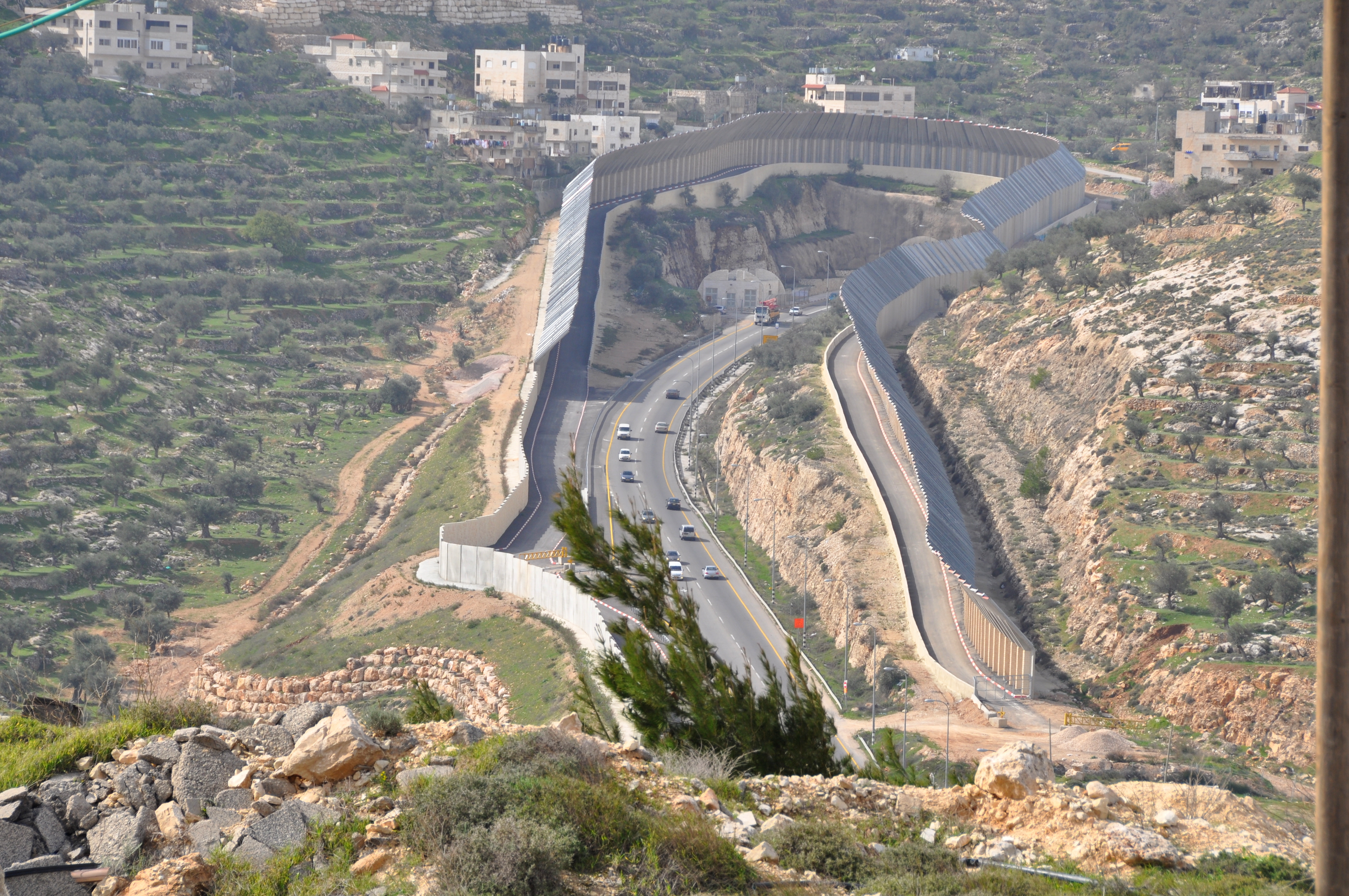
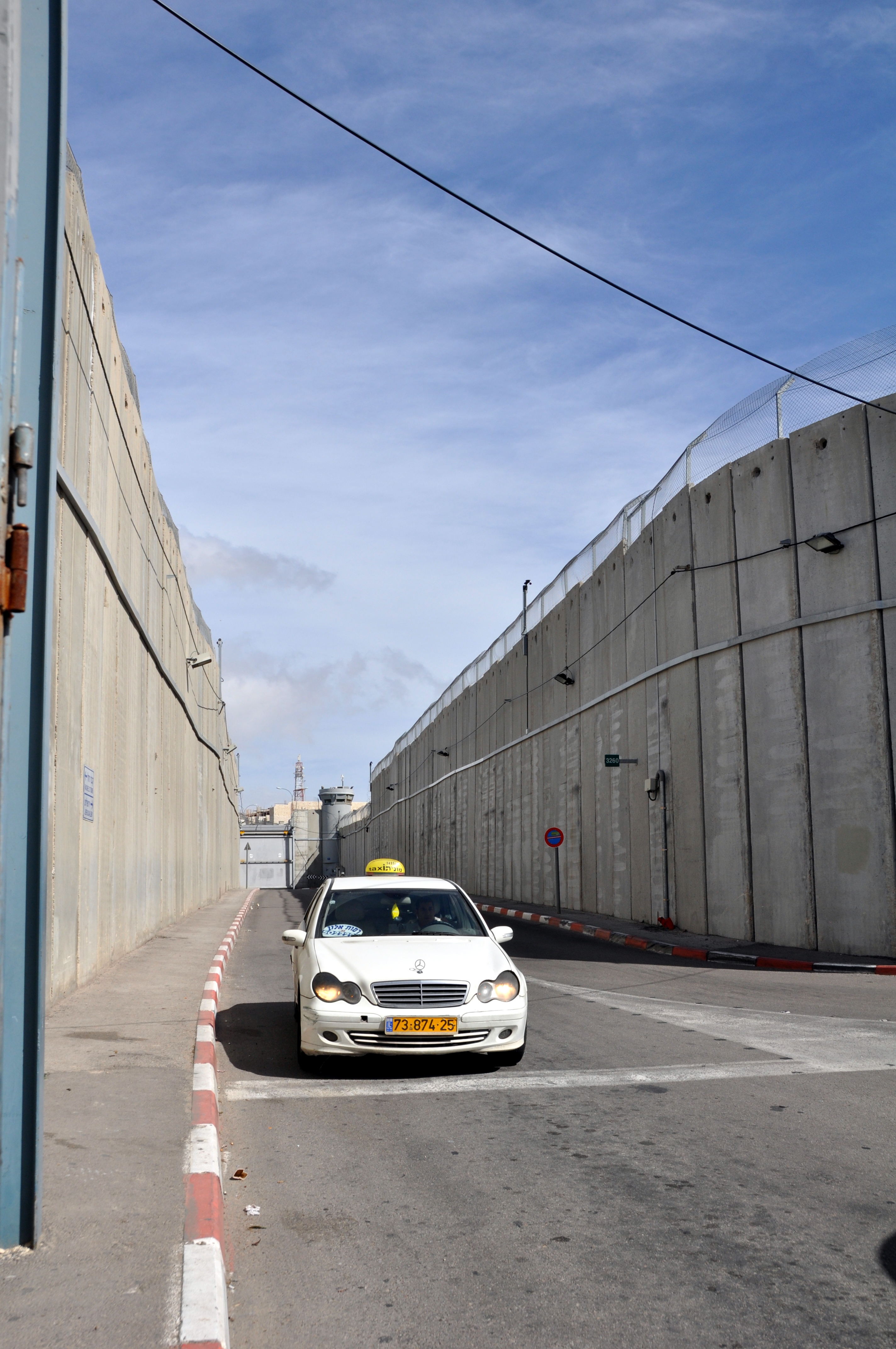
With less than 24 hours in-country, we headed right to the heart of the matter: the Israeli – Palestinian Conflict. We spent four hours visiting different sites along the barrier dividing east and west Jerusalem and learning about the political, humanitarian, and ideological conflicts that have riddled this area since the early 2000s, the Second Intifada.

The barrier

The barrier

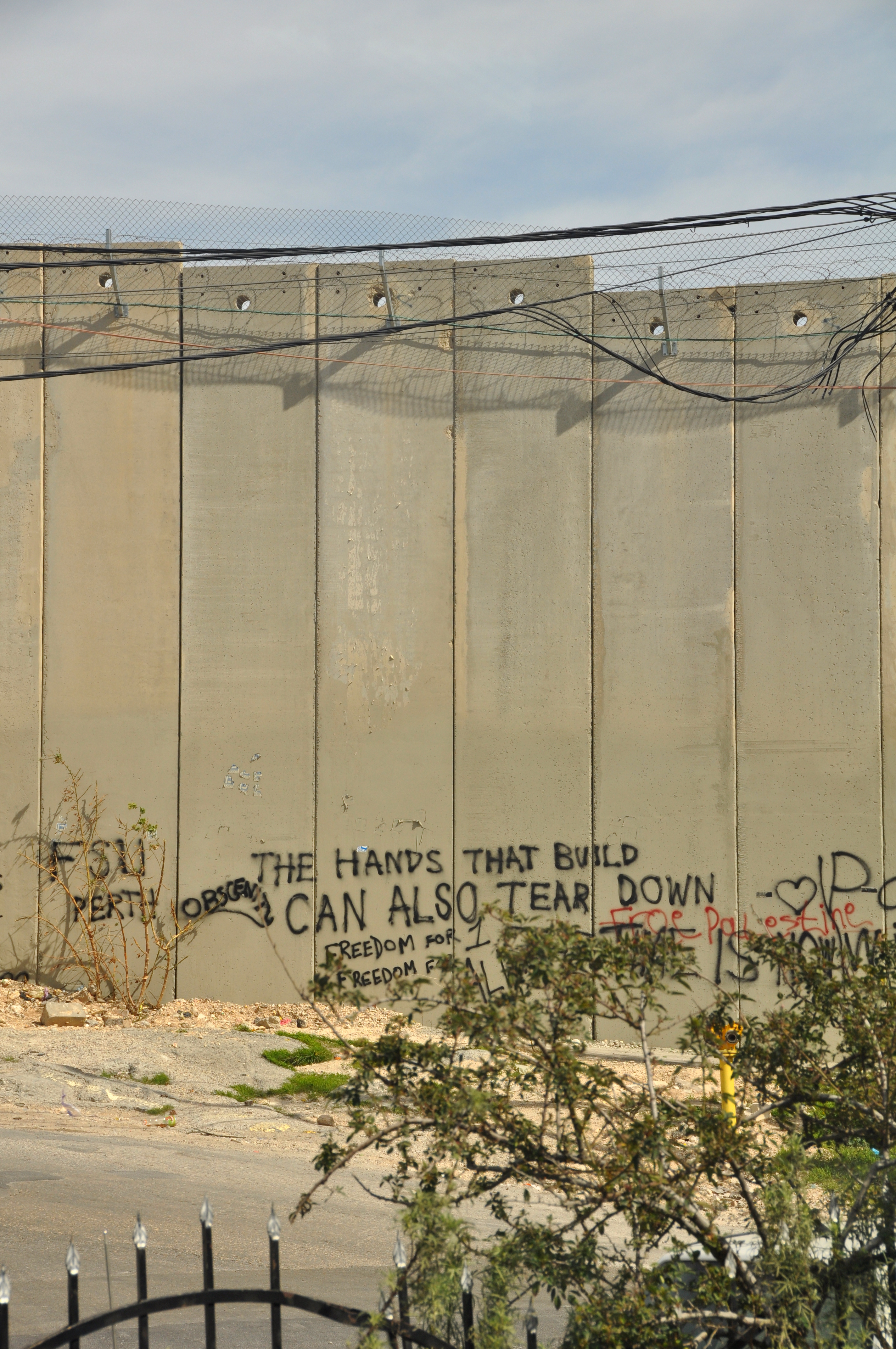
There are people who have spent and will spend their entire lives studying this conflict and working towards a solution. I will not even begin to try and explain the details of the history and politics that brought these two groups of people to the current state they are in, for fear of oversimplifying a racial, religious, and political struggle that is seeped in thousands of years of history, yet occurring in a “modern” society. The bottom line: “It’s complicated.” Only individual research will allow anyone to begin to digest this conflict at a level which is comprehensible on a personal level and through a lens that speaks to the unique beliefs or perspectives of the investigator. The following are my personal reflections and the facts that stood out to me. Hopefully, reading a few tid-bits will inspire you to begin your own investigation into the conflict and, more importantly, how your elected government chooses to respond to and manage this conflict in the interest of American democracy.
graffitti

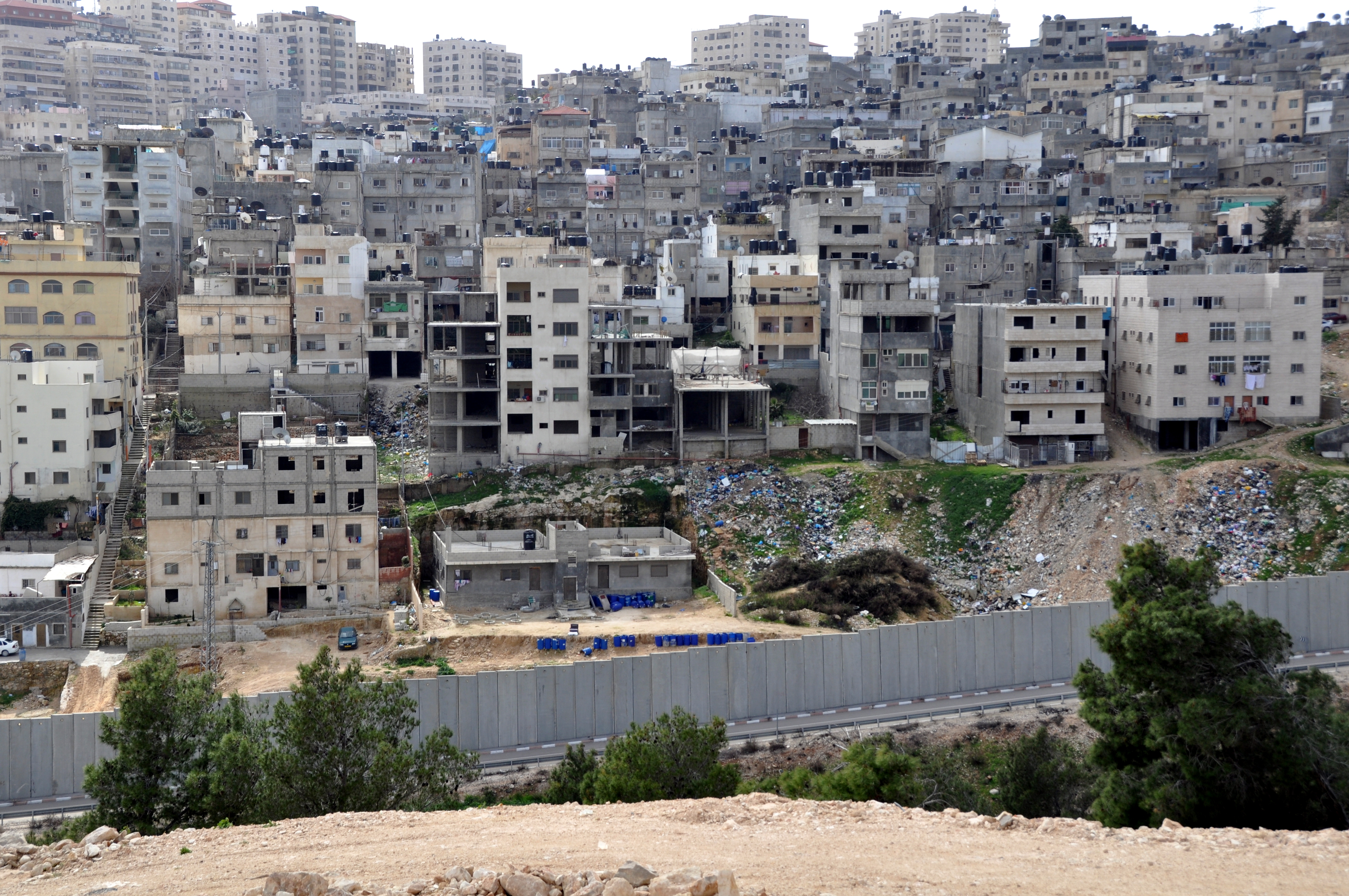
In some of the Palestinian neighborhoods, only 20% of the residences are connected to sewage and plumbing. It is hard to ignore the piles of trash that trickle (or maybe ‘pour’ is a better verb) down the hillsides. One Palestinian neighborhood in particular did not have any garbage removal from 2007 to 2010, and currently only has pick-up once a month. In addition to the tangible wall barrier, there are ‘glass borders’ between the Palestinian and Israeli neighborhoods, where not only can you see the difference in living conditions, but also feel it. The road is suddenly smooth to drive on, the quantity of trash lessens, and the overall conditions improve. Rachel’s Tomb is controlled by the Israelis, but is located outside of the municipal boundaries of Jerusalem, technically within the West Bank. The road to get there is completely isolated by the wall. There are guards controlling the entrance and signs posted in several places, stating exactly who can enter and who cannot. Despite the religious importance of this site for many people, it is not accessible by all. It makes you thankful to live in the land of the free.

Road leading up to Rachel's Tomb.

Road leading up to Rachel’s Tomb.

During a bathroom stop, I engaged our guide in a conversation about the stated and un-stated messages regarding the conflict. There are still sections of the wall that are un-built, but a plan is in place to continue construction. That sends a clear message. Simultaneously, there is always talk and debate about finding a solution, be it one-state or two. This sends a contradicting message. Our guide said that finding a solution wasn’t even a major talking point in recent elections, as the people are “tired” of it. Many believe that continuing the wall is the only way for these two populations to co-exist. He also told me that by the end of the day, I will have more knowledge over the conflict than the majority of the Israeli population. That is a tough pill to swallow. What’s harder to swallow is the question: Are Americans really that different in regards to certain issues within the United States? Mull it over for a while.

Towards the end of the tour, we stood on a hill overlooking Ahu’afat Refugee Camp, a Palestinian neighborhood inside the municipal boundary of Jerusalem but outside of the wall, where living conditions are worse than any other neighborhood. As gun shots rang out, I decided that this is what really matters: we were here, we tried to educate ourselves, and we continued to deepen our understanding after the experience was over.

Ahu’afat Refugee Camp

Ahu’afat Refugee Camp

Ultimately, I (and I think I can speak for Joe here as well) am thankful for the experience. Even though I would still classify my understanding somewhere between “confused” and “highly confused”, I am thankful to have had an opportunity that only some Americans can or choose to have. Even more so, I am thankful for our friends, the Welches, who were willing to answer questions and continue the discussion from the perspective of Americans living in Israel.

NOW…ON TO THE FUN STUFF!!!

The great part about being with friends, who can also be considered “locals”, is all the things you can enjoy, that you normally wouldn’t, if alone. This by no means covers all the things we did, but the most fun things, for sure!

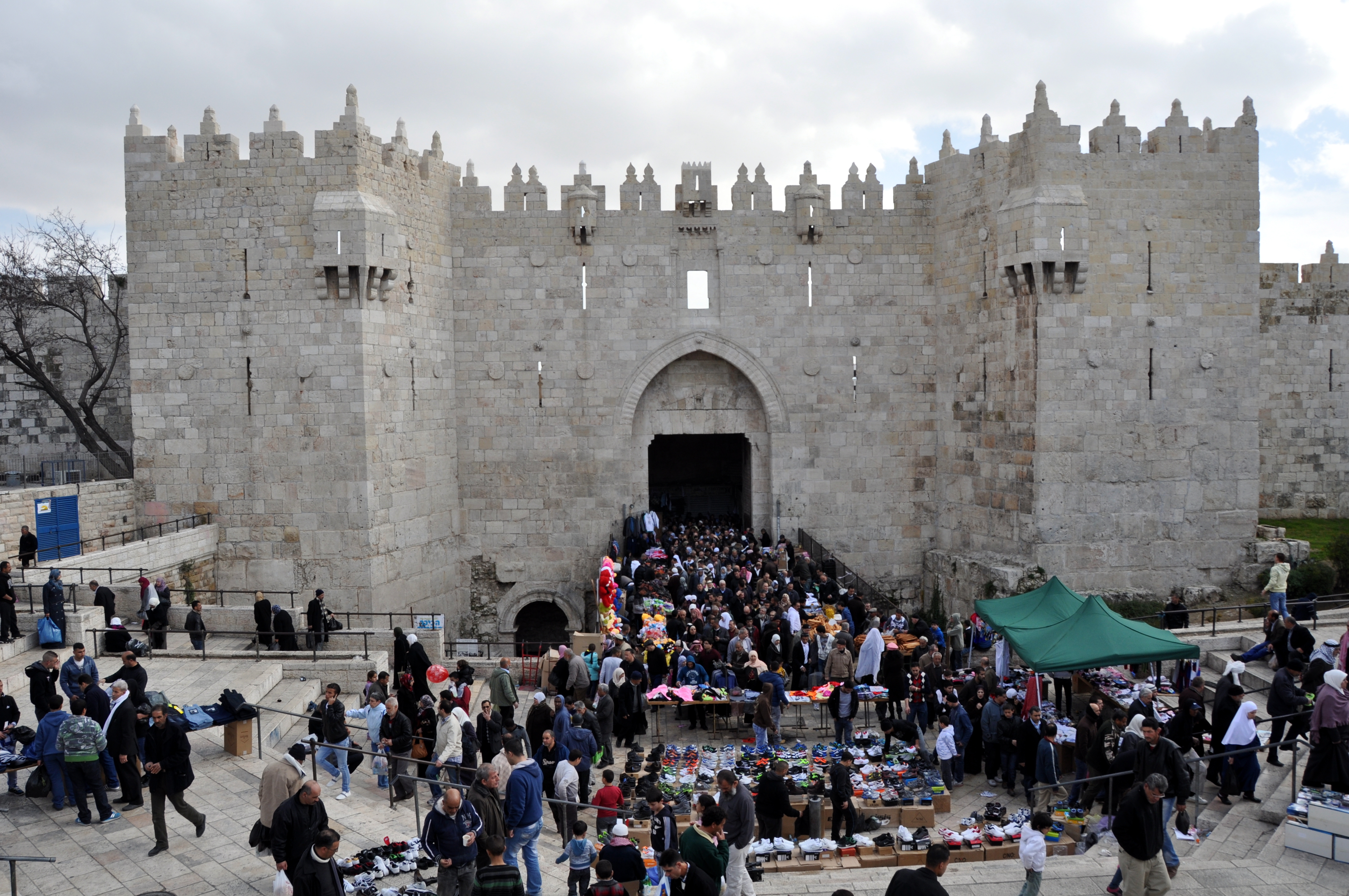
After watching everyone pour out of Damascus gate on Friday afternoon after prayer…

Demaskus gate

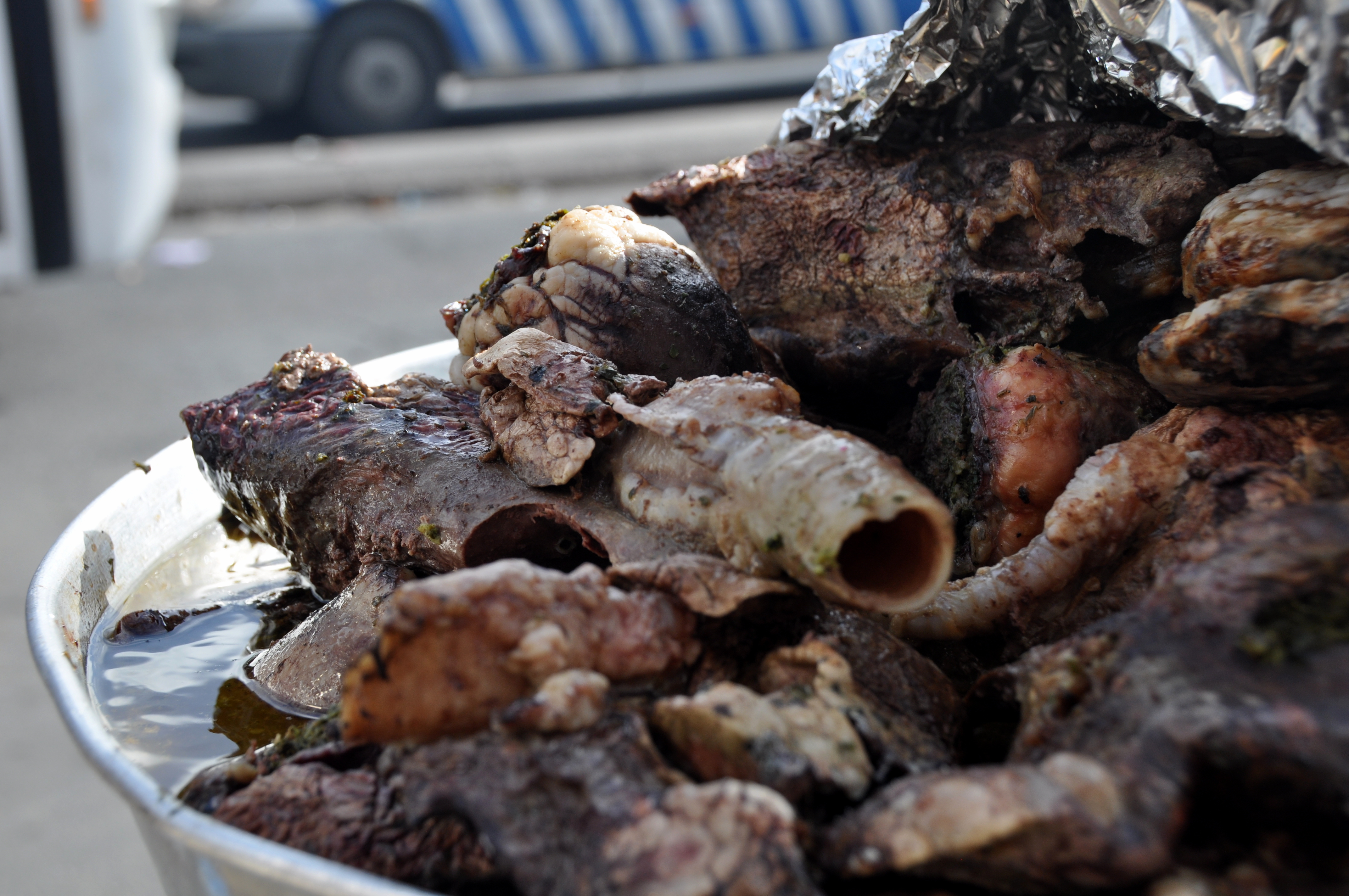
…who is in the mood for some “Street Meat”?!
street meat
We cannot confirm nor deny which organs were included in Stew’s “street meat”, but you can make your own deduction from the options below.
street heart
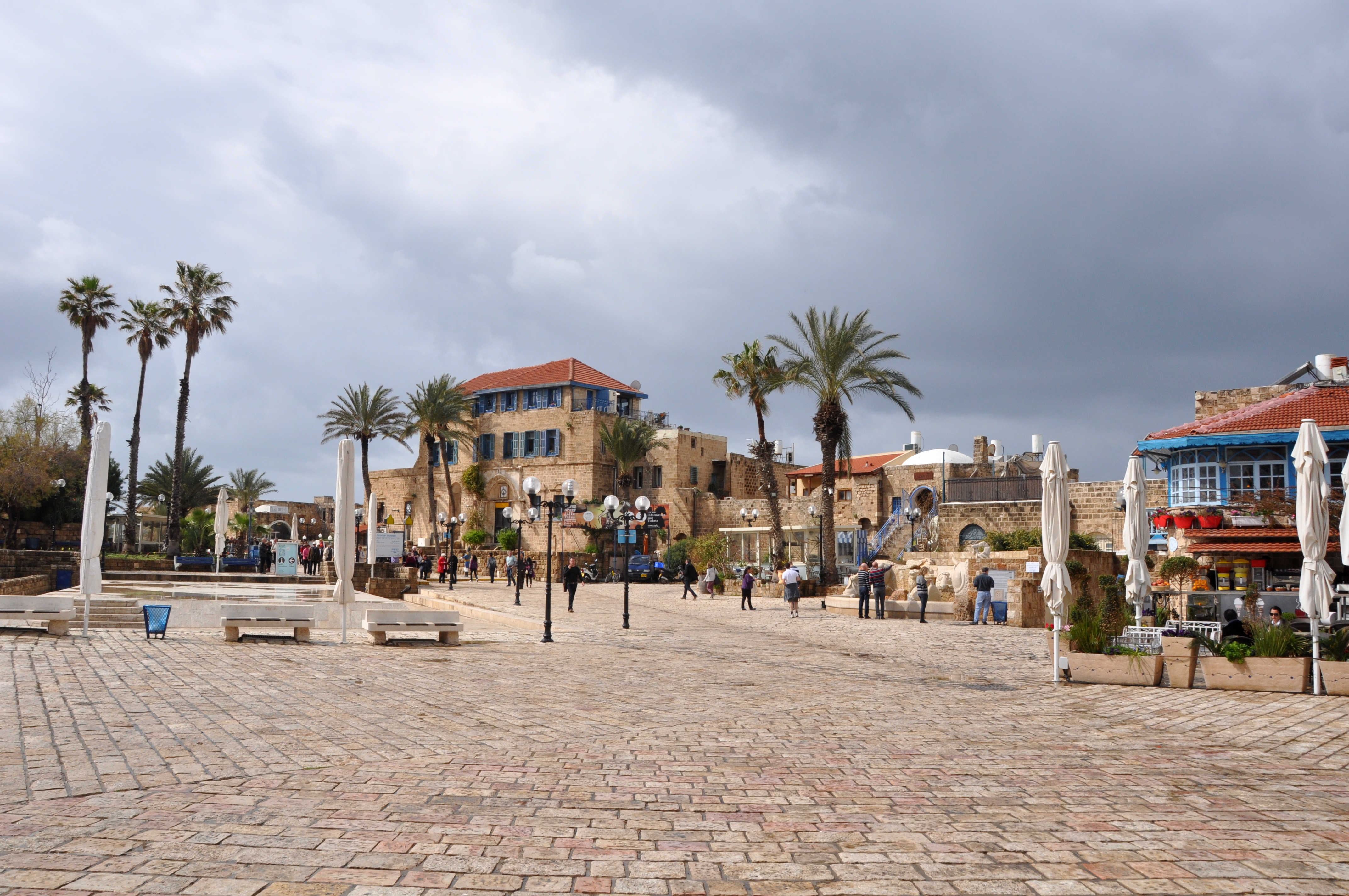
Jaffa – Elizabeth gave us a great tour of Jaffa, which touts itself as one of the oldest cities, dating back to 7500 BC! There are several layers of ancient cities buried beneath Jaffa, Jonah reputedly set sail from Jaffa for his fateful date with the whale, and Andromeda was tied to the rocks outside the port as a sacrifice to Poseidon’s sea monster.

All this history aside, we saw some really interesting present-day things in Jaffa: a double Eritreaian wedding, business-in-front-dreads-in-the-back hairstyle, and remarkable modeling skills from Joe that have obviously been repressed for some time now. These are all probably “I guess you had to be there” stories, right Elizabeth?!

The square in Jaffa.

The square in Jaffa.

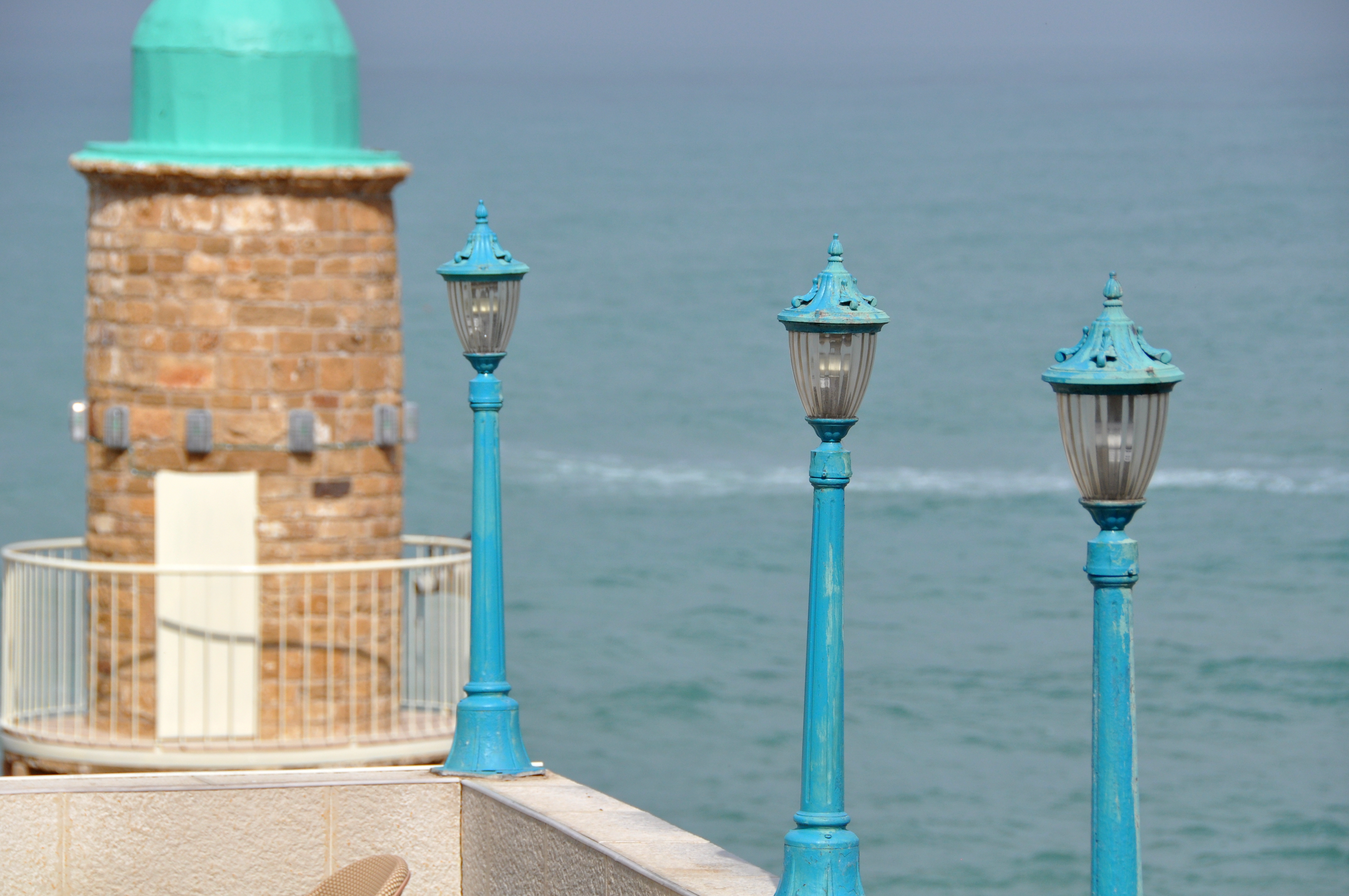
laterns
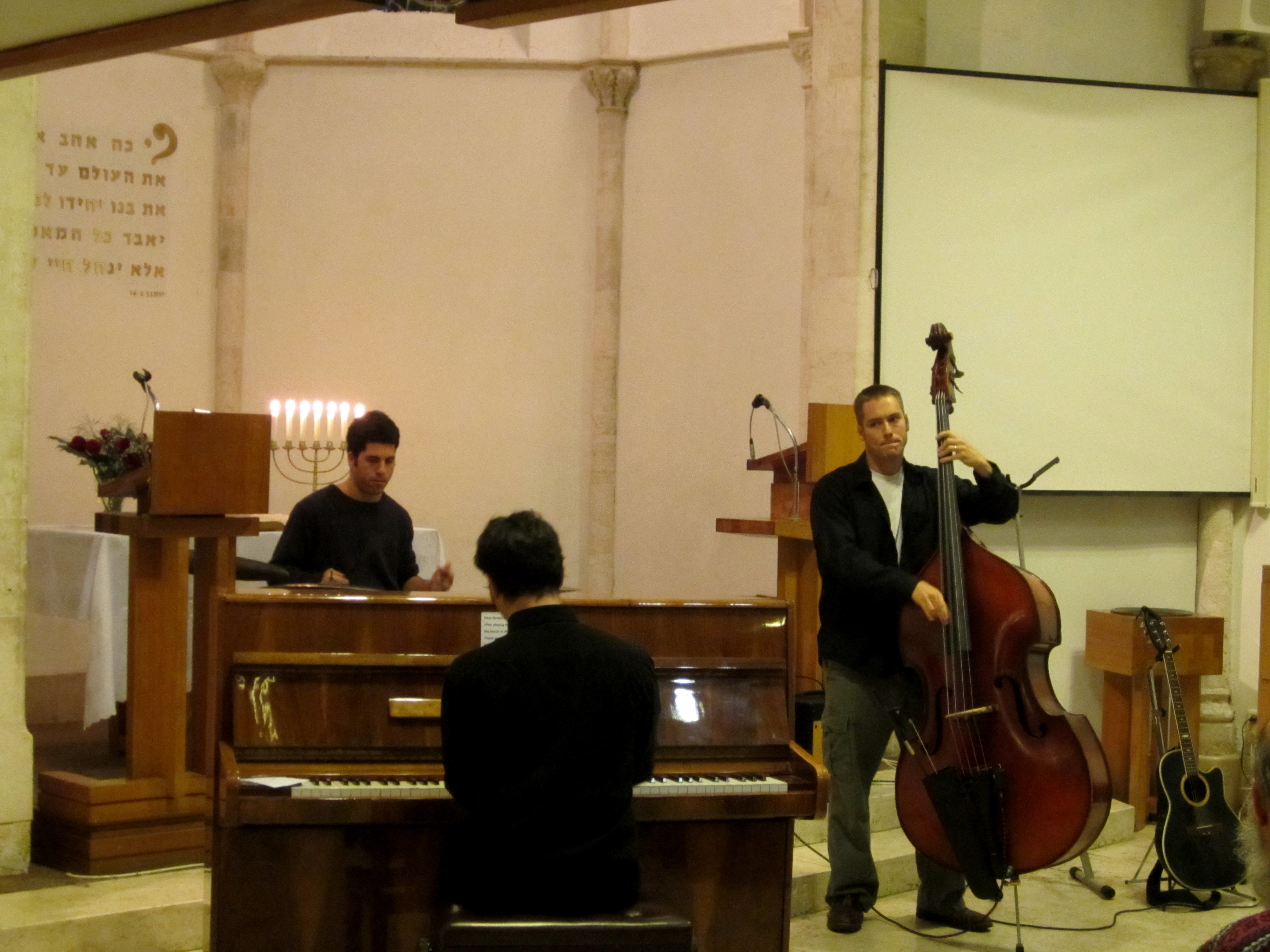
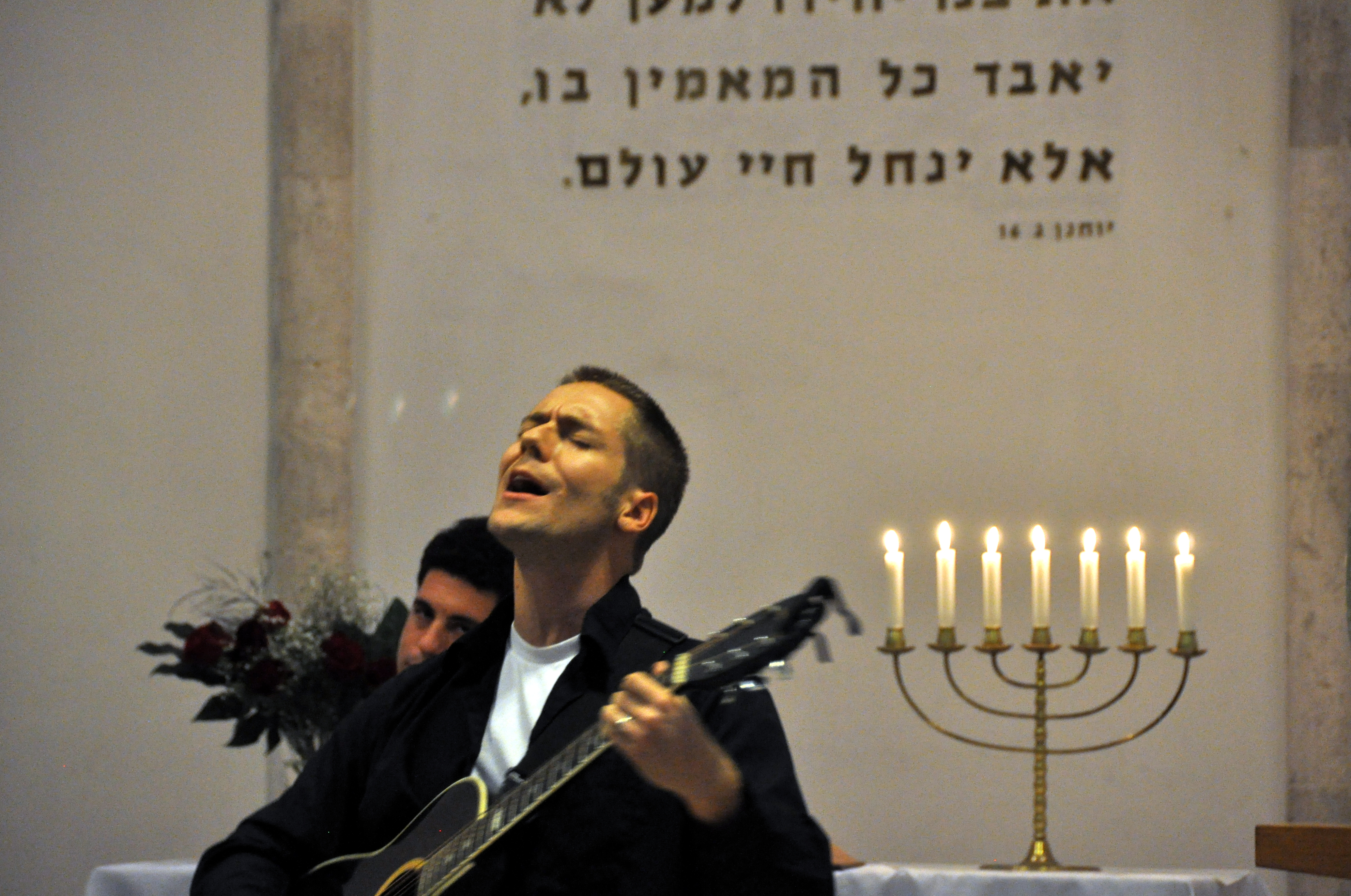
We were also lucky enough to be in town while Stew had a “gig”. As a bass and guitar player and jazz-lover, Stew plays in a local band with several Israelis. It was really fun to see a friend, enjoying something he loves, in another country that he calls home, and in another language!

Jazz group

Stew singing

We thought it was a great show, but sometimes family can be a hard sell.

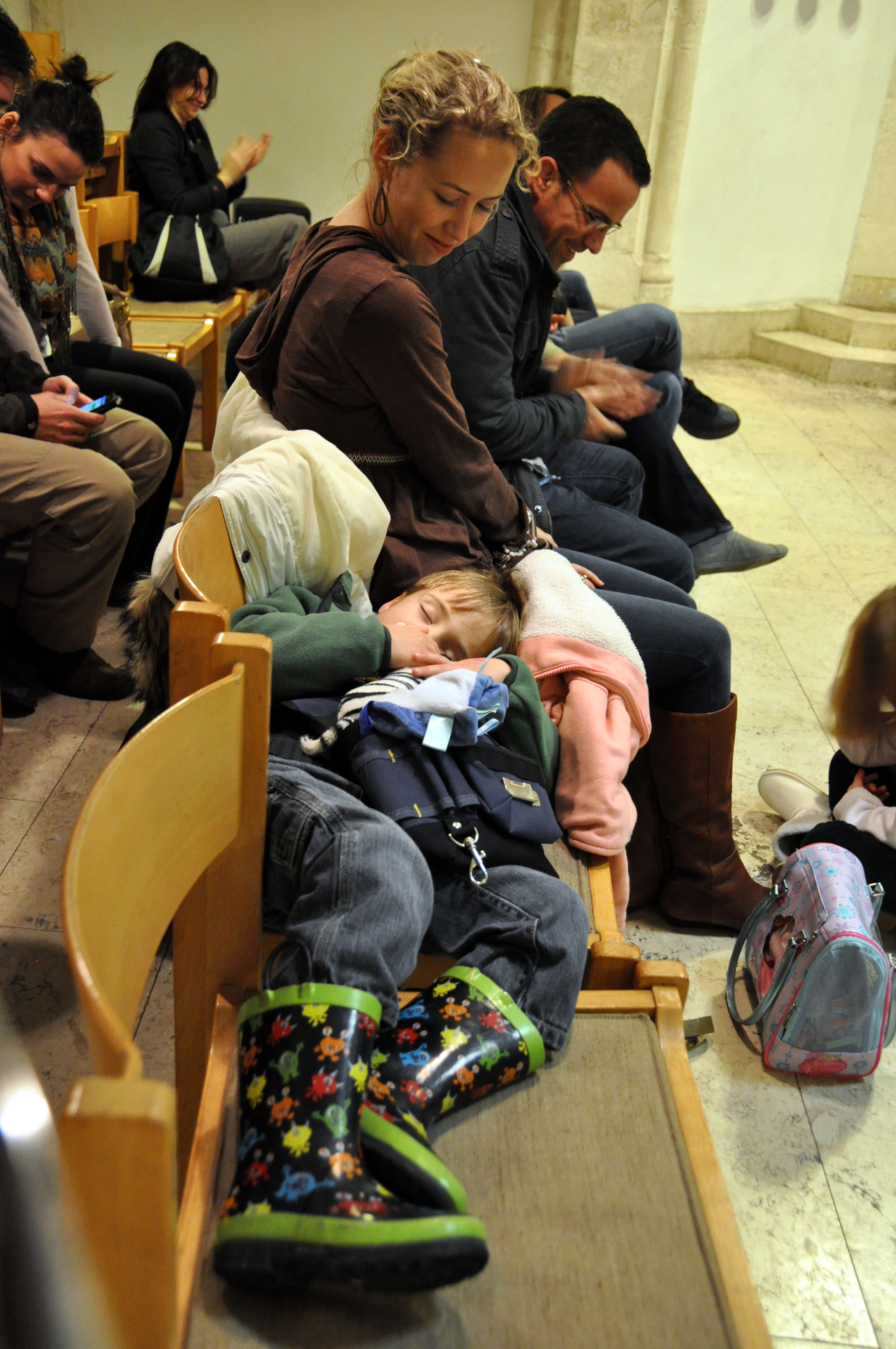
Stew’s wife, Elizabeth, and sleeping son, Will.

Stew’s wife, Elizabeth, and sleeping son, Will.

A huge thank you to our wonderful friends, the Welches. Our experiences in Israel wouldn’t have been so fun, and so rich, without you. We look forward to the next chapter of our shared journey.