The Golden City of 100 Spires (every time I read it, or heard it, there was a different number!)
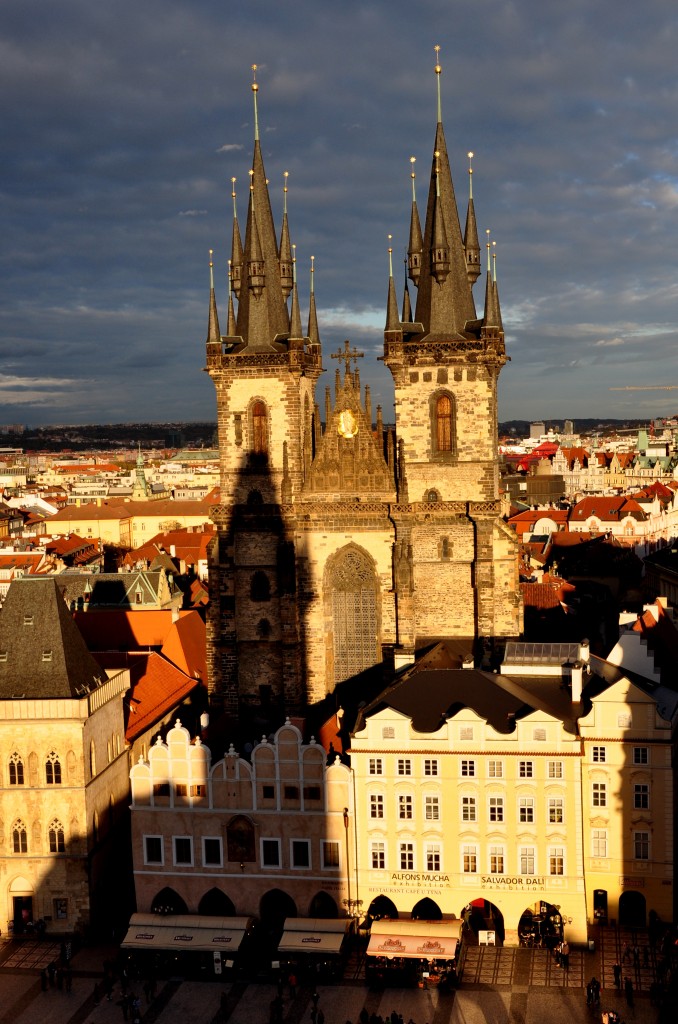
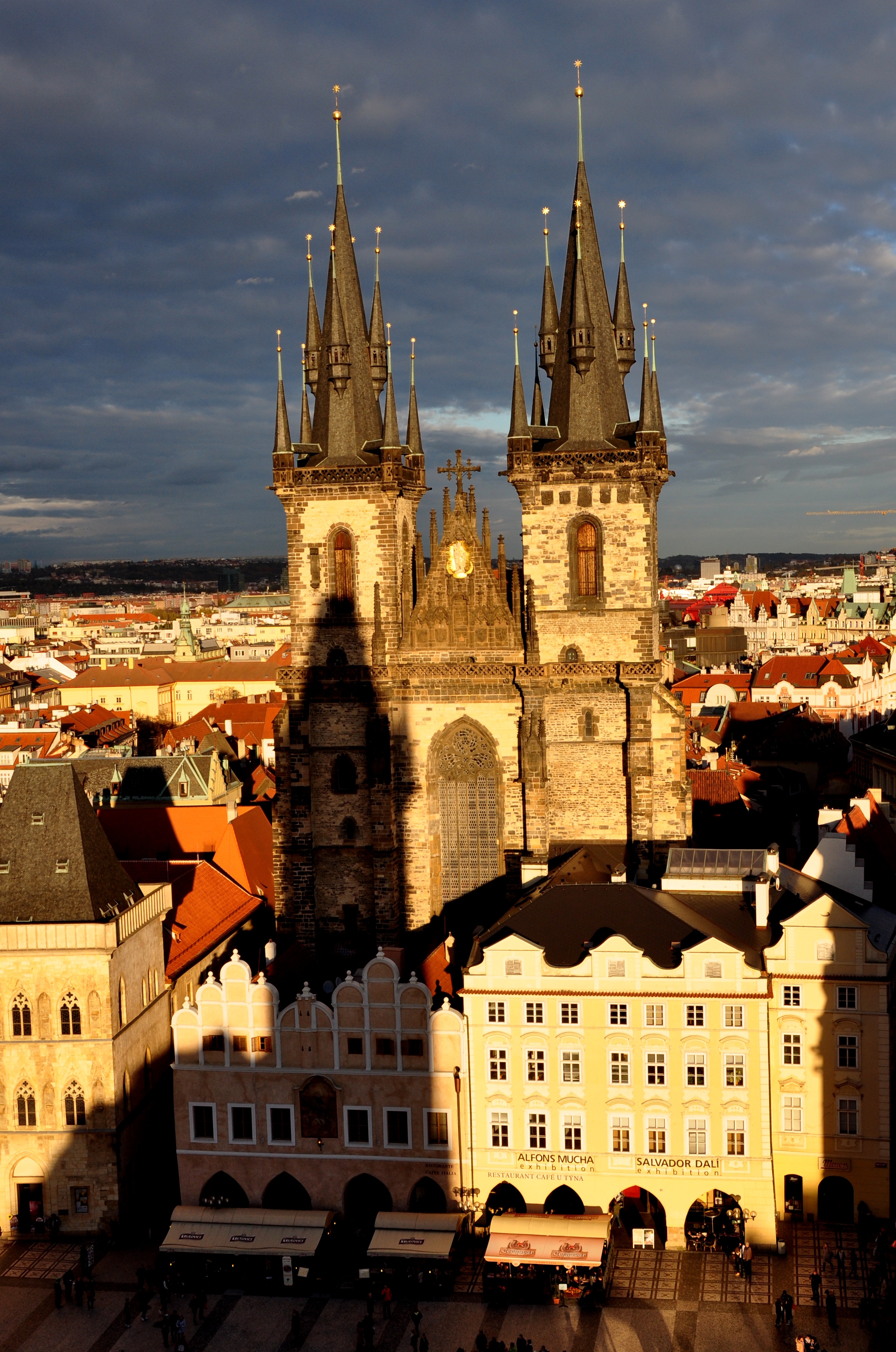
Church of Our Lady before Týn and the shadow of the Old Town Tower, which we are standing in.
We had a great time exploring Prague and its sights. Even I sampled more than a few Czech beers, which are supposedly the greatest in the world! So, here are just a few of our favorite highlights and discoveries within Prague.
Jewish Quarter – Between the Middle Ages and WWII, the Jewish population of Prague had been confined to a small section of the city. There was a continual ebb and flow of oppression and freedom, providing small windows of time where the community could enjoy a few freedoms and even develop their spiritual and cultural heritage. Many of the synagogues in the Jewish Quarter are hundreds of years old, which makes them particularly special because they are some of the very few Jewish institutions to survive WWII. Yet another one of Hitler’s twisted plans prevented this section of Prague from disappearing into history. During WWII, Hitler insisted that Prague’s Jewish neighborhood remain intact because he intended to turn it into a museum displaying the steps he took, and progress that was made, toward eliminating the Jews.
The Pinkas Synagogue was particularly moving. Inside, the names of Czechoslovakian-Jewish victims of WWII have been written on the walls. The walls are covered, floor to ceiling, sometimes over 10 feet high; the names include the birthdate and best known date of passing for each individual. The memorial was destroyed by the Communist regime in 1968. 80,000 of the names were rewritten from 1992 – 1996, but 183,000 names are still not included. It is an unbelievable visual reminder of the sheer quantity of human life that was taken. And that is just the first room. I thought that the main room in the synagogue was the only space used to display the names; however, they continue through three additional rooms, and even upstairs. No pictures were allowed, and I was really relieved to see people actually respecting the gravity of this unique memorial.
Upstairs is an exhibit about Friedl Dicker-Brandeis, an artist and painter who was deported to Terezín Concentration Camp. She provided secret art lessons, and ultimately art-therapy, to the children of Terezín for two years. In 1944, Dicker-Brandeis requested to go to Auschwitz, where her husband had been sent, and where she ultimately perished. Before she left, Dicker-Brandeis packed approximately 5,000 pieces of her students’ work into two suitcases, which were not discovered for at least a decade after the war. The children’s paintings and art work provide a totally different perspective on the Holocaust. I found myself pausing at the paintings in which the children had drawn signs written in both Czech and German, reflecting what their neighborhoods looked like before they were deported. I wish I could have found Friedl’s name in the synagogue.
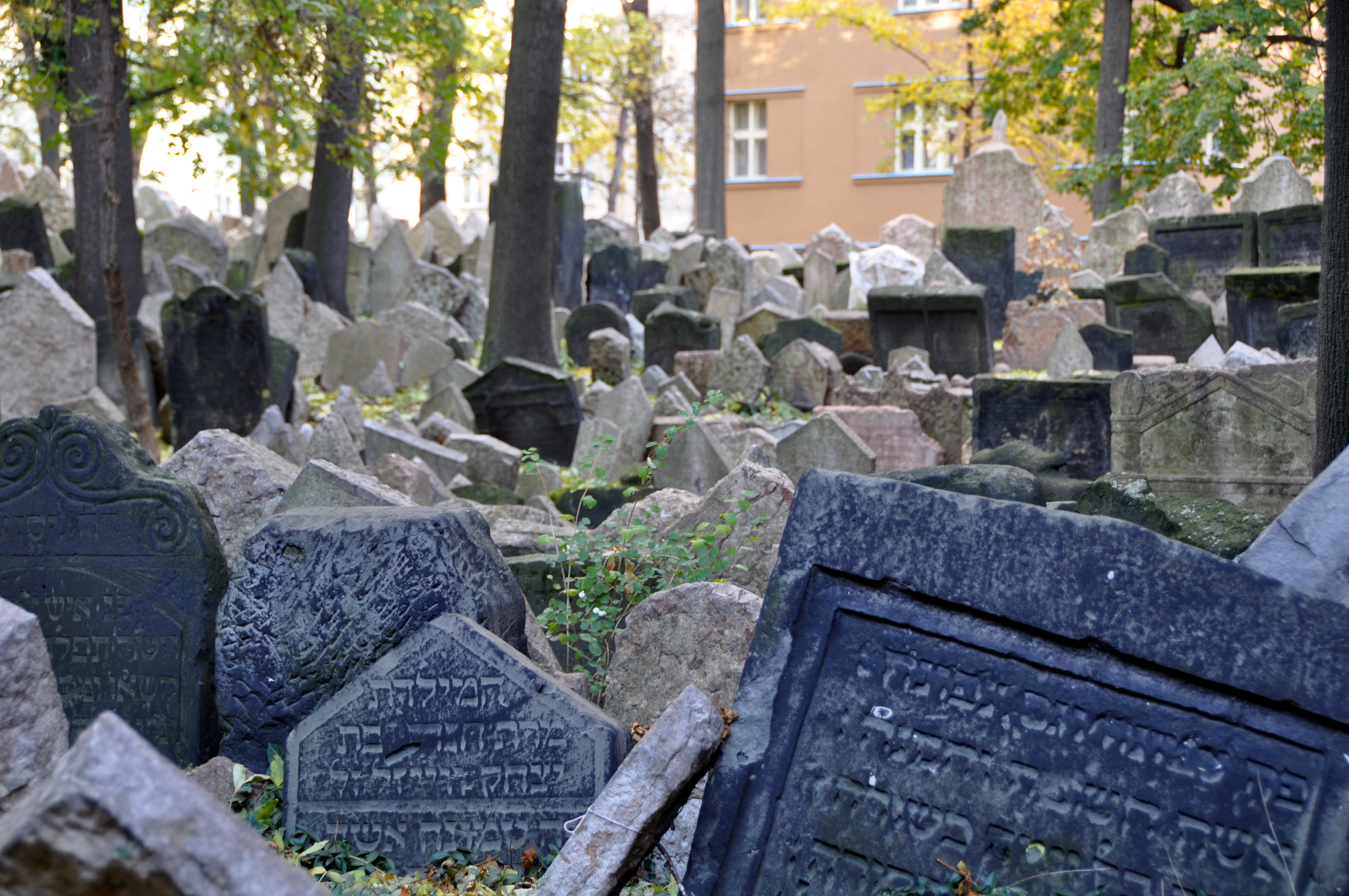
Immediately outside of Pinkas Synagogue is the Old Jewish Cemetery. For over 300 years, this was the only place where Jews were allowed to bury their family. Not any bigger than a city-block, the cemetery contains over 12,000 gravestones, the youngest dating to 1787, the oldest to 1439. It is unbelievable.
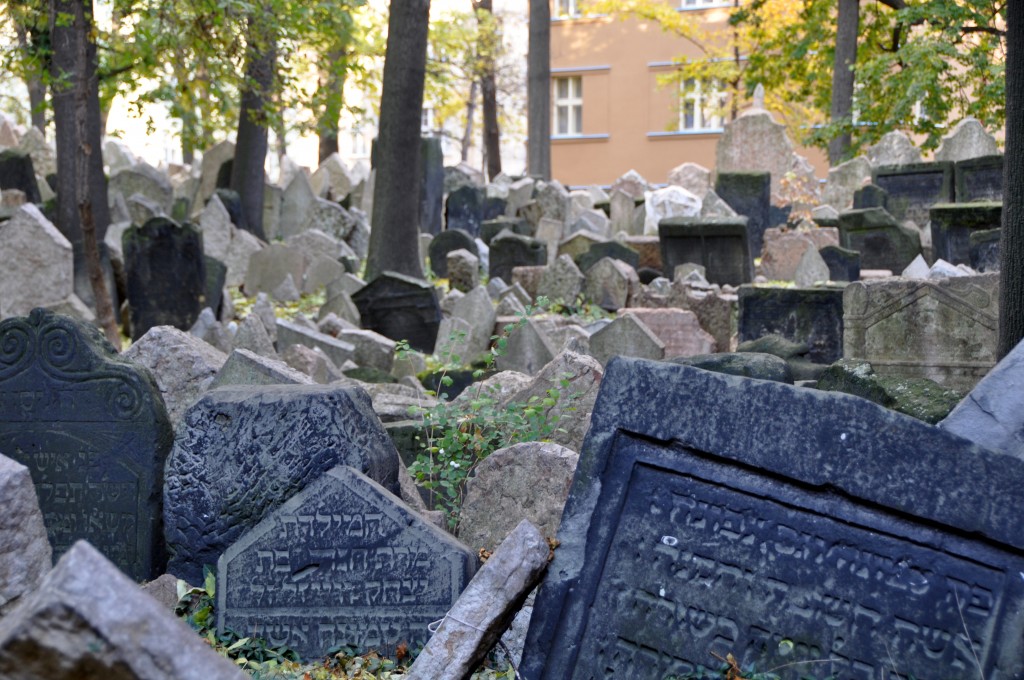
Due to such limited space, people were actually buried 12 layers deep. It is estimated that around 100,000 individuals rest within the cemetery.
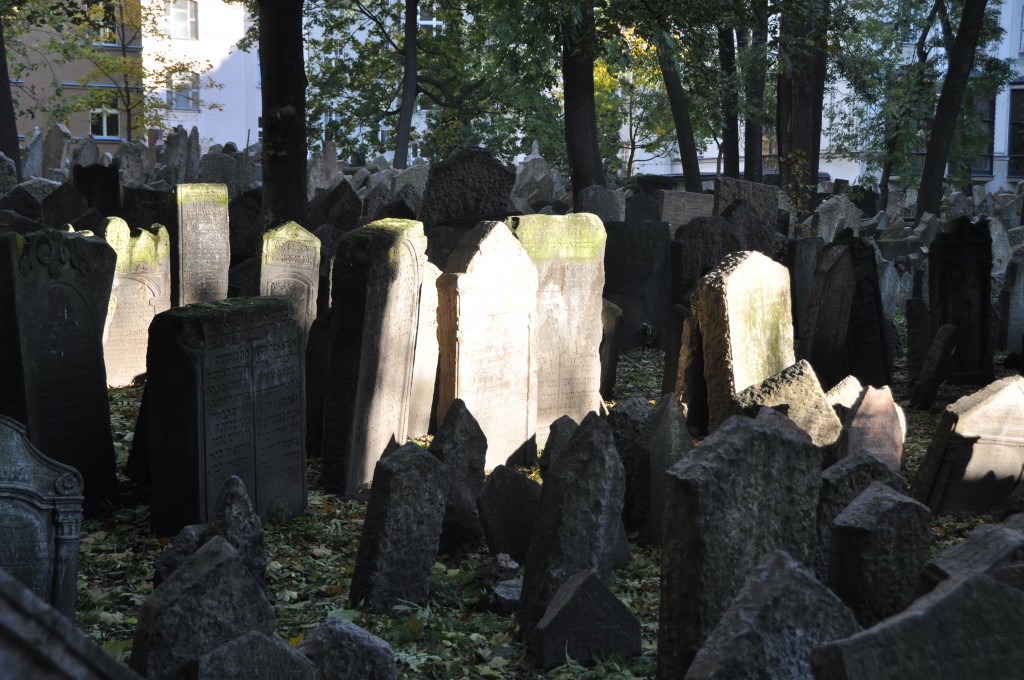
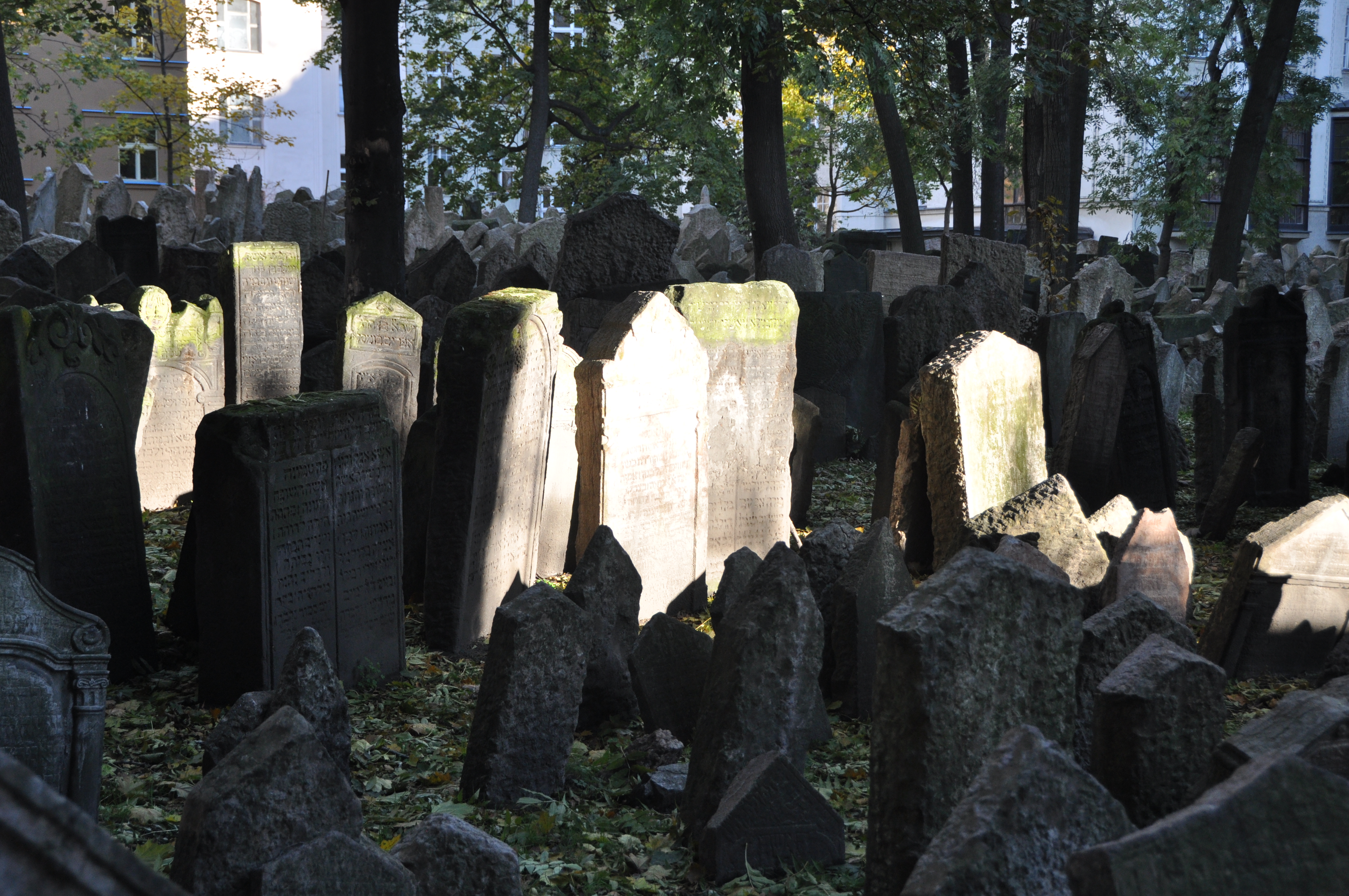
Amazing sunlight during our walk through the cemetery.
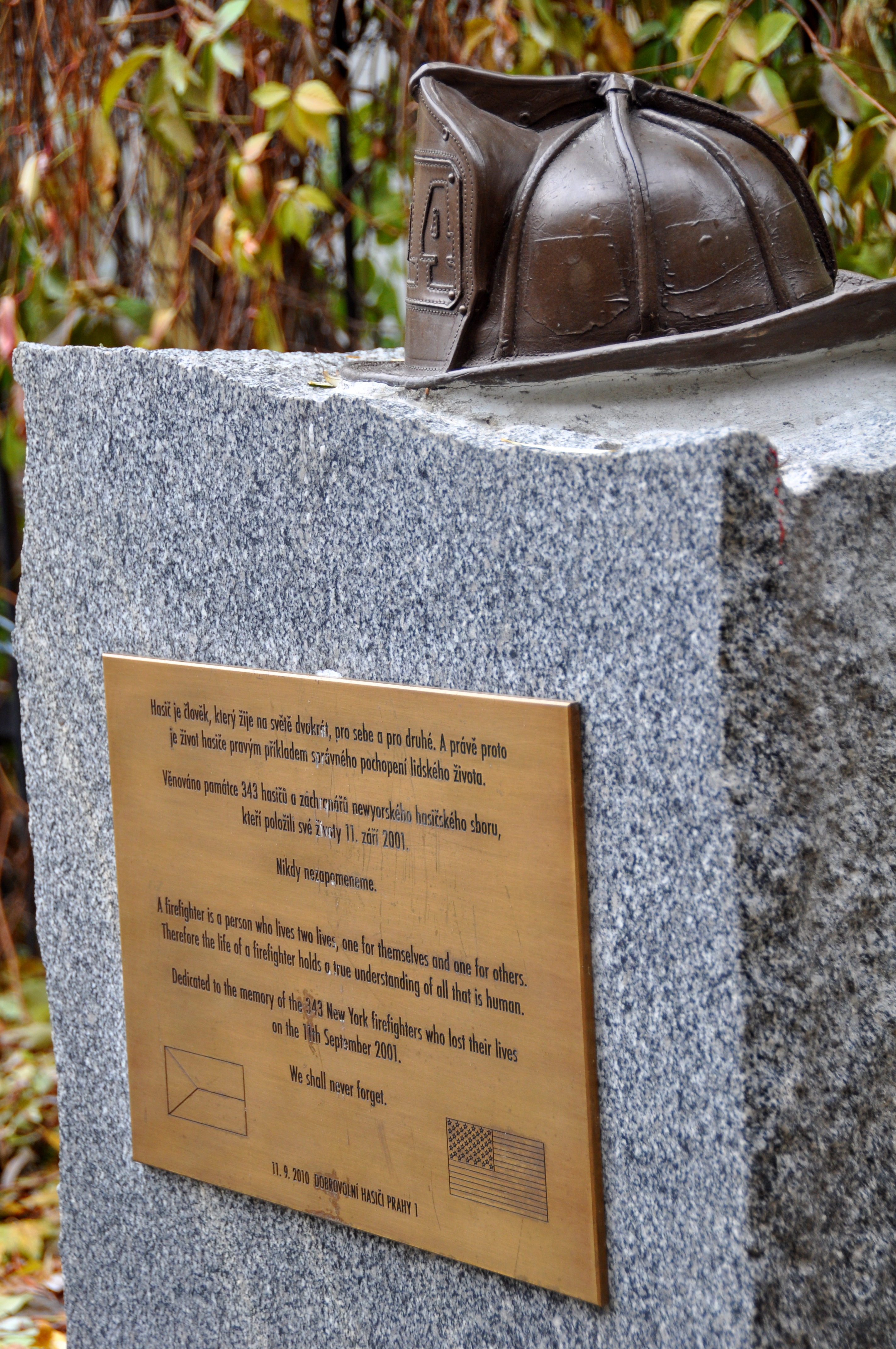
Firefighter’s Memorial – Tucked beneath Charles Bridge, we found this Firefighter’s Memorial.
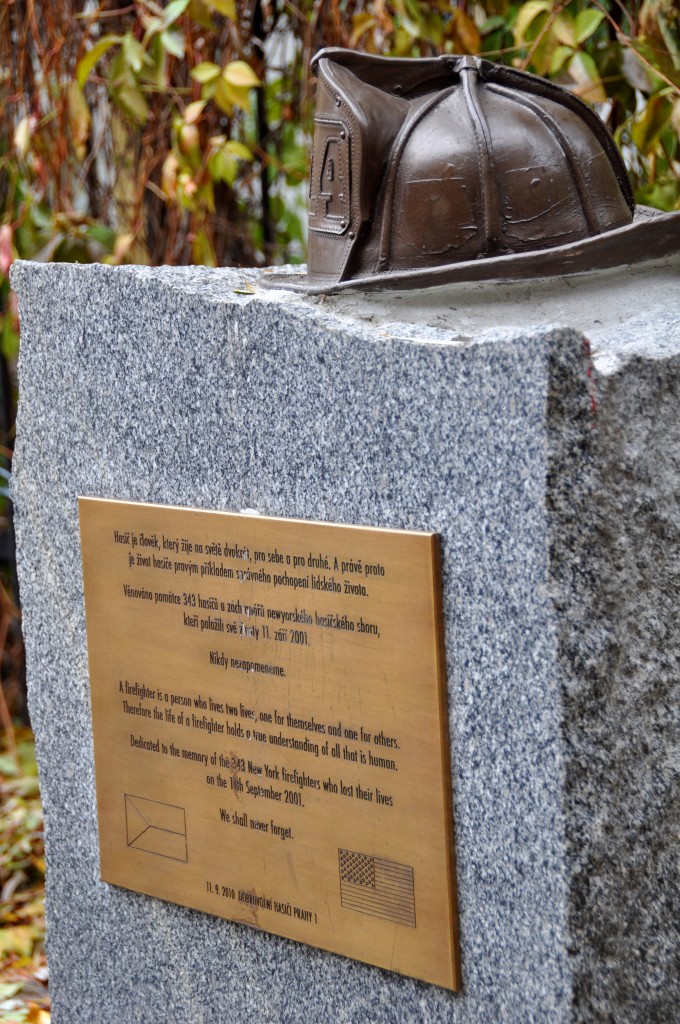
It reads: A firefighter is a person who lives two lives, one for themselves and one for others. Therefore the life of a firefighter holds a true understanding of all that is human.
Dedicated to the memory of the 343 New York firefighters who lost their lives on the 11th September 2001.
We shall never forget.
11.9.2010 Dobrovolní hasiči Prahy 1
The memorial was dedicated by a volunteer firefighting unit within Prague. To me, these discoveries reveal the true character of a city and its people, more than buildings and attractions. I don’t know why a group of Czech firefighters choose to raise a memorial to victims of an American tragedy, exactly nine years after it happened. I don’t know what ties any of these volunteers have or had with the US and the events of 9/11. What I do know is that it has been a very enlightening experience to live outside the United States, specifically in Germany, and especially during the past few pre-election months. I have learned, more clearly than ever before, that everyone knows what happens in the US, and more importantly, everyone cares. Be it iPhones, the President, or the lives of firefighters, everyone cares.
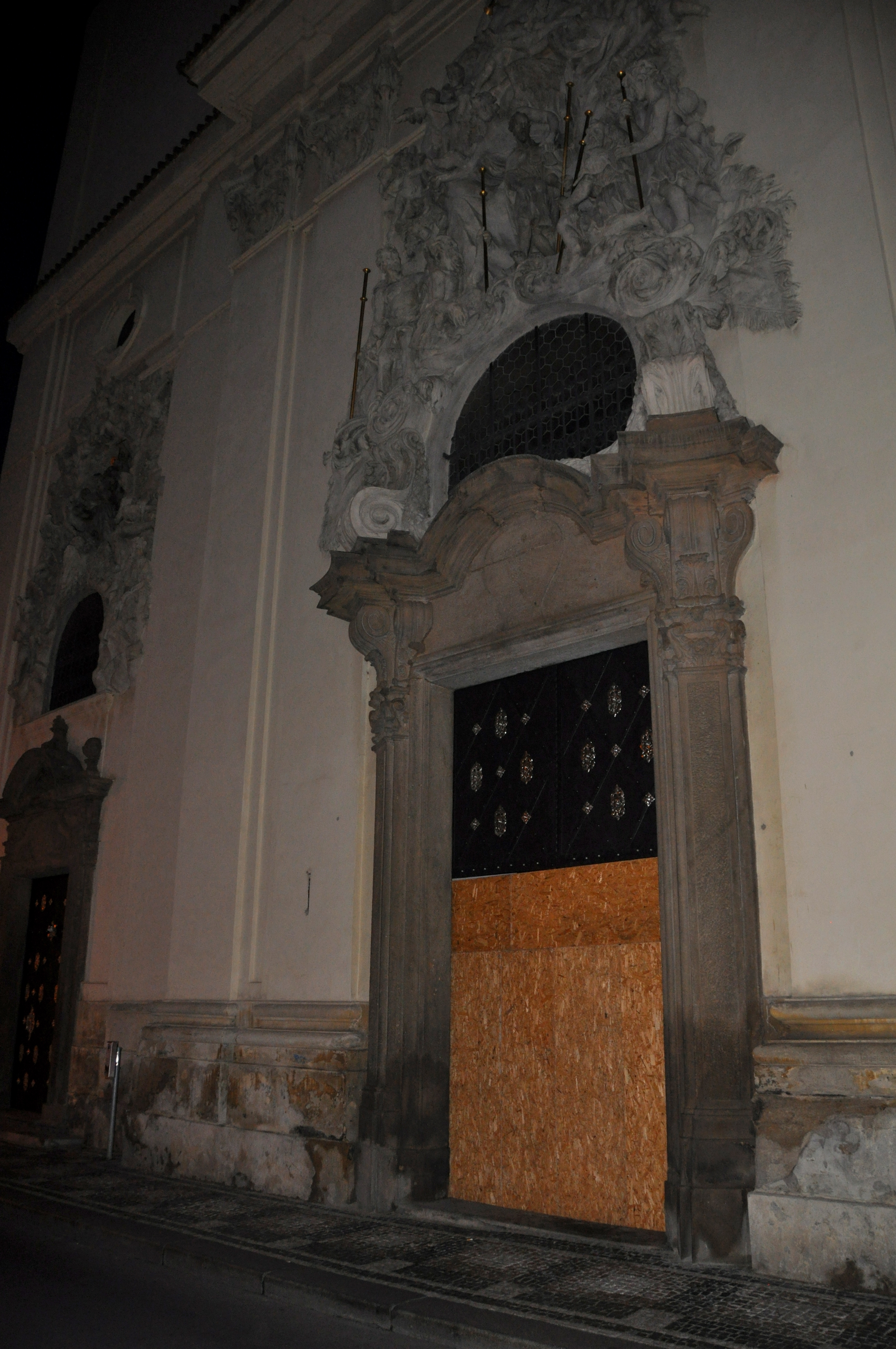
Church of St. James – Alright, here it is! My favorite part of Prague! We walked past this church several times, but were not successful at getting in. Apparently it has bizarre opening hours, but from the looks of the outside, who would really want to go in anyway?
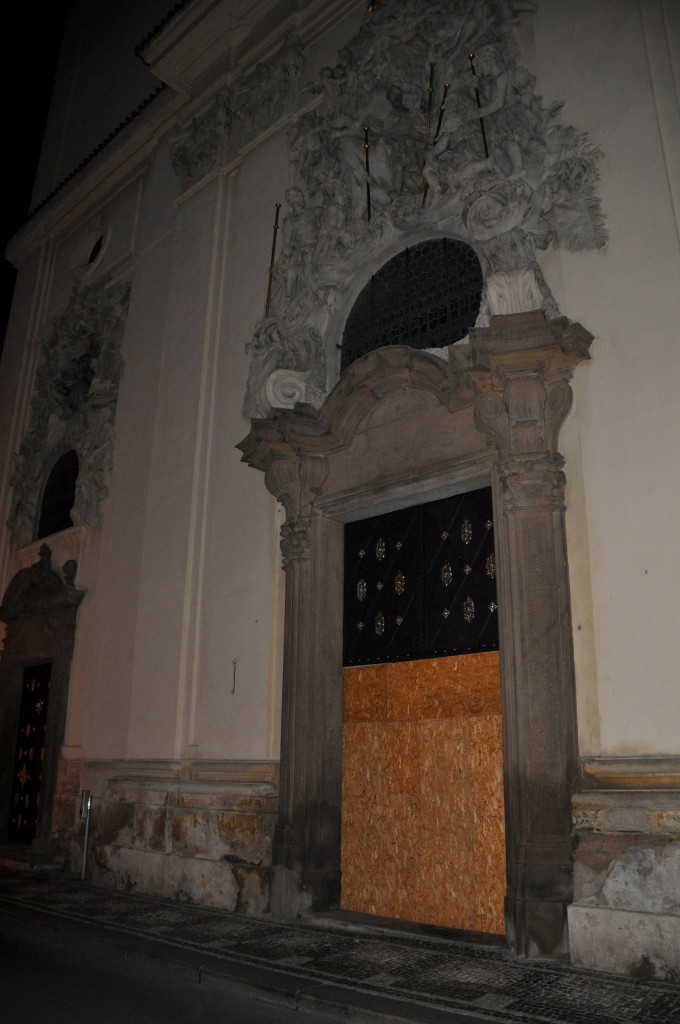
I mean, it pretty much looks like a crap-fest, right?
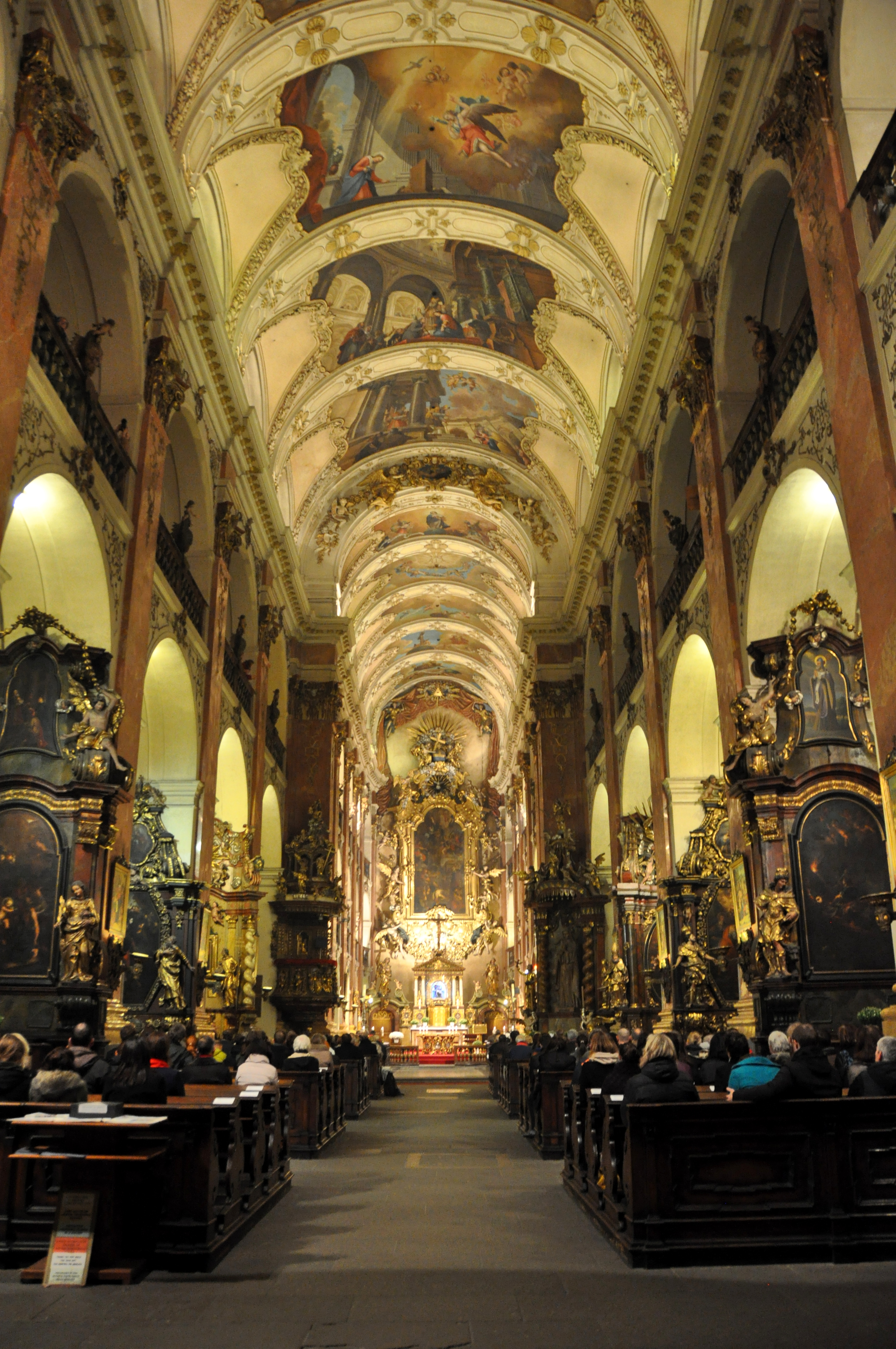
Finally, late one evening, I walked up to the door and heard music coming from inside. Joe, waiting across the street, had already assumed that we would be unsuccessful. I pushed on the door, and it actually gave way! Adopting the philosophy of “keep pressing on until someone stops you”, we walked (ever so quietly) into that evening’s Mass. The music that was coming from the choir and organ above our heads was astonishing. Like nothing I have ever heard before. I know I have been throwing around a lot of synonyms for unbelievable/amazing in this post, but it really was the most beautiful music I have ever heard. I should know…I’ve quit more than a few musical instruments in my time! Seriously, it was breathtaking.
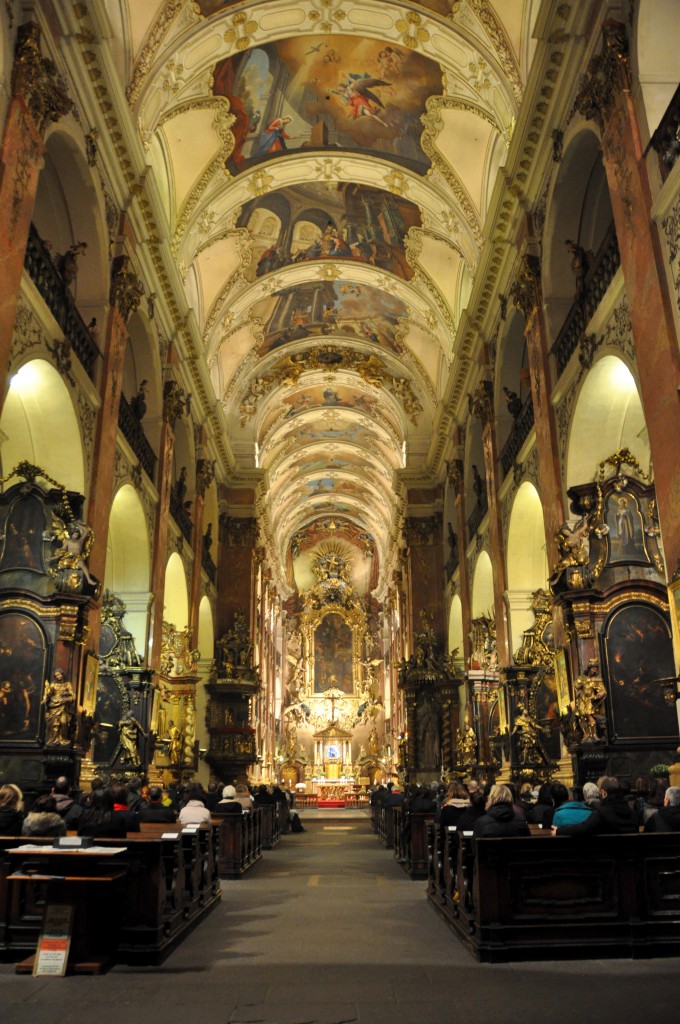
Quite a contrast from the outside.
Not nearly as amazing, but equally mind-boggling is the tale of St. James’ thief. Long, long ago, there was a pilgrim who traveled from a faraway land to worship at the feet of St. James’ Madonna. He stayed in the church and prayed the entire day, watching the verger carefully. As the verger was preparing to lock up the church for the night, the pilgrim hid beneath the pews, as to prevent being seen. Once all was quiet and still within St. James Church, the pilgrim emerged and approached the lavishly clad Madonna statue. He took off his “pilgrim” robe, revealing his true intent, and began to plunder the gold and precious jewels adorning the altar statue.
As he feverously worked, he felt something grasp his arm. The Virgin Mary had taken hold of him. He struggled, and pulled, and tried to free his arm, but her grip was too strong. He could not free himself. The strain was too great and he eventually fell asleep, hanging by his arm, at the altar.
The next morning, the clergy arrived and found the thief dangling from the altar. He confessed that he had deceived them and came to steal the Church’s riches. “Please, please,” he begged, “get me down from here. I will leave the Church, and its riches, and will never be seen again.” The clergy stood and thought for a while, and finally announced their decision. “Yes, we will cut the arm off, and you will be free.” They pulled up the sleeve of the thief and began to cut. “Wait, wait!”, he yelled. “What are you doing?” The clergy responded, “This statue is hundreds of years old. We couldn’t possibly cut off the Madonna’s arm.”
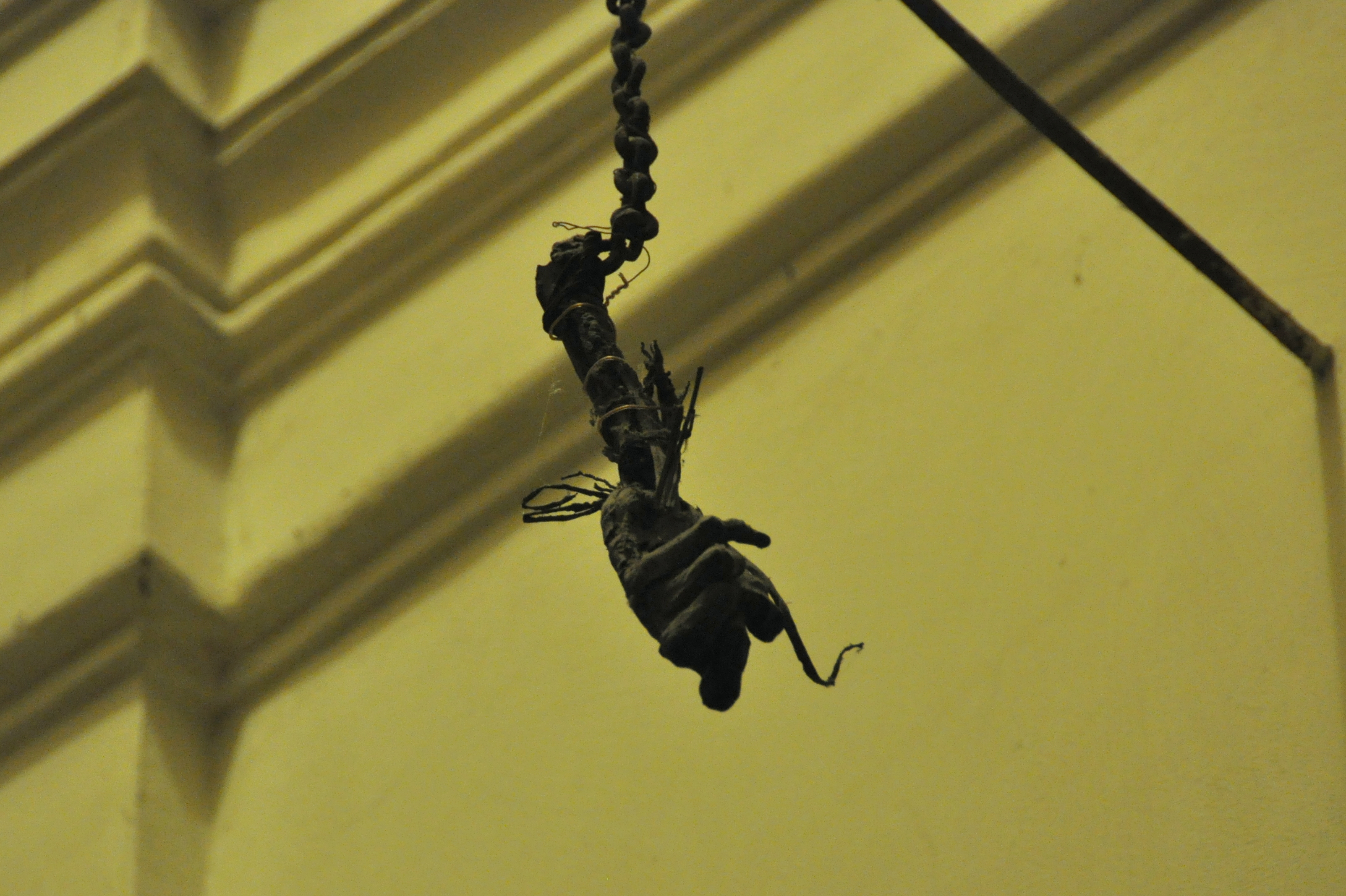
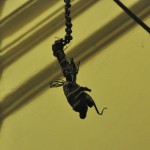 Realizing he had no other options, and that losing an arm was better than hanging at the altar for eternity, he consented. After the thief was freed from the statue’s grip, she released the arm. The 400+ year old, petrified limb now hangs inside the Church of St. James, as a warning to all would-be thieves.
Pretty cool, huh?! It’s the stories behind a city that really make it interesting!
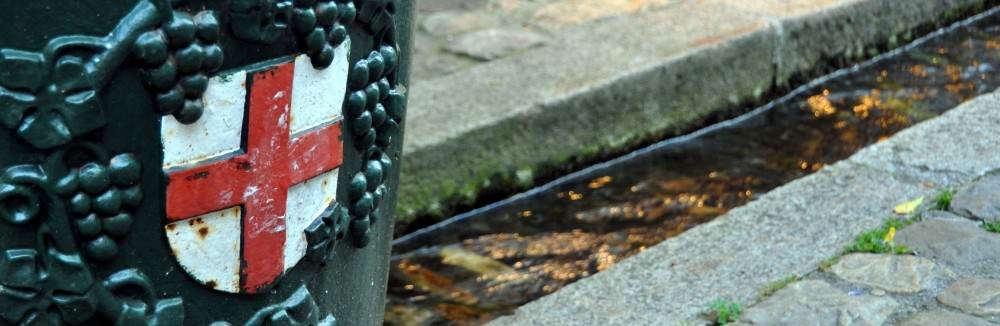
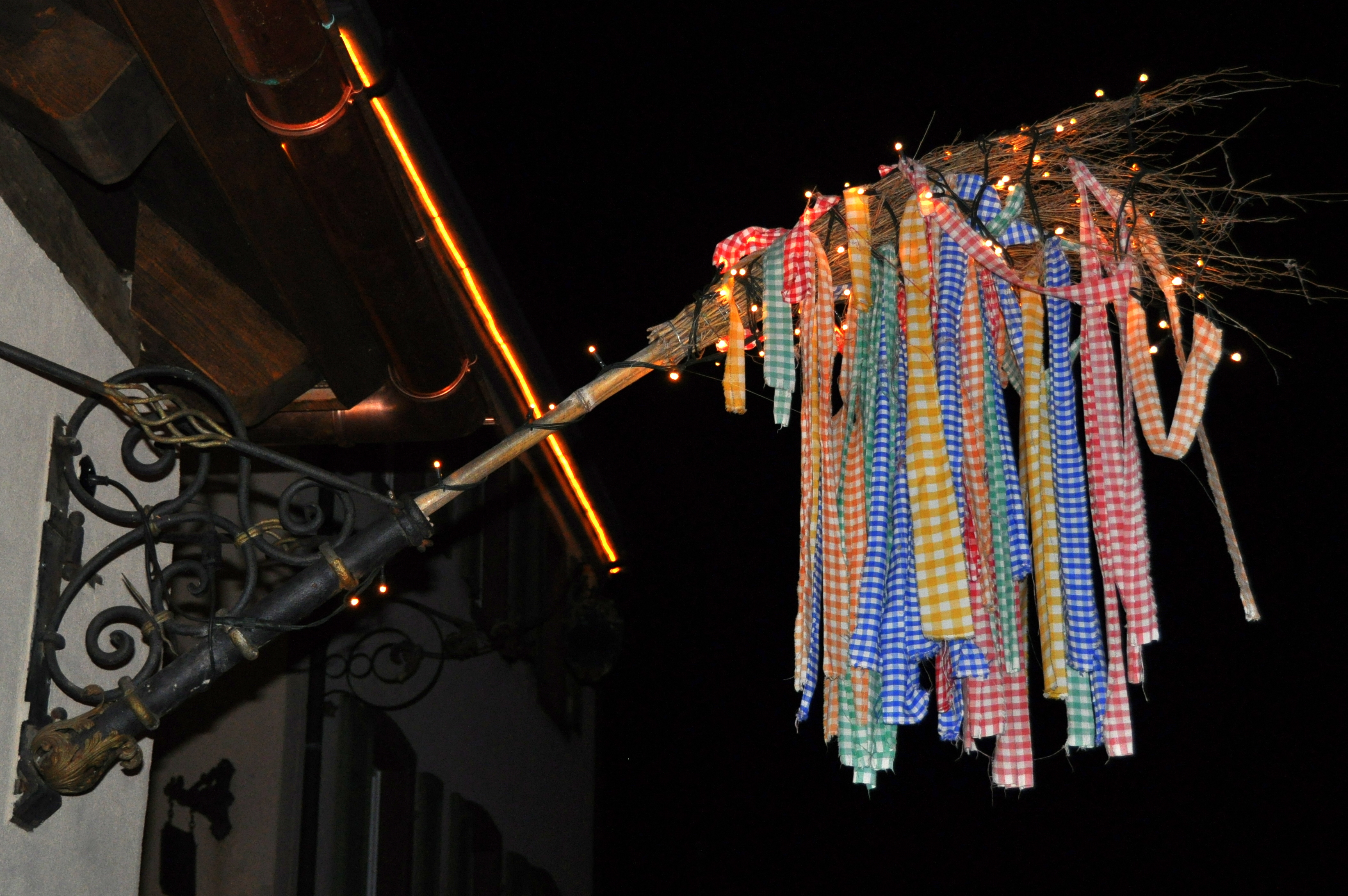 Basically, Strauβenwirtschaften are what I like to call “Germany’s secret restaurant society”. Outside of a website and a small pamphlet, which you can only buy at certain bookstores when it is available, there is no marketing. Word of mouth is the only way to go. Most don’t even have signs, just brooms hanging outside, subtly inviting informed souls inside for a respite.