Joe and I set out on Easter Sunday to road-trip around Germany and visit some sites! The main plans centered around UNESCO sites, but curiosity led us to lots of other places! I must say, we saw some amazing churches along the way. They just don’t make ‘em like this in the United States!
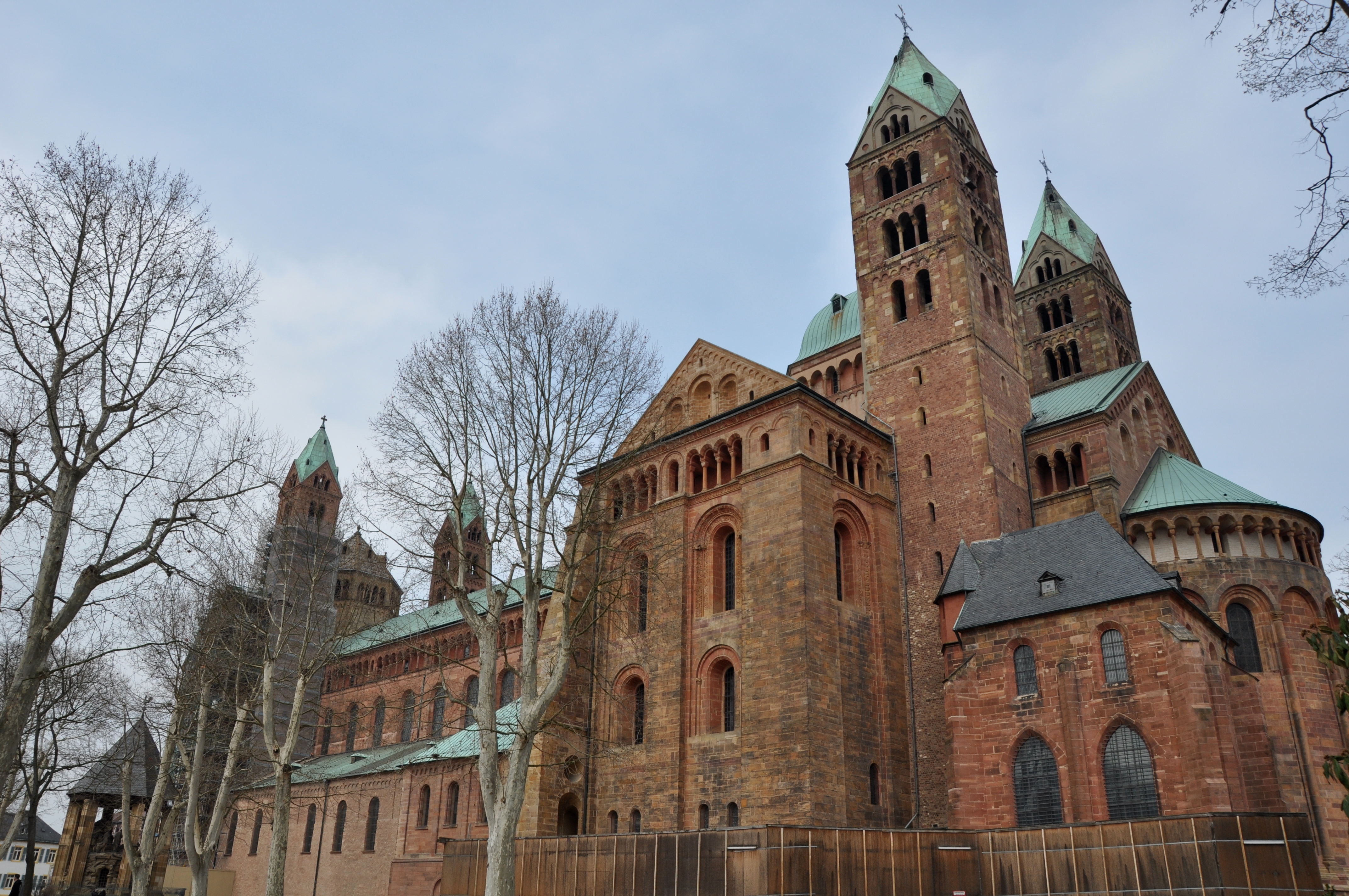
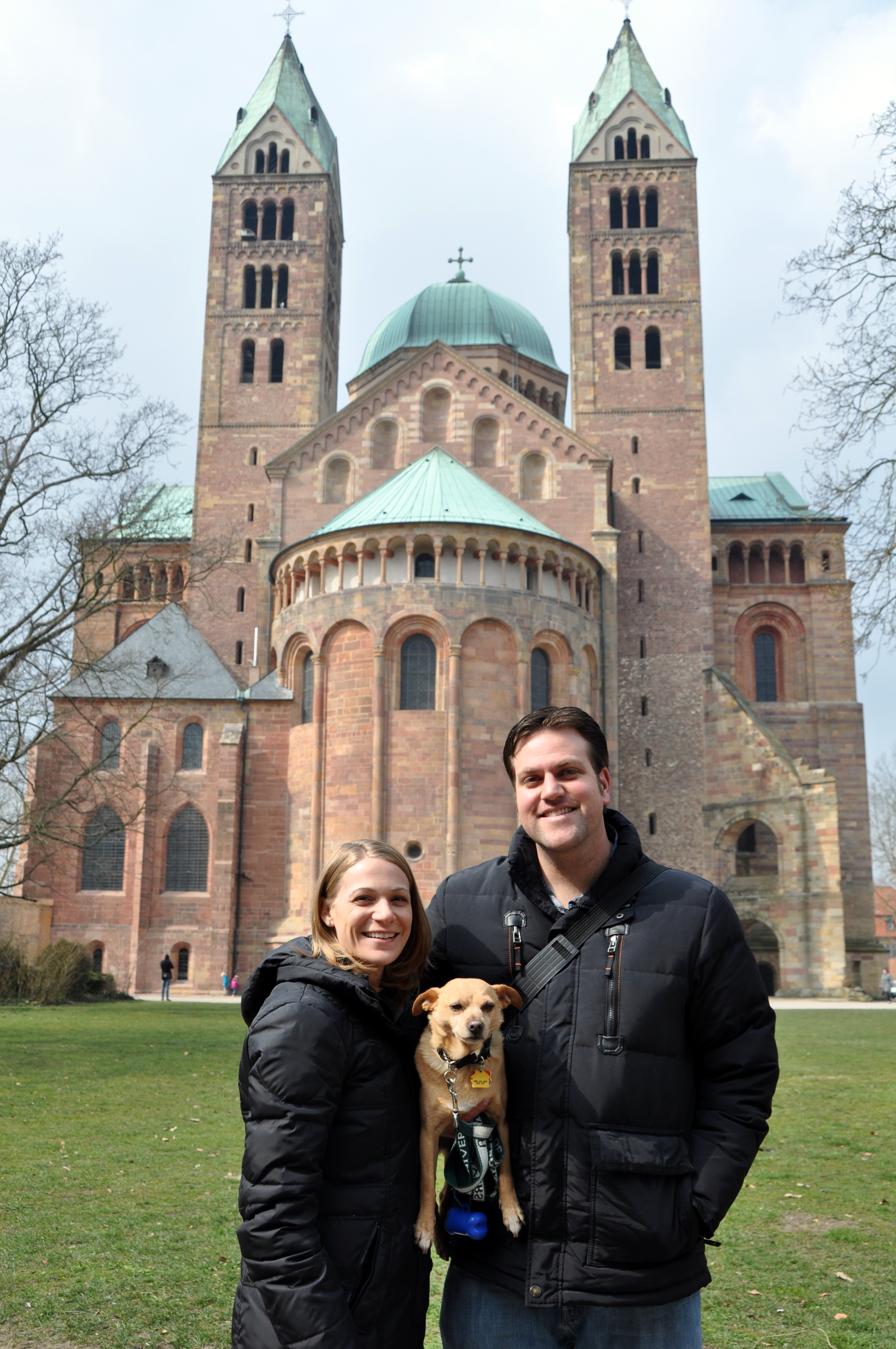
Speyer – The Kaiserdom in Speyer touts itself as “the greatest roman church in the world” and is where we spent Easter. Construction began on this massive Cathedral in 1030 and the crypt holds no less than 12 tombs of emperors, kings and queens. The four massive columns represent the four seasons and the four directions in which the power of the Salian dynasty spread.
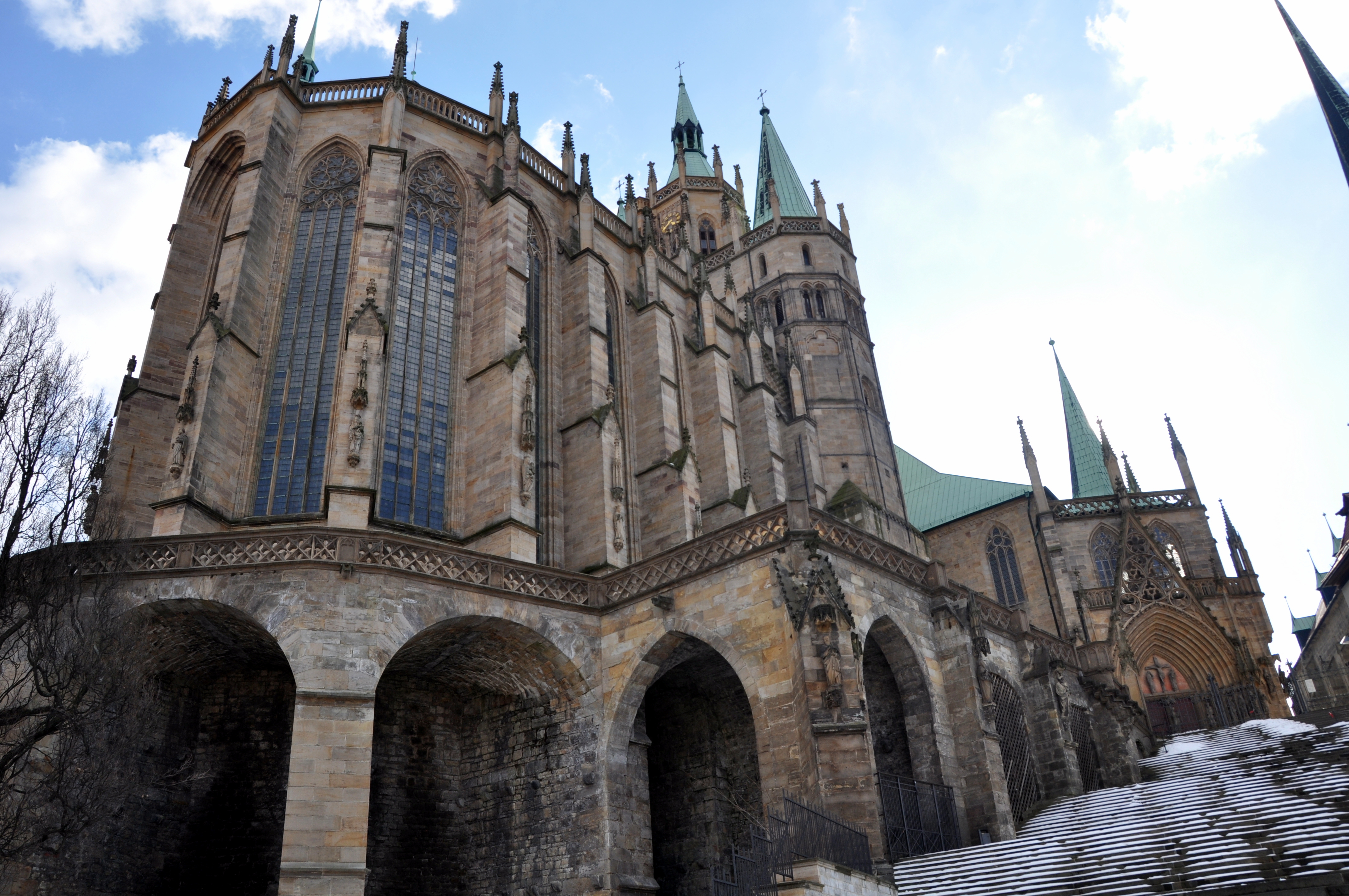
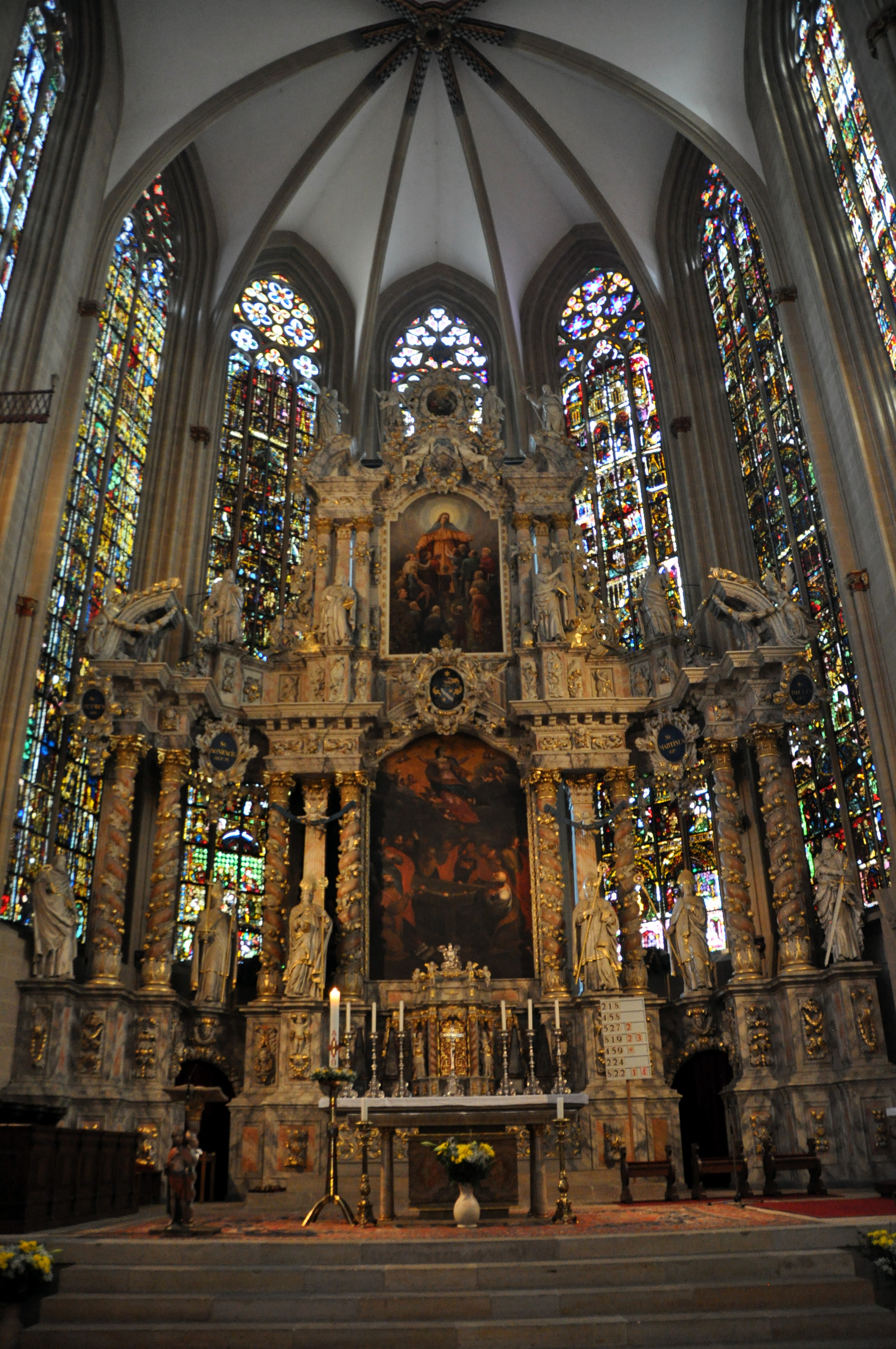
Erfurt – The Dom in Erfurt, in combination with the Severikirche, make the Domplatz a remarkable site! Behind those stained glass windows on the left was the most amazing alter! It was huge, covered in gold plating and surrounded by 14th century glass.
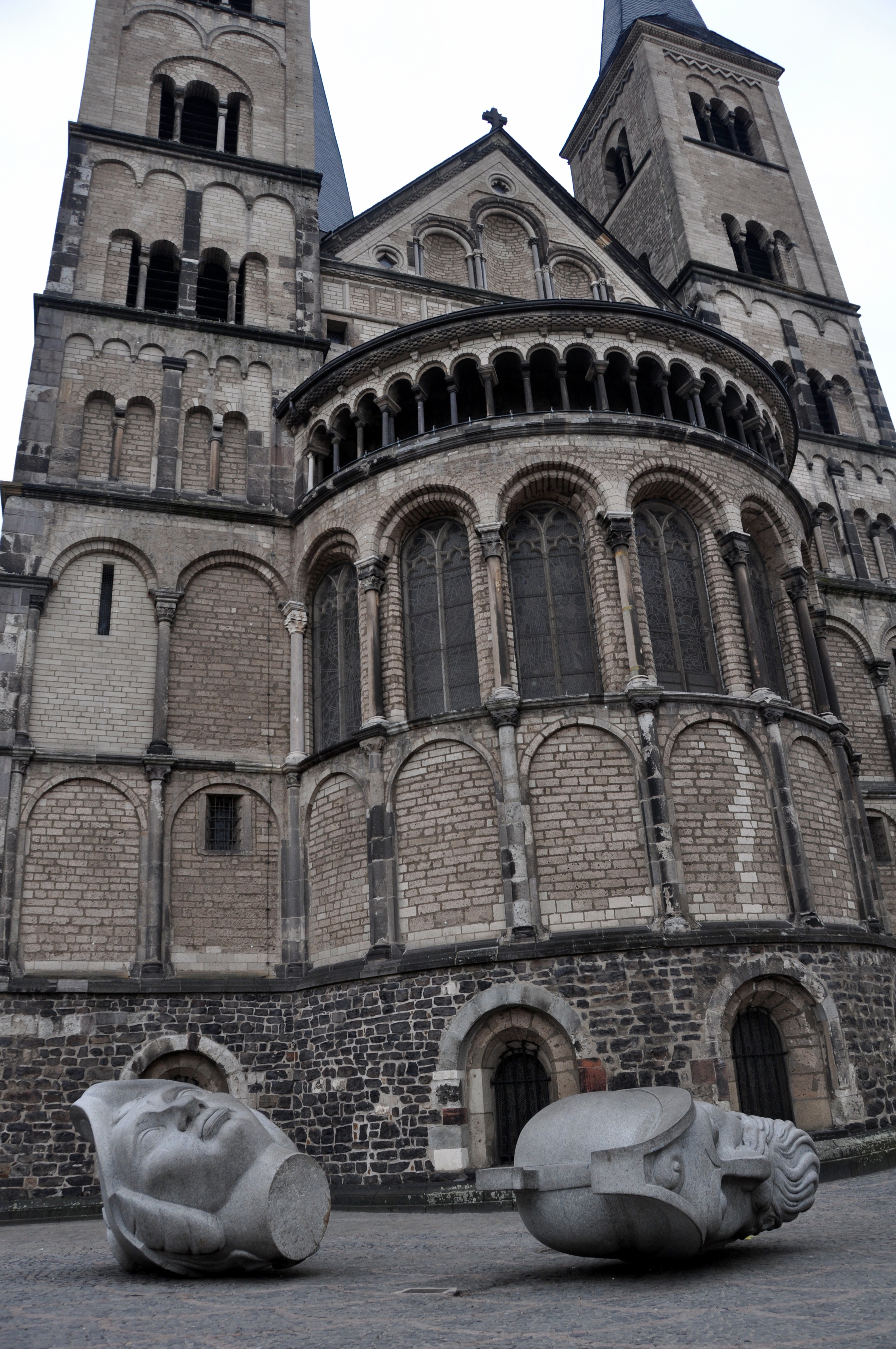
Bonn – The Münster in Bonn has two interesting sculptures outside. They are the heads of Saints Cassius and Florentius, who were believed to be beheaded where the Münster now stands. The sculptures themselves are really big, about shoulder height!
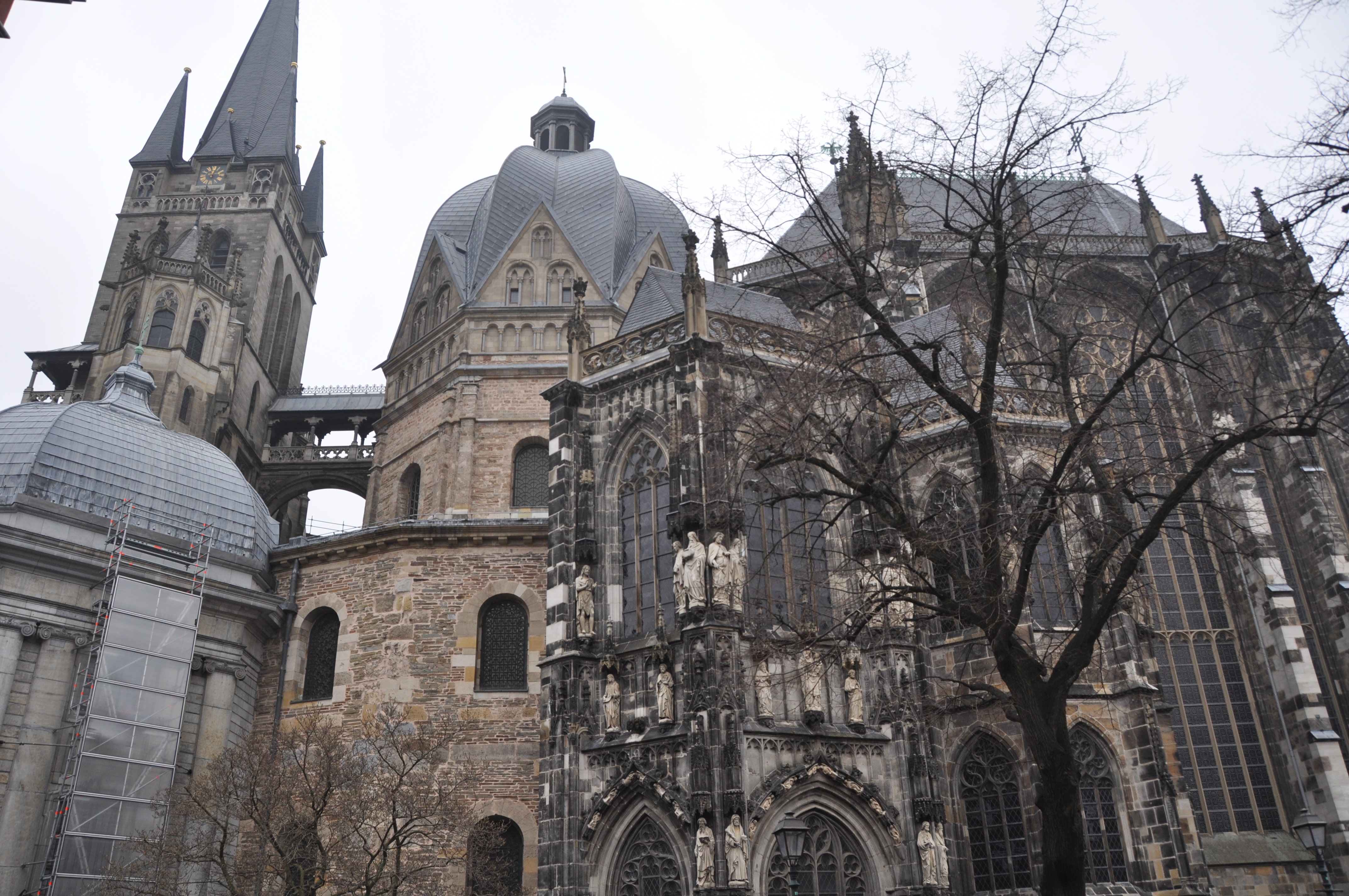
Aachen – The Cathedral in Aachen, also a UNESCO site, was definitely my favorite. Built by Charlemagne in 805 AD, it was Germany’s first World Heritage site. Luckily, it survived both World Wars with minimal damage.
 Inside the Cathedral, the Palatine Chapel is lined with 32 columns in an octagonal shape. These columns are original and were brought from Rome and Ravenna by Charlemagne himself. They were kind of like his souvenir collection! Deceptively, the columns are actually not load-bearing. They are purely for decoration and the building would remain standing if they were removed. The bronze grills between the columns are also original, and were cast in Aachen during construction of the Cathedral.
 Pilgrims have been flocking to Aachen’s Cathedral since the 12th century. They have been coming to see the remains of Charlemagne (resting inside in the Shrine of Charlemagne), as well as the dress of the Virgin Mary, the “nappies” of the infant Jesus, the loin cloth of Christ and the decapitation cloth of St. John the Baptist (all four resting in the Shrine of Virgin Mary). Quite an interesting combination! Joe and I discussed for a while what other relics the “nappies” of the infant Jesus could possible contain, but that is only speculation! Scientists used pollen found on the relics to verify their authenticity, tracing it back to a plant that was known to exist in the region during the time of Jesus’ life. Man, I love science!
The shrines are opened every 7 years for pilgrims to view. The next visitation is scheduled for 2014, so start your planning! A clear glass wall is built around the shrines within the choir and almost 1 million pilgrims line up to file past. Interestingly, the opening of the shrines is the single most important economic event for the town of Aachen.
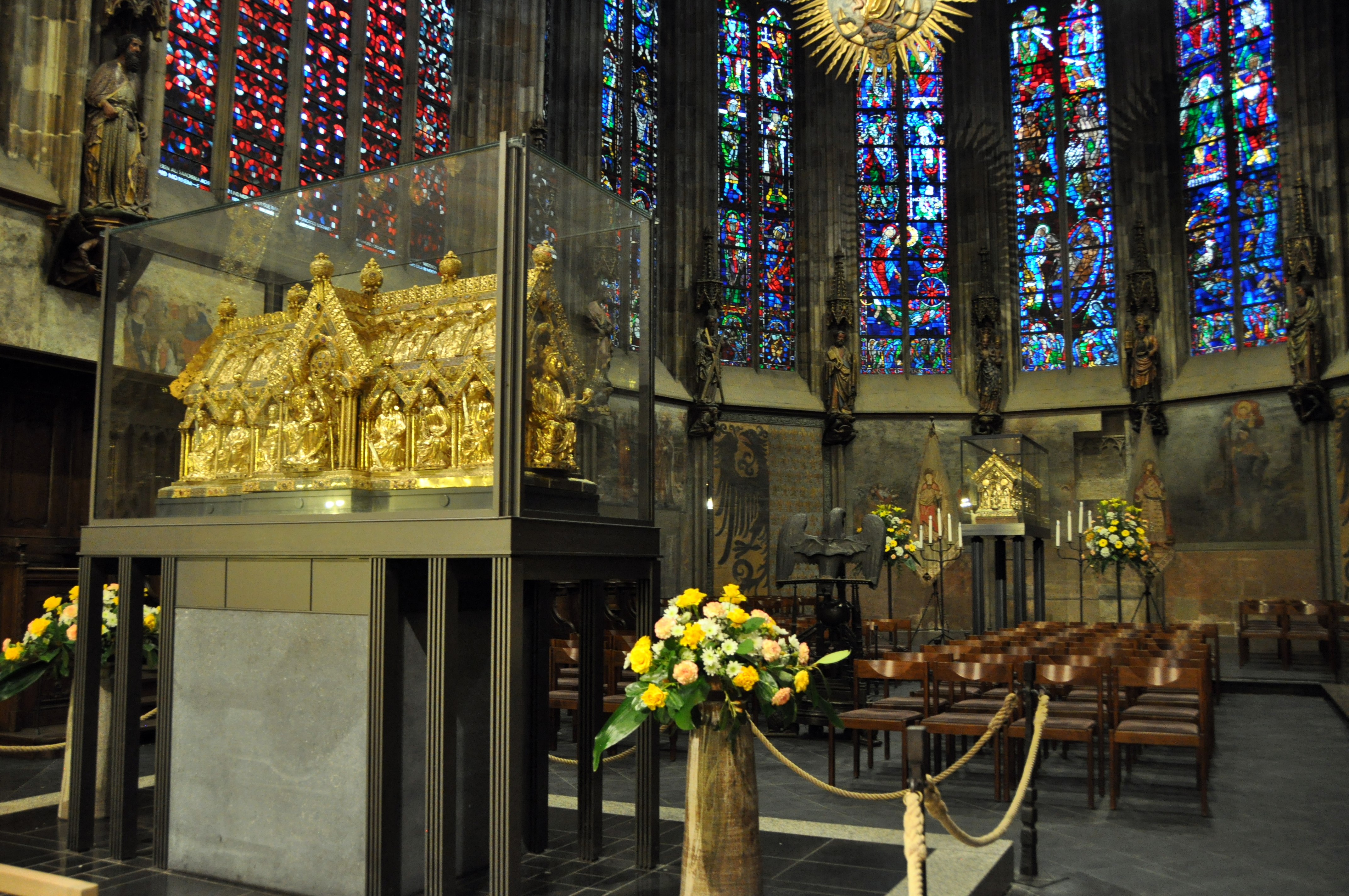
Shrine of Virgin Mary in front, Charlemagne in back
Alright, stay tuned for the not-so-holy parts of our Holy Road Trip!