Sevusevu

Before any visitor can enter a Fijian village they must first be blessed and welcomed by the village Chief and Elders. This occurs at a “sevusevu” (kava ceremony). Kava is a shrub, whose scientific name translates to “intoxicating pepper”. It is actually the root of the plant that is important in many Pacific cultures, and a part of daily life in Fijian villages. The visitor must bring an offering of kava root with him/her to present to the village Chief. The offering is then blessed and made into a drink to be shared during the sevusevu. Once you have been blessed by the Chief and drink your kava, you are then welcome in the village!

Kava root

Kava root

So, even though we had already been staying in Nataleira for a day, we were technically still not allowed to enter the actual village. Here enters our sevusevu and first taste of kava!

Once we were properly dressed (shoulders and knees covered), and ready with our kava root offering, we walked down the beach to the location of all important civic events within the village. Before entering, we had to announce our presence and desire to enter by shouting “bongi”, which means dark. With this word the visitor is actually giving voice to the darkness, because back before there was electricity, village members couldn’t see approaching visitors. We were then given permission to enter and sat down with the Chief and Elders. The kava root was presented and blessed, with a whole lot of Fijian that we obviously didn’t understand.  Five kava roots were used, to represent the five countries of the visitors.

The ceremonial drink is prepared in a large bowl, called a tanoa (kava bowl). The kava root is ground into a powder and then placed in a small bag which acts as a strainer. Water is poured over the bag as it is massaged and wrung out over the kava bowl. Voila! The kava is now ready to drink!
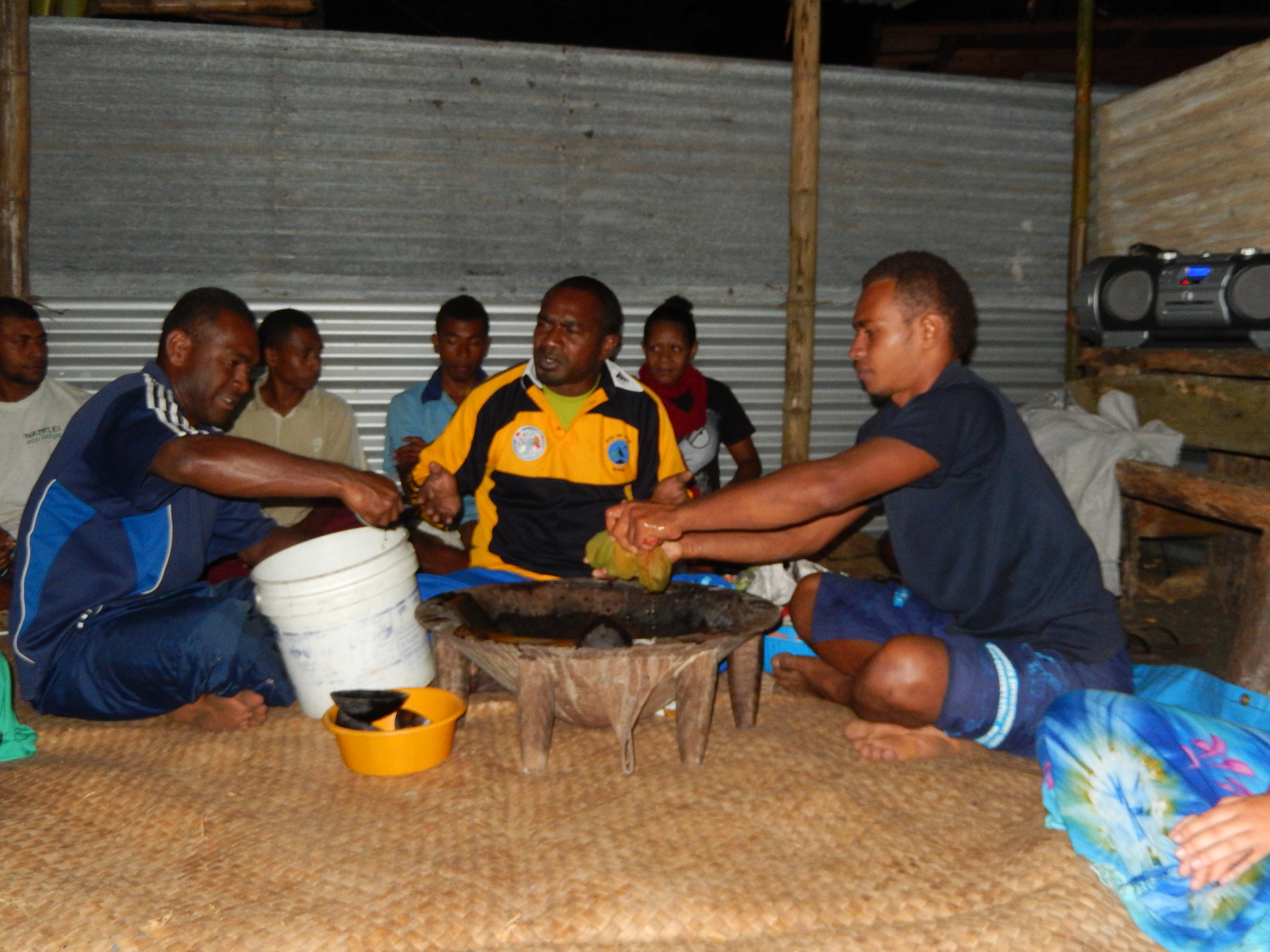
Massaging of root and addition of water from white bucket.
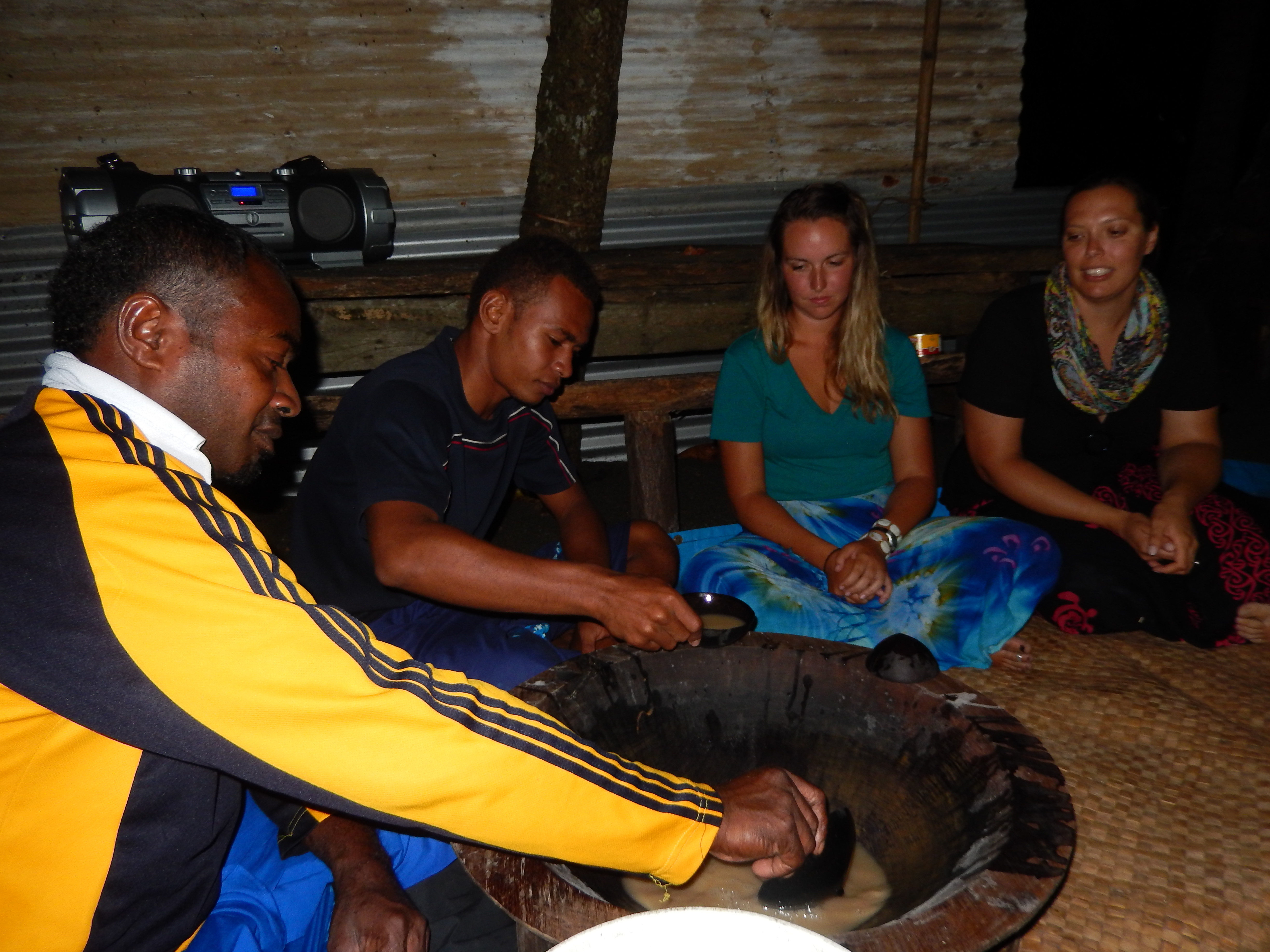
Massaging of root and addition of water from white bucket.

Finished product.

Finished product.

Maybe you’re wondering if we are sitting in a 3-sided, corrugated tin shack with a palm leaf roof…we are. Maybe you’re wondering if those coconut shells are going to be used as communal drinking cups…they are. Maybe you’re wondering if there is also a very large boom-box from the 80’s…there is.

After the kava was prepared, it was time to drink! During a sevusevu, only one person drinks at a time, with everyone else watching. When offered a coconut shell of kava, the recipient must clap (with cupped hands, no flat cheerleader hands allowed), say “bula” and then drink the entire serving. As someone is drinking, everyone else claps three times. When you are done, you hand the empty coconut shell back and everyone says “maca”, which means empty or done, and then there is more clapping. Sound confusing and awkward? It was…but a wonderful experience nonetheless!
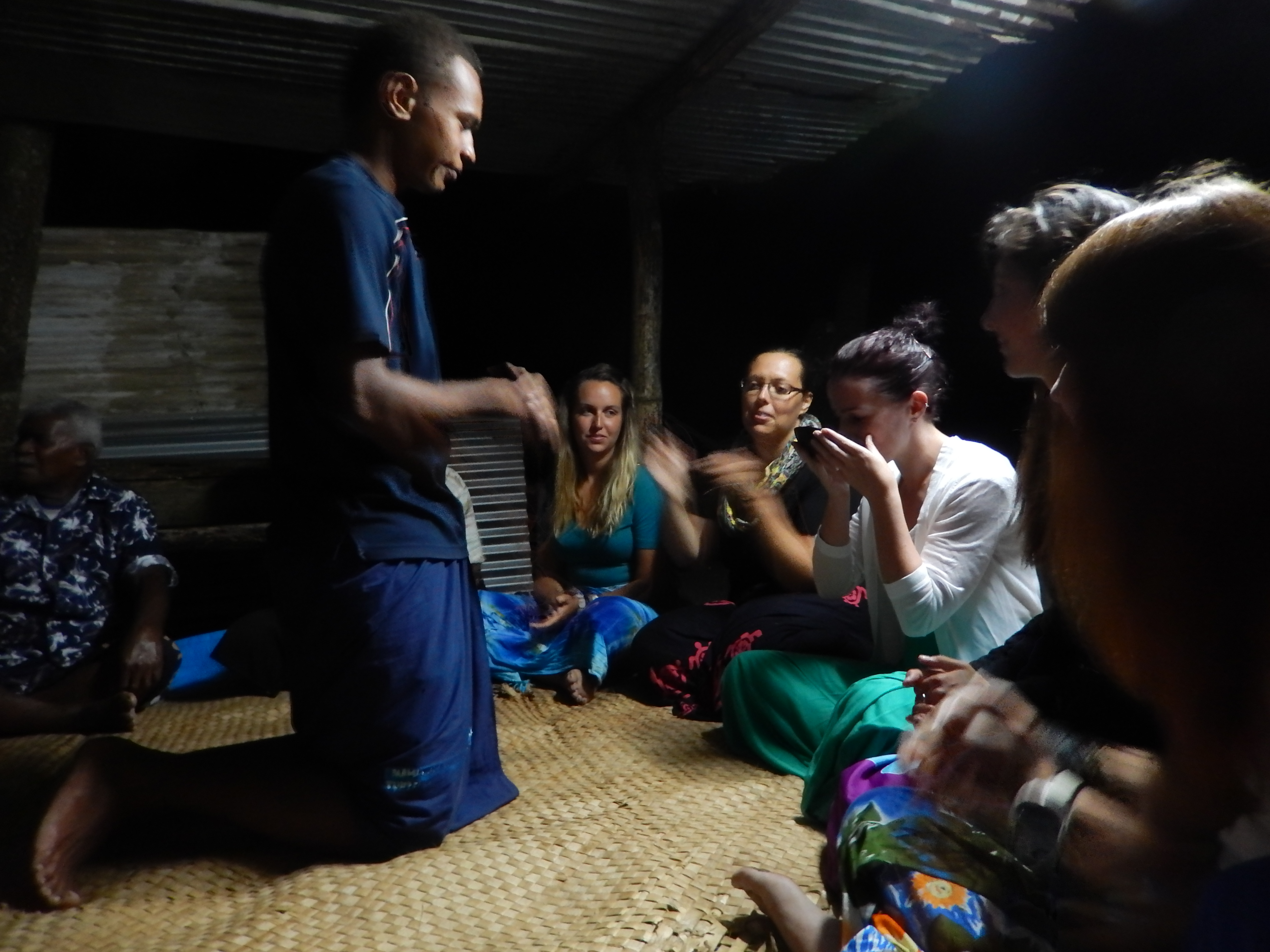
Andrea drinking

Kava doesn’t contain any alcohol, so people don’t get drunk per say, when drinking it. It does, however, have anesthetic properties. So about a minute after drinking, your tongue and lips start to tingle and go a bit numb. Eventually, enough rounds will make you super relaxed and sleepy. The first round of a sevusevu is always obligatory, in order to be officially welcome in the village, subsequent rounds are voluntary. Maybe you are wondering if it tastes exactly like the mud-water it appears to be…it does!

After everyone had their first round, the men started making some more. One man in particular began to ask me questions. He wanted to know where I was from in the US and whatnot. His curiosity stemmed from the fact that he had just married a girl from Texas a month ago, in this same tin shack. She was working in the village with the Peace Corps, but is now in Maryland. He is currently working on his paperwork to get to the States.

After our little chat, he presented me with a cup of kava and said, “For America.” Ok…it was hard to turn that one down, so I was apparently kicking off the next round! I don’t remember exactly what I said as I worked through the clapping and Fijian words and accepted the drink, but obviously it was a crowd-pleaser!
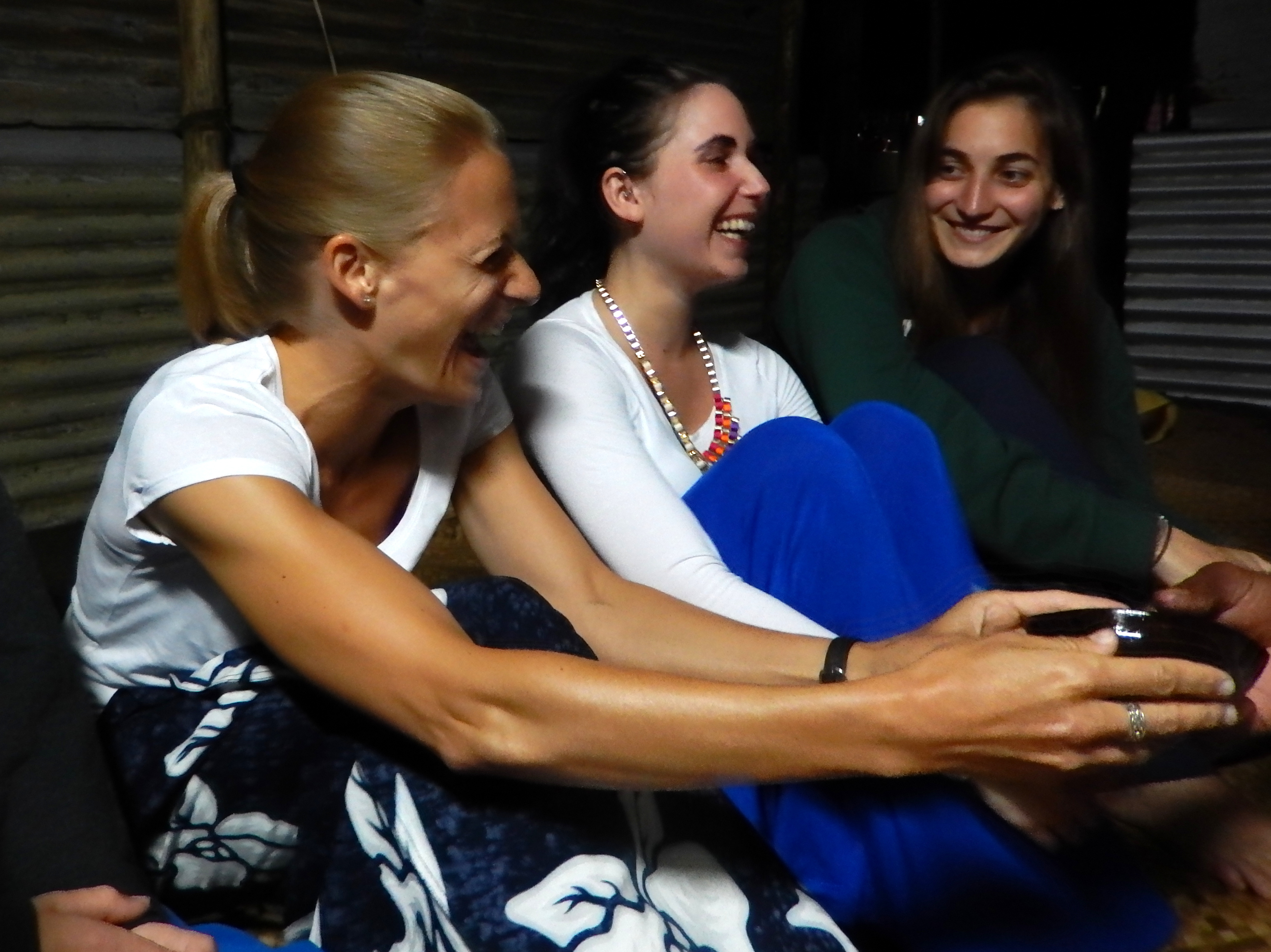
laughing sevusevu

Several rounds (which everyone accepted, as not to be offensive) and lots of clapping later, it was time for music and dancing. Here entered the boom-box.

First we listened to a few traditional Fijian songs as more rounds of kava went around. Then, the Elders left and the young guys took over as DJs! Think: Maroon 5/Justin Bieber/Miley Cyrus remixed and digitally altered to encompass rapping, techno beats, and steel drums. The “island” versions were actually better than the originals!!

In order to dance, you must be tapped on the back by someone, or told to dance by an Elder. When a song is over, everyone sits back down and waits for the next song…and maybe another tap on the back!!
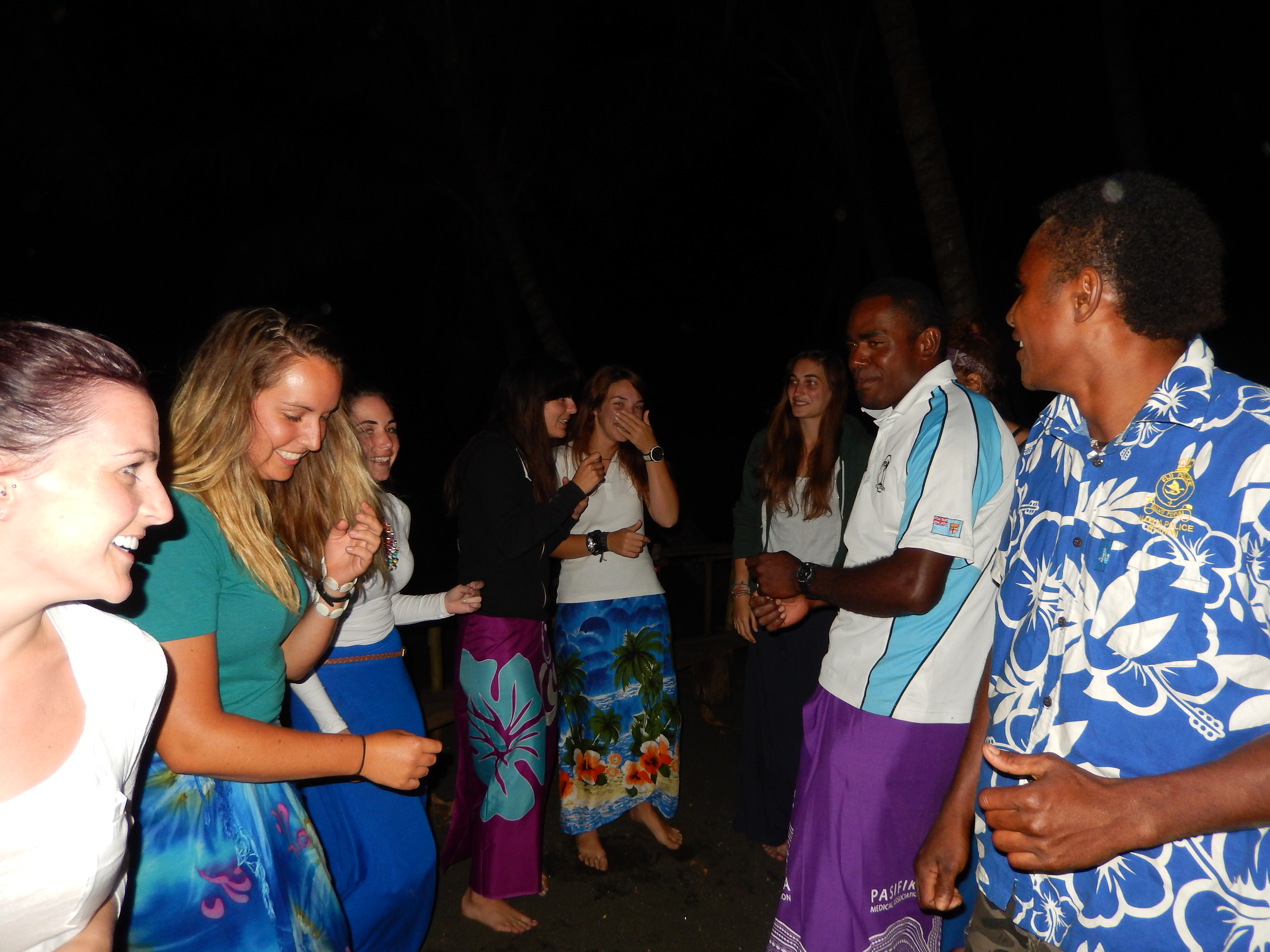
Group dance dictated by the Elders.
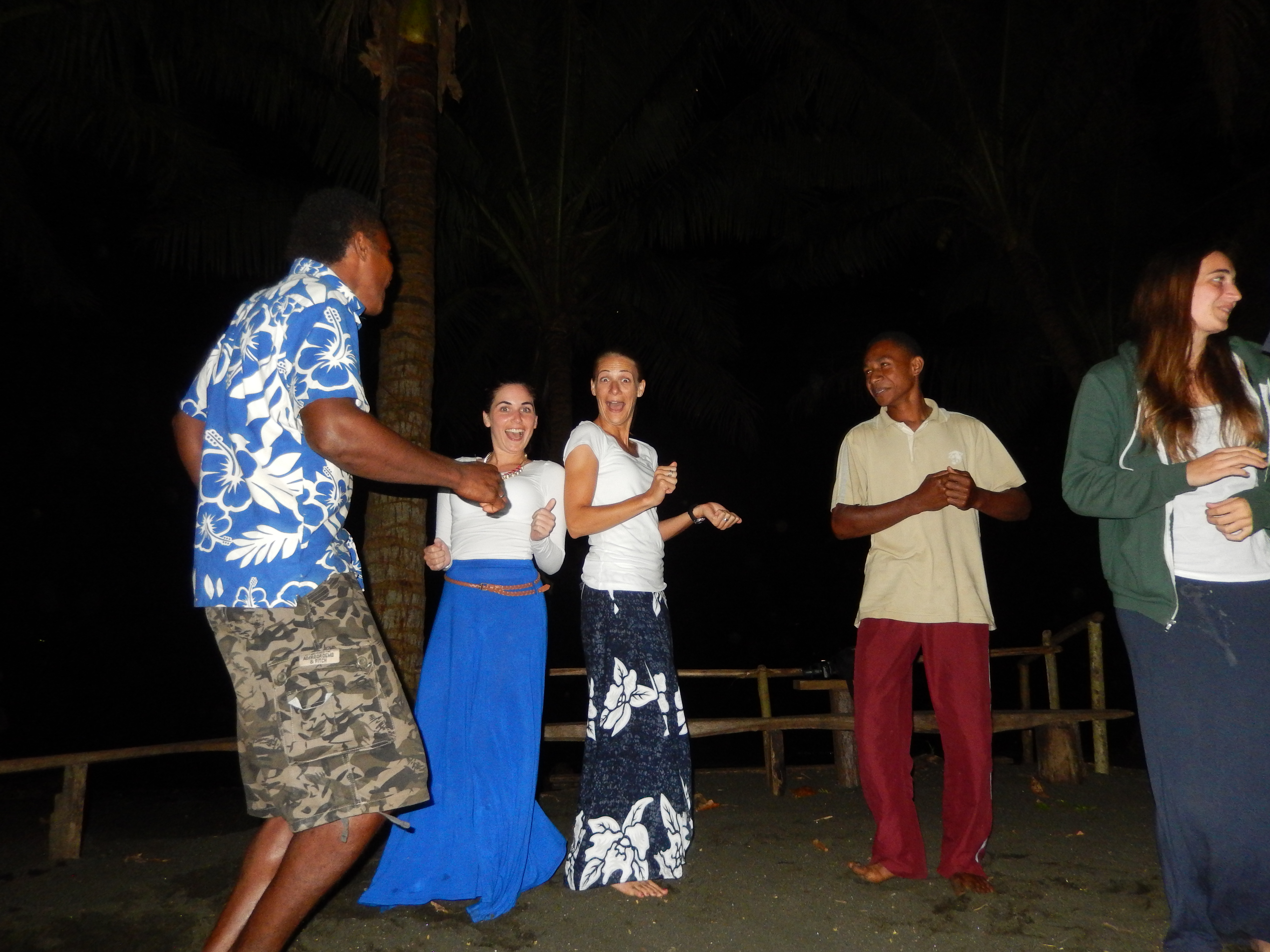
Group dance dictated by the Elders.

The boy in the red pants asked me to dance like 5 times. He was probably half my age.

The boy in the red pants asked me to dance like 5 times. He was probably half my age.

I must say…the Fijians love to laugh! Whether they were laughing at us or with us was impossible to tell. Regardless, there was a lot of laughing during our dance-fest, and not just by the Fijians! My first sevusevu was actually really fun! It was an unbelievable experience that I never could have imagined.
Studying Babale

So…finally…the entire reason for this incredible journey: babale! (Fijian for dolphin!)

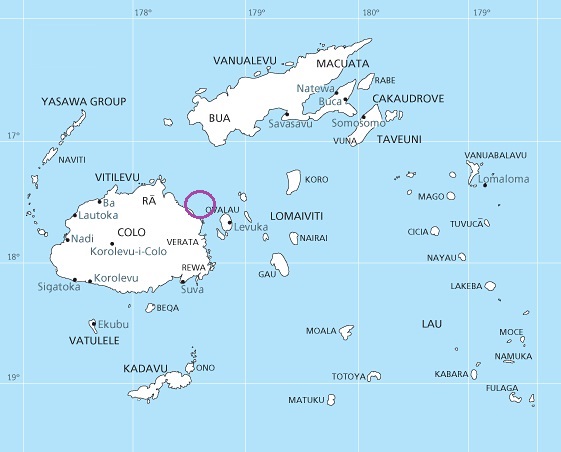
Moon Reef sits 7.3km off the eastern coast of Viti Levu and is home to a very unique Spinner dolphin pod.

moon reef

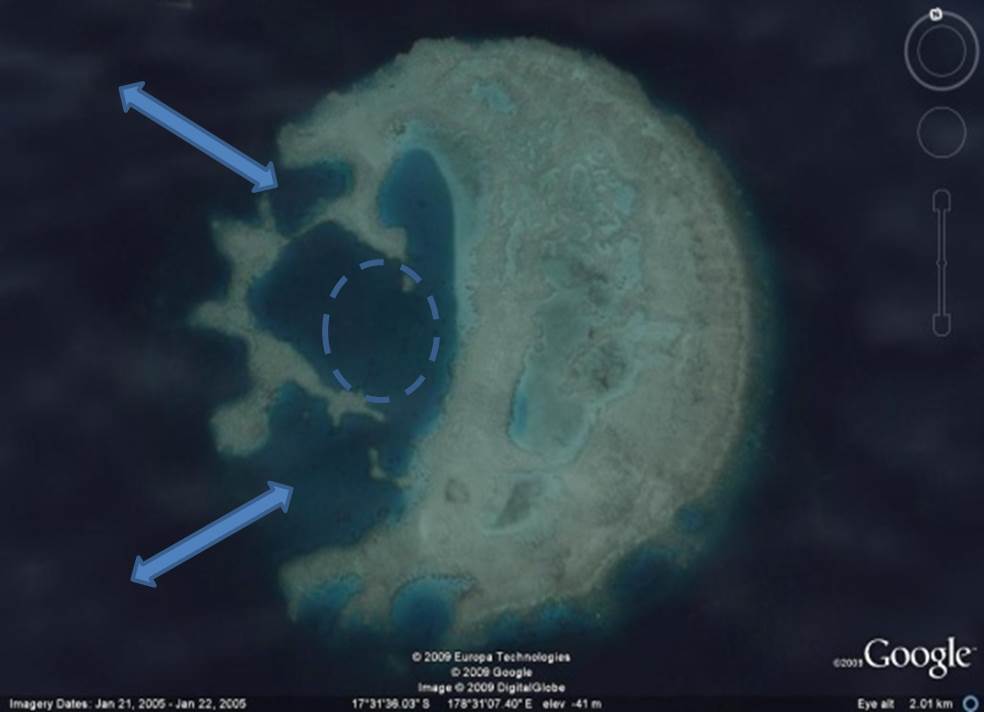
Every day the dolphins do the same thing: around 4-5pm they leave the reef, swimming to deep passages to forage during the night, and then return to the reef between 6-8am to rest. They never stay in the reef overnight, as then they would miss their only meal. The reef is shaped like a moon with only two points of entry/exit, making it a safe and calm place for this pod of +/- 50 dolphins to recuperate from their journey and enjoy their food-coma.

Google Earth Moon Reef

Most dolphin pods migrate between cold foraging waters and warm nursery grounds, or follow the migration of their prey species. The site-fidelity of this group is exceptionally uncommon. The plus side of this being that this predictable behavior is very helpful when it comes to research. On the flip side, it also makes them a prime target for harmful tourism practices.

Research on these dolphins occurs only three times a year and is carried out exclusively by volunteers. There is a Master’s student and Postdoc from University of South Pacific who conduct long-term analysis of the data, but the heavy lifting is 100% volunteer-run. The goal is to create a baseline of data from which changes in health and behavior due to the impact of tourism can be monitored. In another years’ time, the data will be ready to be presented to the village Elders and the Whale and Dolphin Conservation.

The research focuses on three main elements: acoustics, behavior scan sampling, and photo-identification.

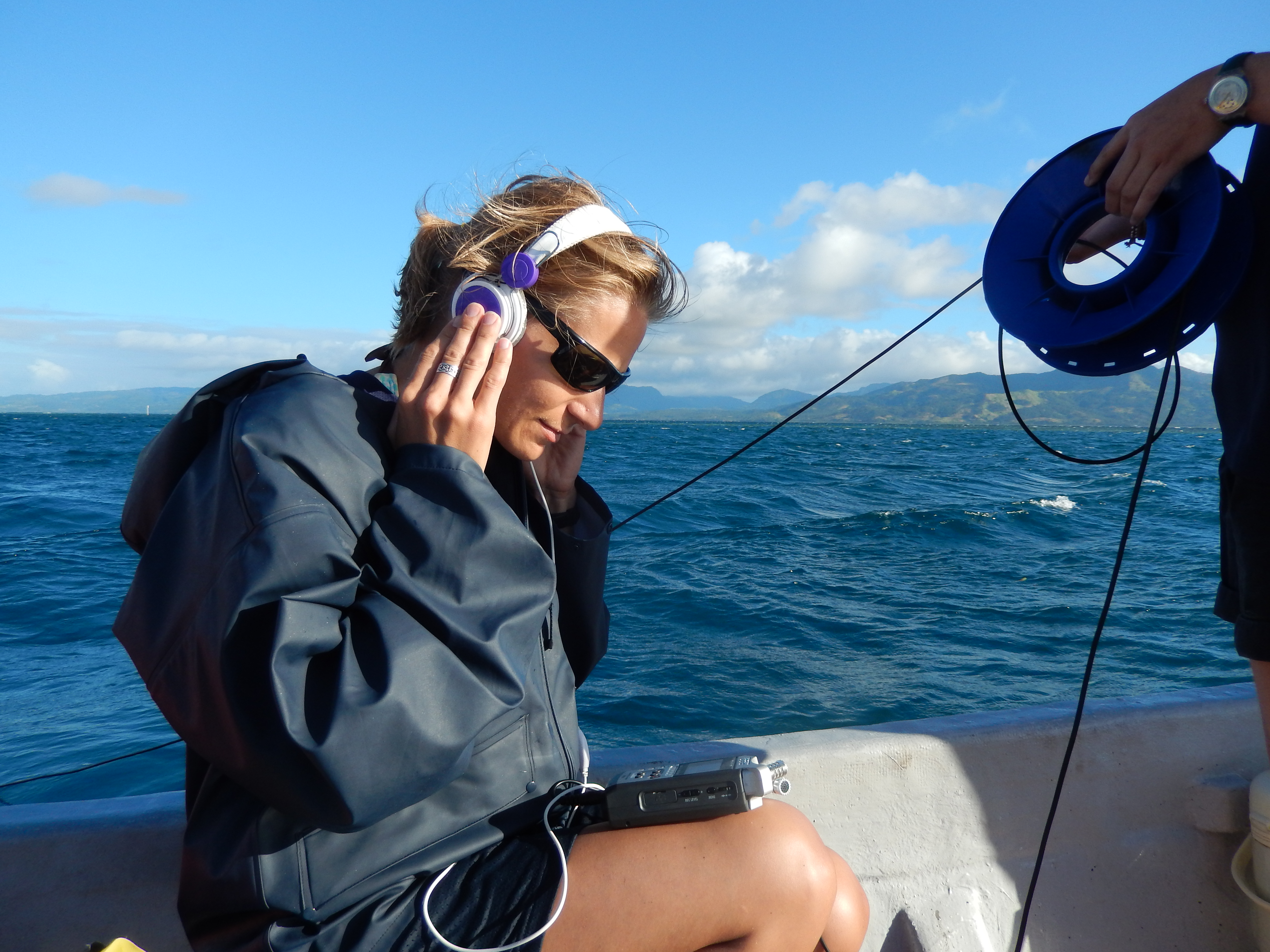
Acoustics – Used to quantitatively assess behavior, we deployed two hydrophones to listen to and record the communication and echolocation between the dolphins.

acoustics

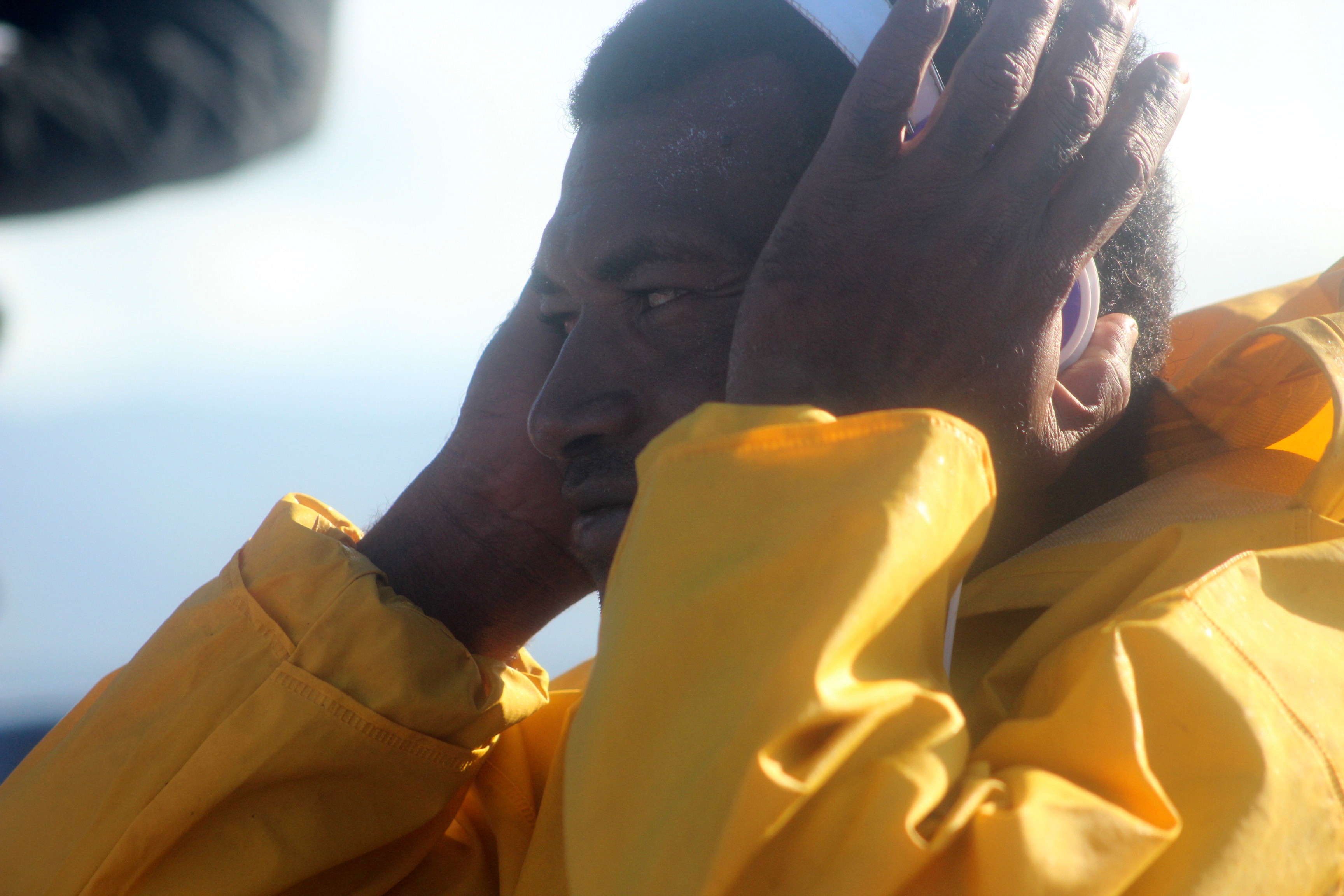
Meli, the “skipper” lives in Silana and was the best boat driver I have ever seen! One day he was sitting next to me in the boat and was curious about what we were doing. He started contributing to data collection and eventually put the headphones on, hearing the dolphins for the very first time! Even though he lives just a few miles away, and makes two trips out to the reef every day, he had no idea that dolphins communicate with each other and what their “chatter” actually sounded like. It was so touching to see the surprise in his eyes and the smile on his normally very stoic face when he heard the pod for the first time.

Meli listening

Later that day, I heard our Country Director explaining to Meli that dolphins are mammals, breathe air, give birth to live young, etc. Meli knew absolutely nothing about the organisms that he is ultimately responsible for preserving. This is what our work is all about. Not only did employing him as the skipper provide valuable financial support for his family and village, but his knowledge of Moon Reef and its dolphins grew every single day. He will become a valuable asset for Moon Reef within the village and a critical part of its future.

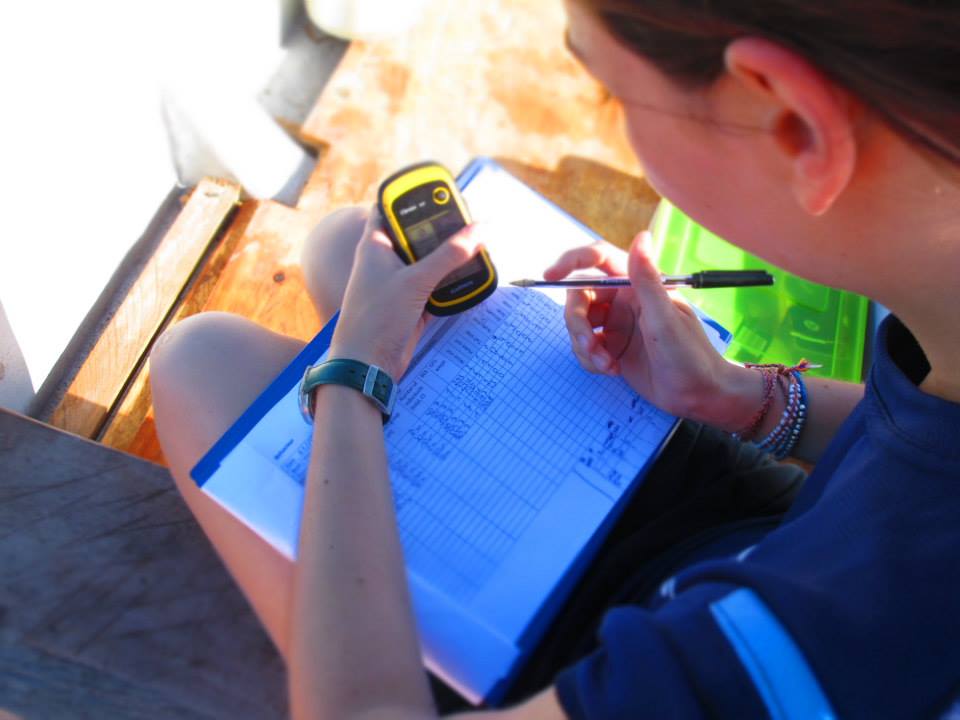
Behavior scans – Just like humans, these dolphins are creatures of habit. For the most part, their actions follow a pattern. They return from feeding and are relatively quiet, both in communication and behavior. In essence, they are sleeping. As the afternoon approaches, they become more active and communicative. Whether they are talking about where they will be dining later, or socializing, or teaching the calves valuable survival lessons, we have no idea. They change their behavior when there are boats in the reef, as well as when there is a change in weather. What’s important to know are the patterns of these behaviors, so that dramatic changes can be noted. If the dolphins do not feel that Moon Reef is a valuable resting, breeding, birthing location for them anymore they will leave and their survival may be endangered.

So, for several 30-minute periods each day, we collected data regarding every behavior displayed by the dolphins. It took teamwork, clear data and role-responsibility, and sharp eyes, but it was fun!

behavior

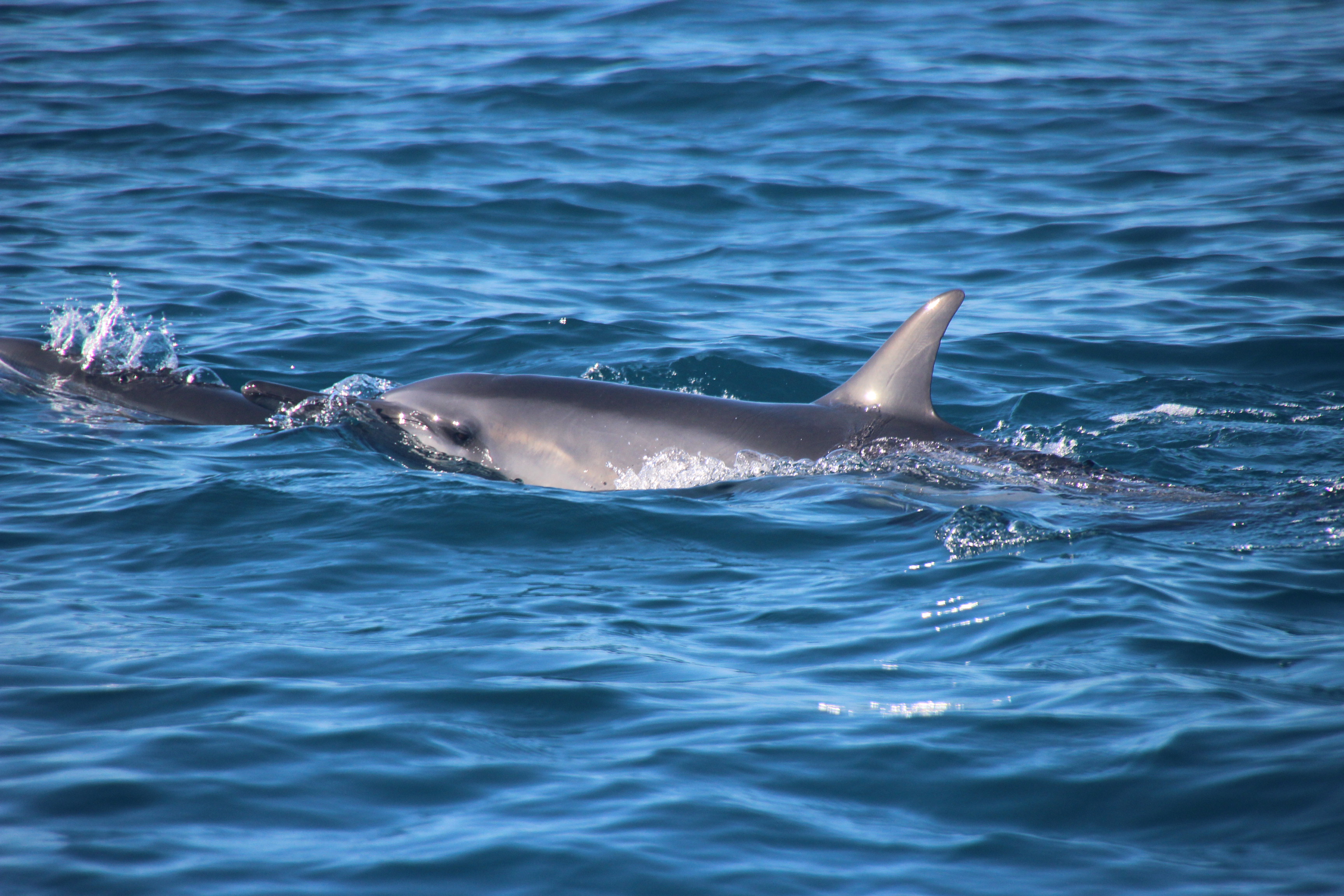
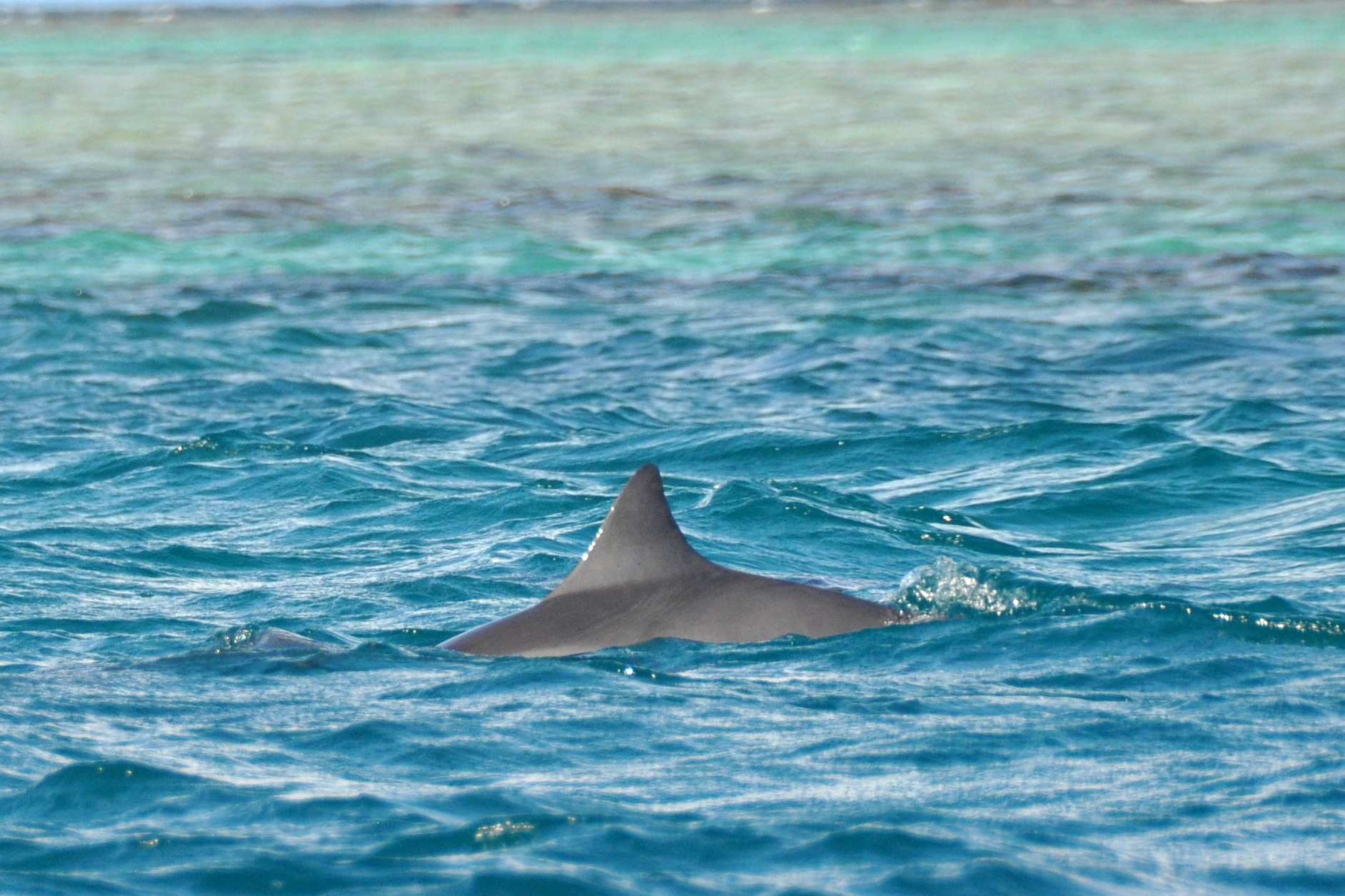
Photo-identification – The dorsal fin of each Spinner dolphin is unique and can be used like a finger print to identify individuals. The goal is to create a catalog of the dolphins, to determine how many there are, who they are, and if there are changes occurring in the resident population.

This is the type of photo that is optimal for research and photo-identification: clear dorsal fin with high contrast.

fin catalog

dorsal

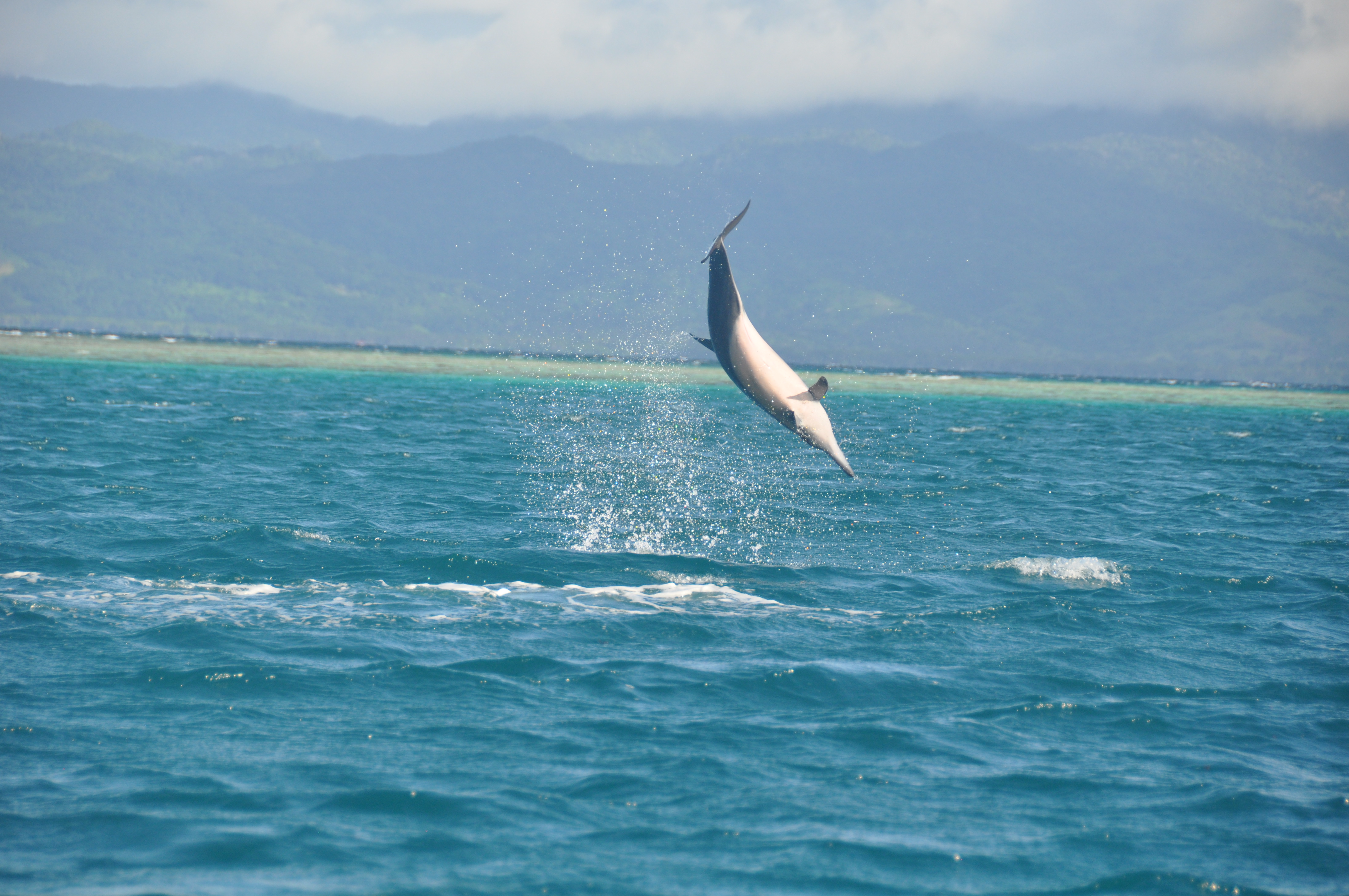
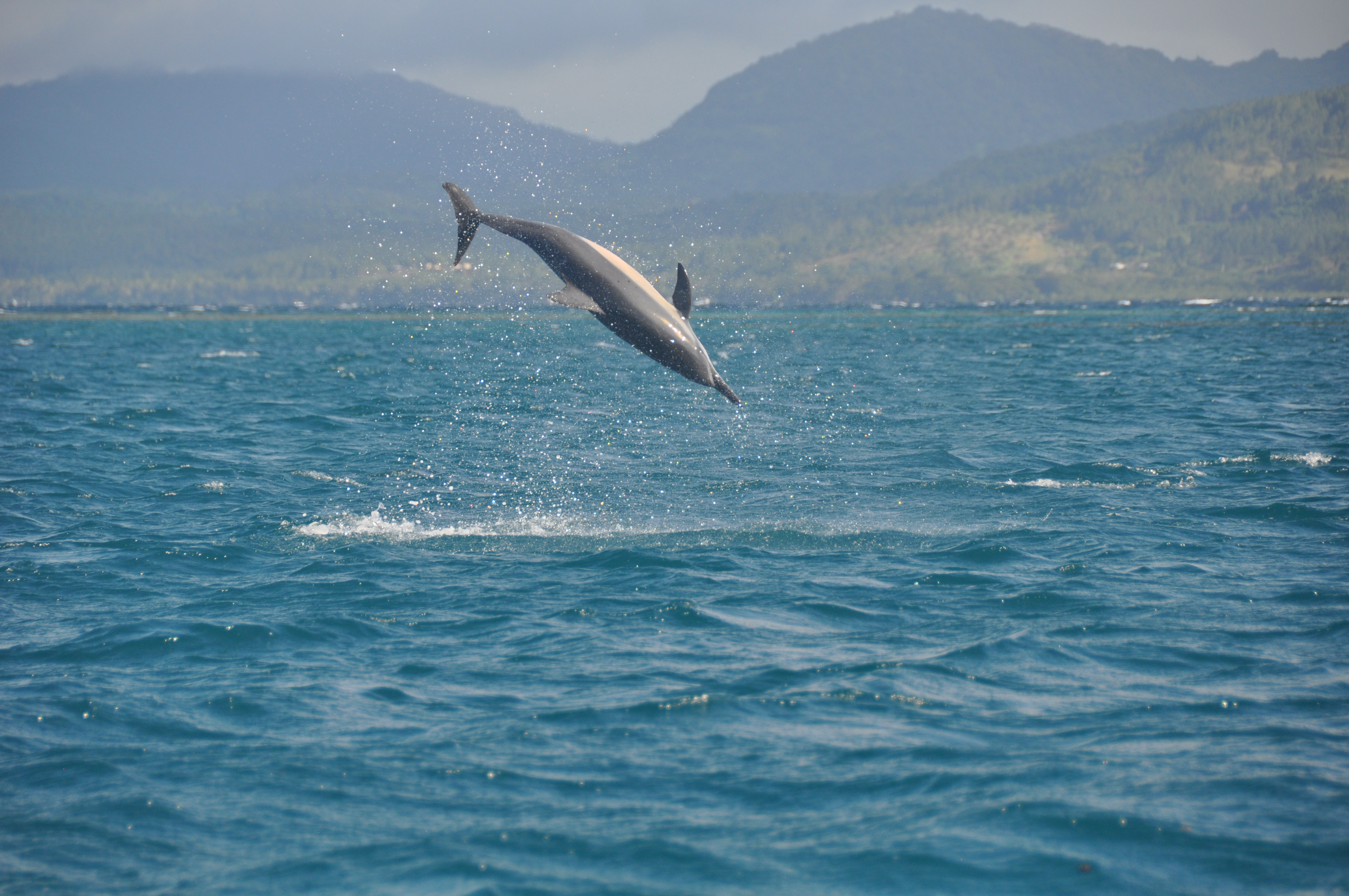
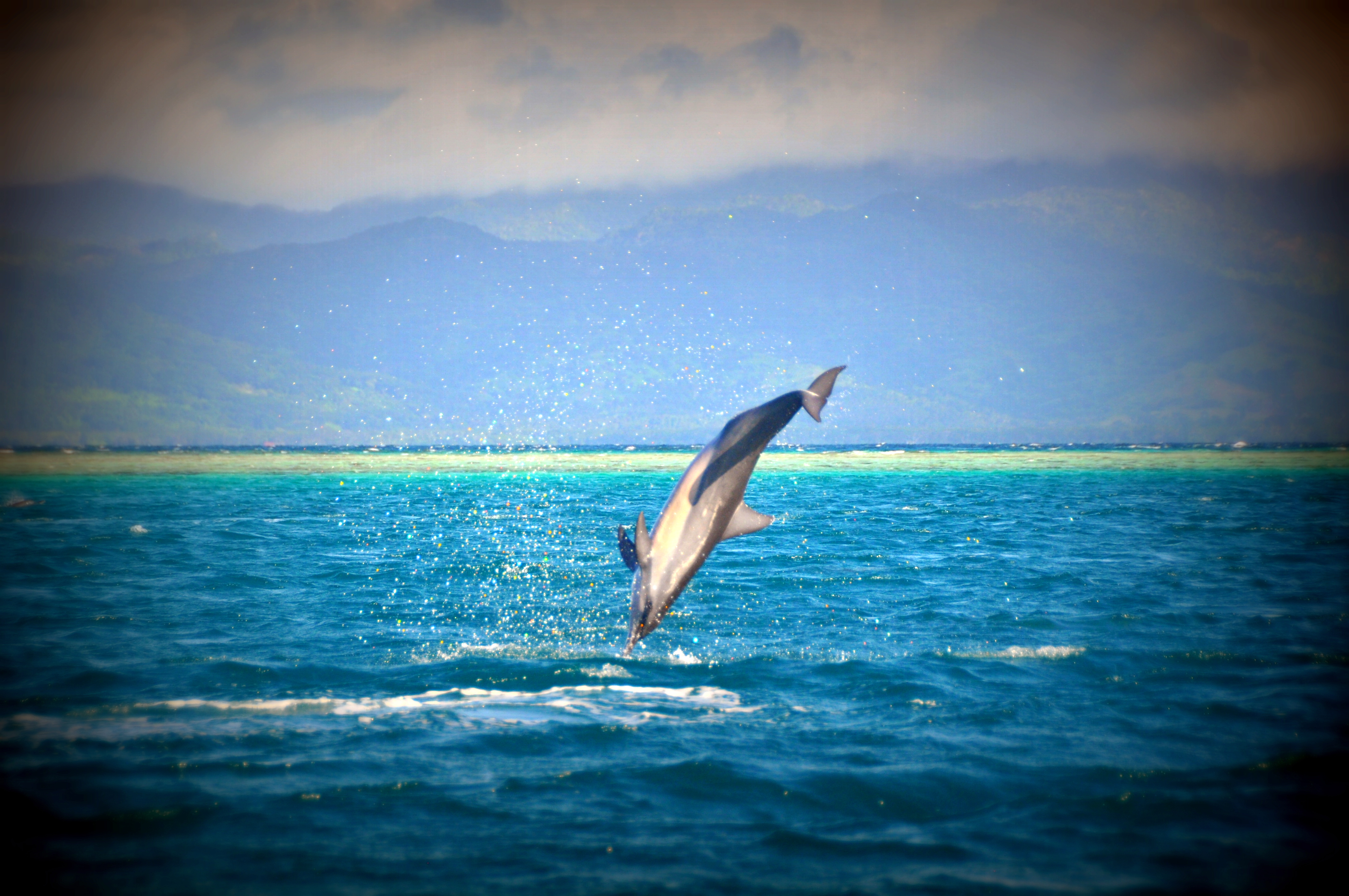
But looking at a bunch of dorsal fins can get pretty boring. Spinner dolphins are known, and named, for a unique spinning behavior. That was the fun part! Fun to watch but challenging to photograph! It’s really hard trying to get good pics of an unpredictable and wild animal, whilst standing on a constantly rocking boat, when the BSS is high and you are zoomed to 300mm! Most of the time, my results looked like this:

splash

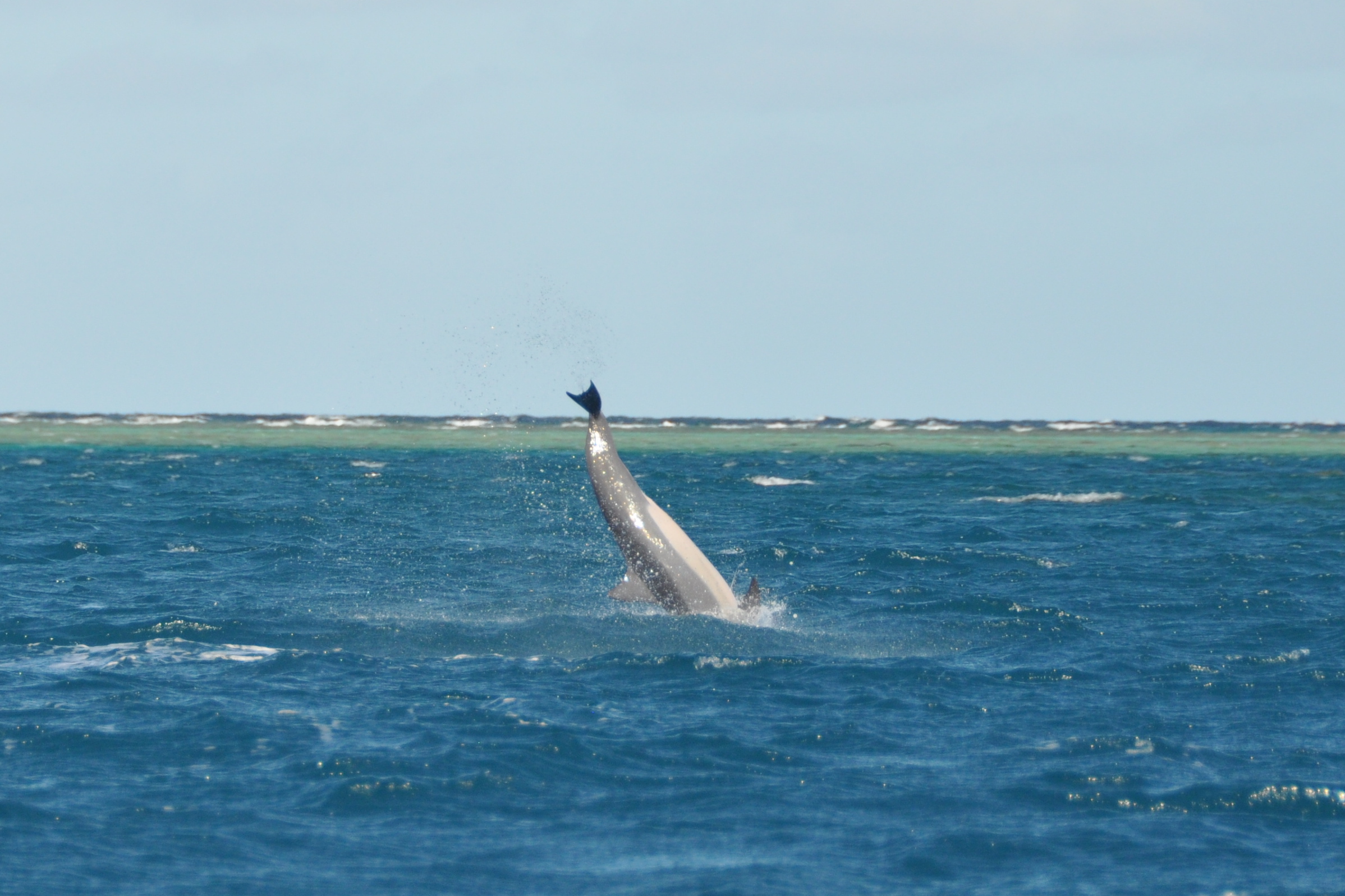
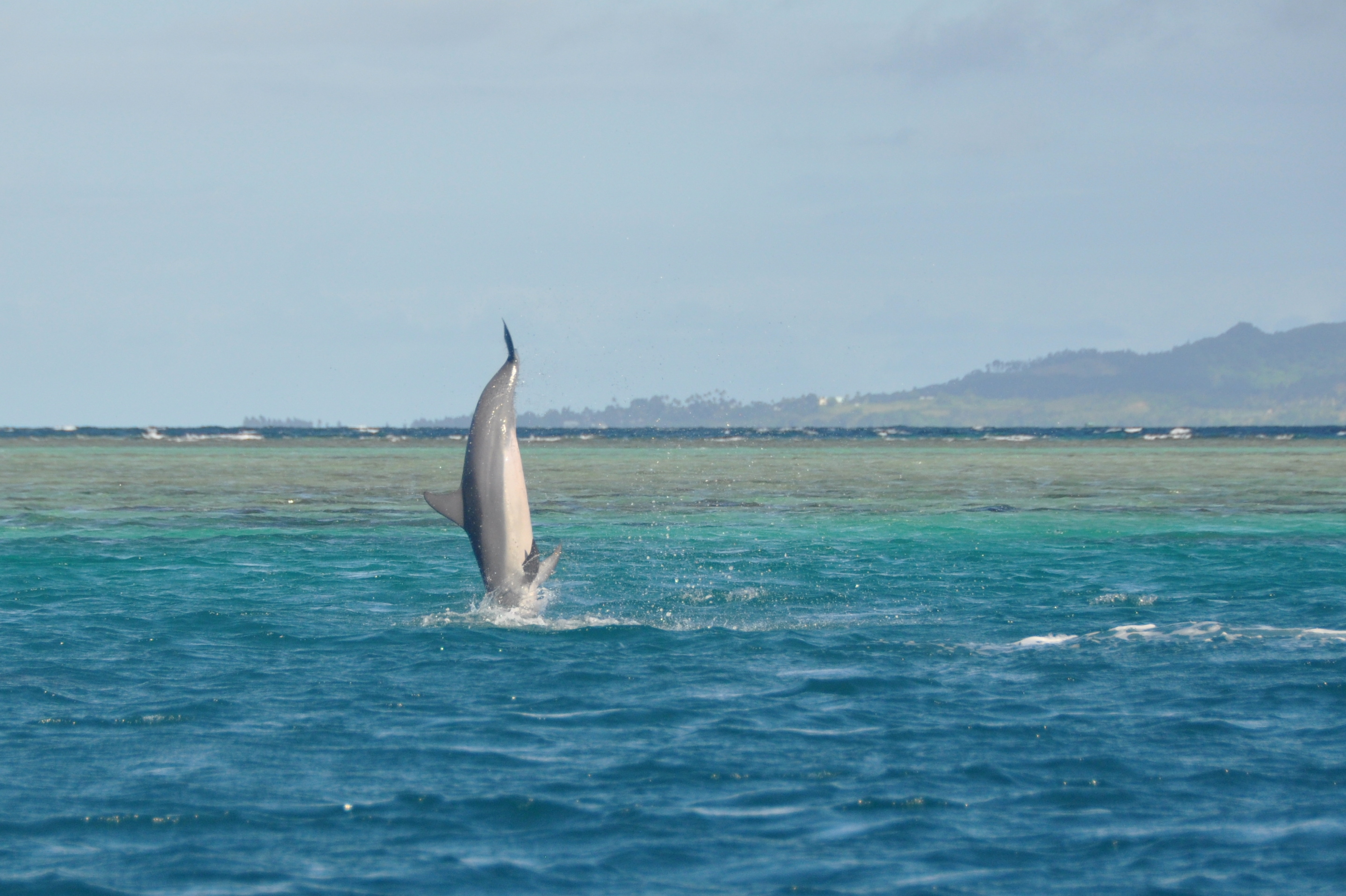
Then there were the near-misses:

tail up

face in

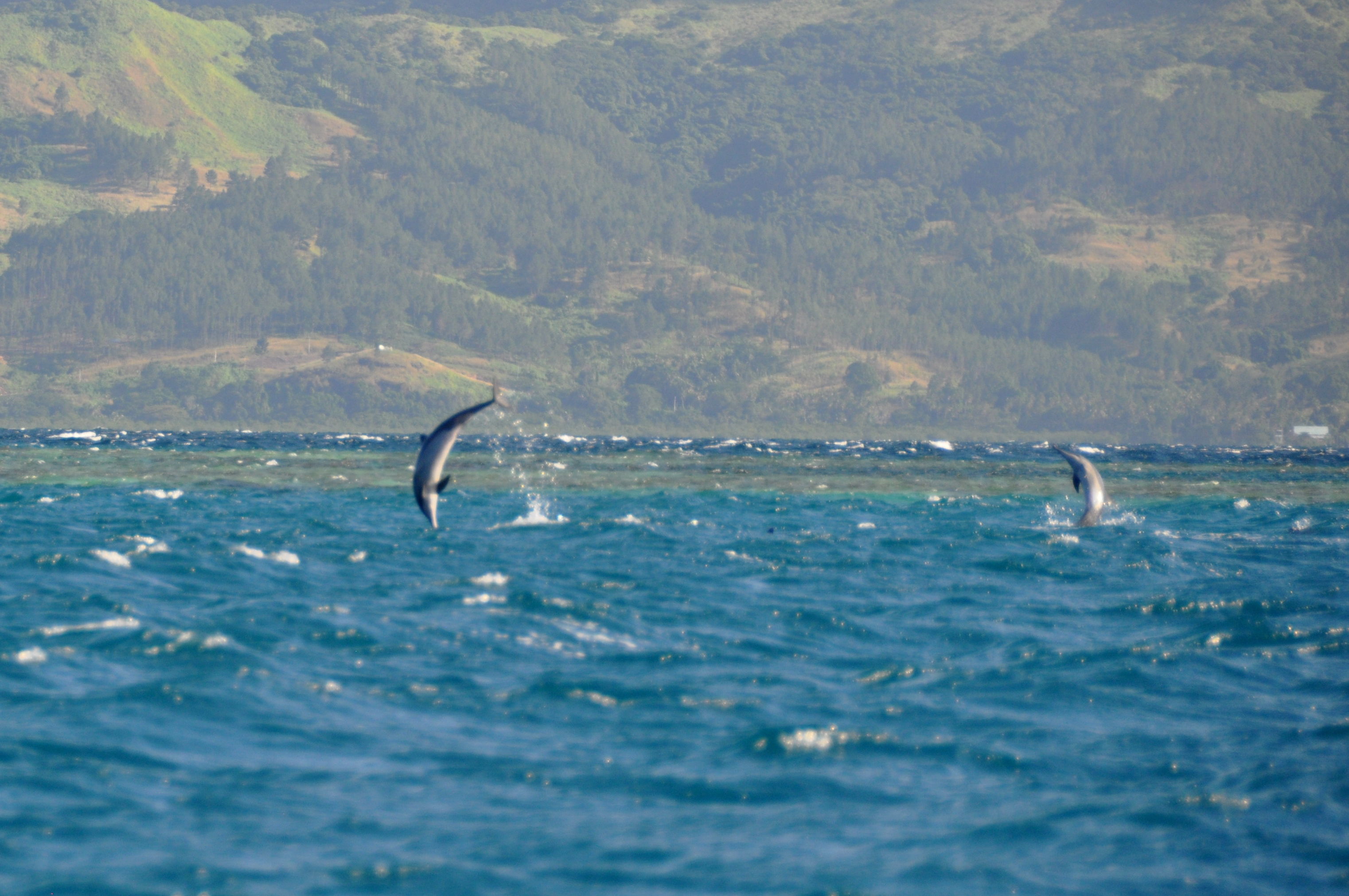
These two were enjoying some hang-time together:

double

About 1 in every 100 shots was something to be proud of:

2nd best

the best

In addition to research, some days involved a lot of other random activities. Like quasi-snorkeling:

She actually had to pee, but wanted to check out the facilities first!

She actually had to pee, but wanted to check out the “facilities” first!

Or a mid-day nap by the staff:

napping

Every day was something different, and as the volunteers from Northern Ireland would say, “quite a good crack” (that means it was a lot of fun)!

Here’s one more…for the Instagrammers!

digital


Commuting to Makalati

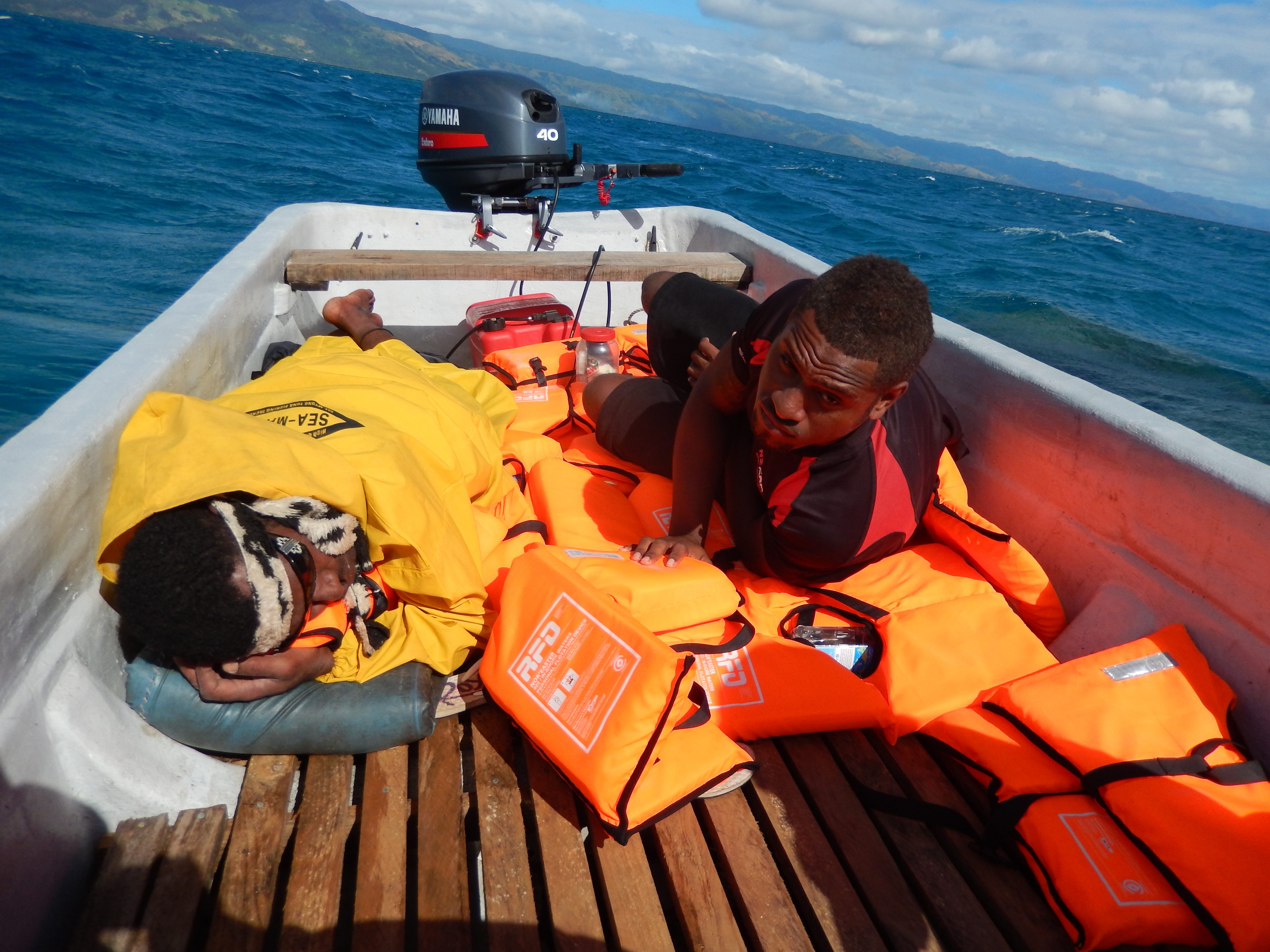
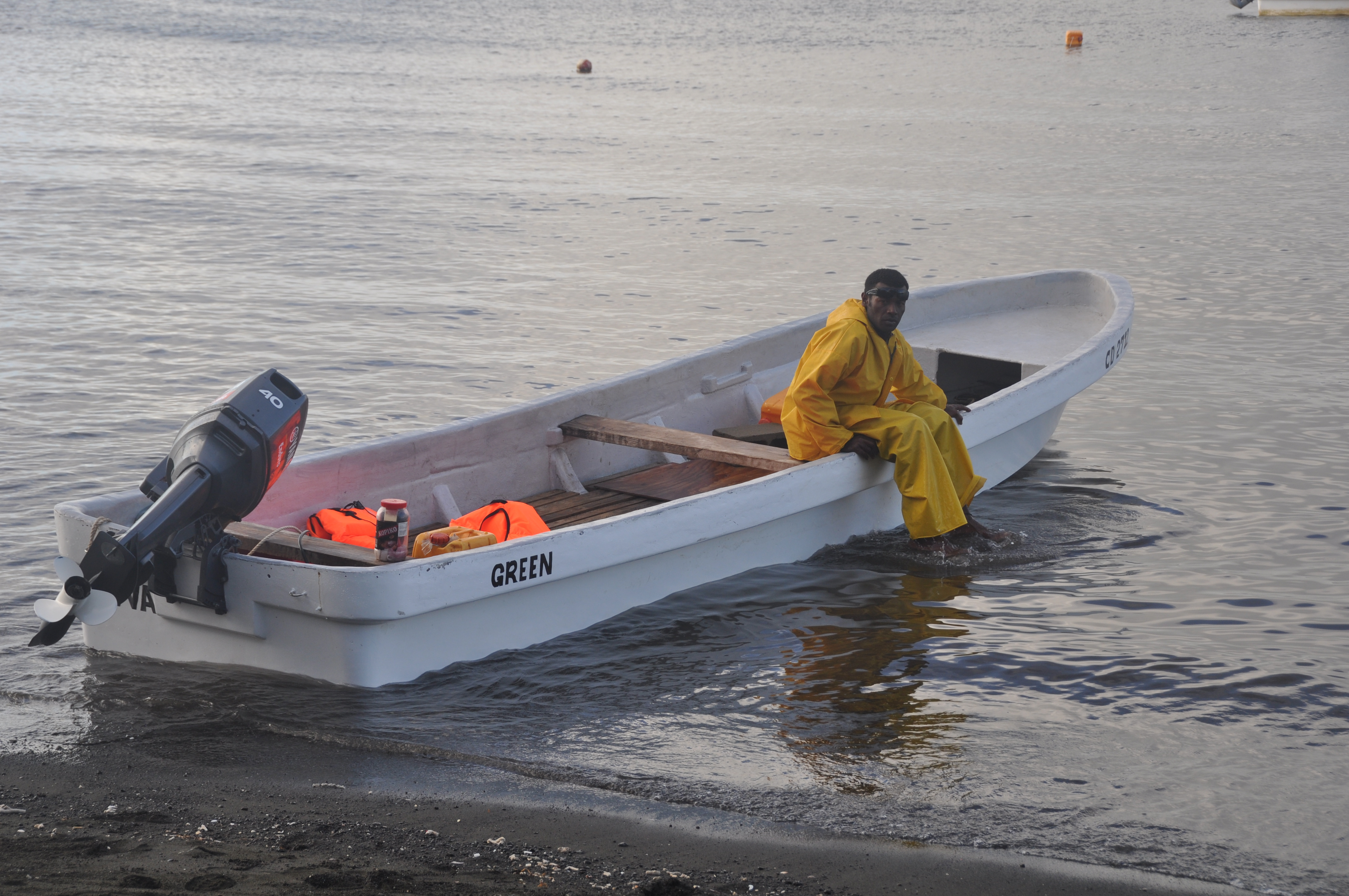
Every day we have to commute out to Makalati (Fijian for Moon Reef) in order to collect data on the dolphins. This is our vessel: a 15-foot, un-sanded wood-bottomed skiff that isn’t much better than a dingy.

Bruiser with Meli, our "skipper".

Bruiser with Meli, our “skipper”.

The journey is 7.3 km (4.5 miles) one way and the swells between the beach and reef are awful…every single time! We have kindly renamed the boat “Bruiser” because your butt, back, elbows, and every other part of your body will be thoroughly bruised after a day’s commute. Forget staying dry. That isn’t even worth discussing.

So, basically, we all sit in the fetal position on the floor of the boat, bracing ourselves for the next swell and blast of cold salt water to come streaming down our backs while praying for it all to be over soon. Eyes open risks a thorough optical salt water cleansing. Eyes closed risks a bout of sea sickness. Bottom line: the commute sucks. Every. Single. Time. I don’t have pictures of the worst moments, because I was too busy trying not to be bounced overboard! And don’t even say, “But you’re in FIJI!! It can’t be that bad.” It is. Every. Single. Time. Even paradise isn’t perfect.

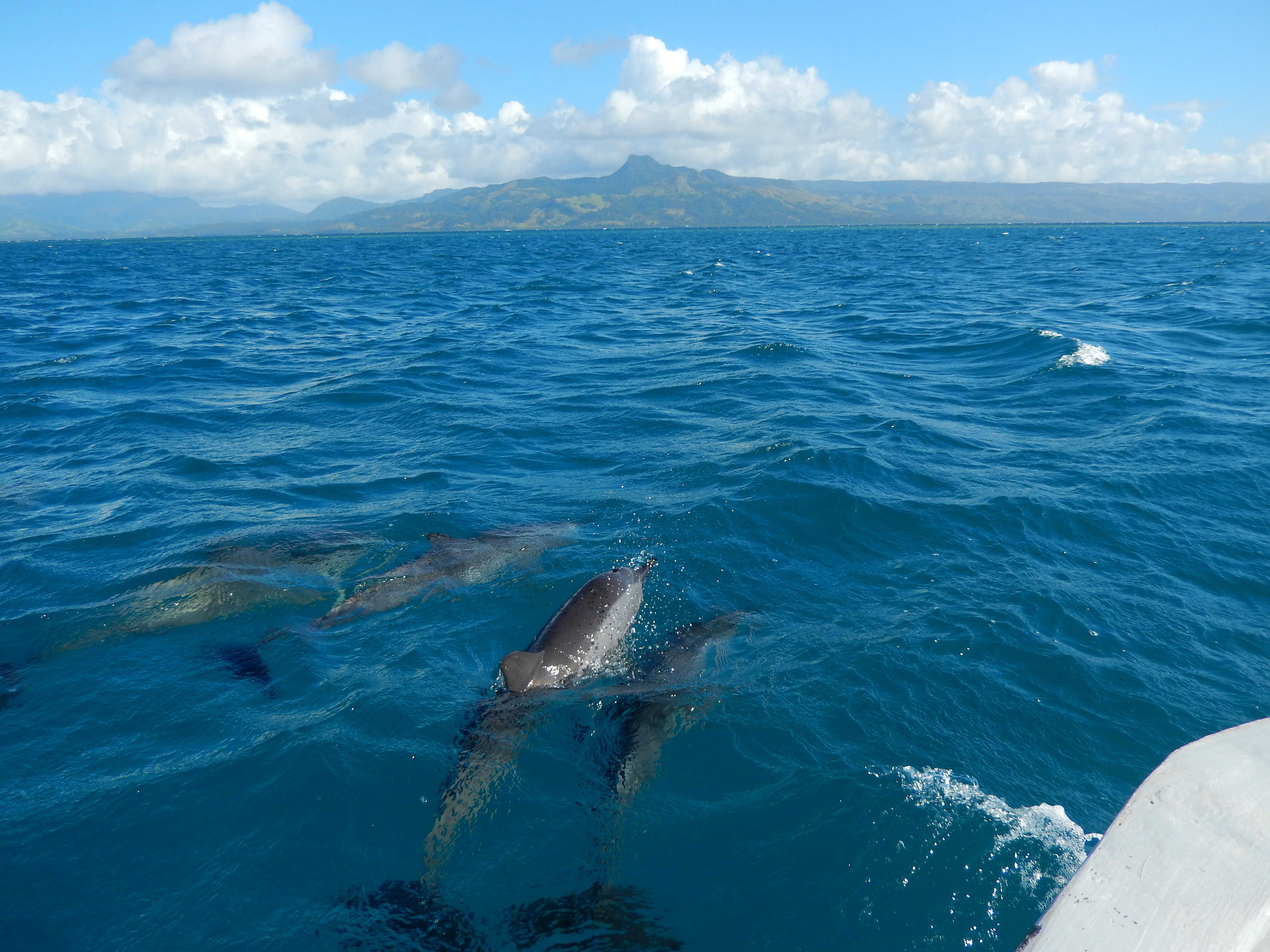
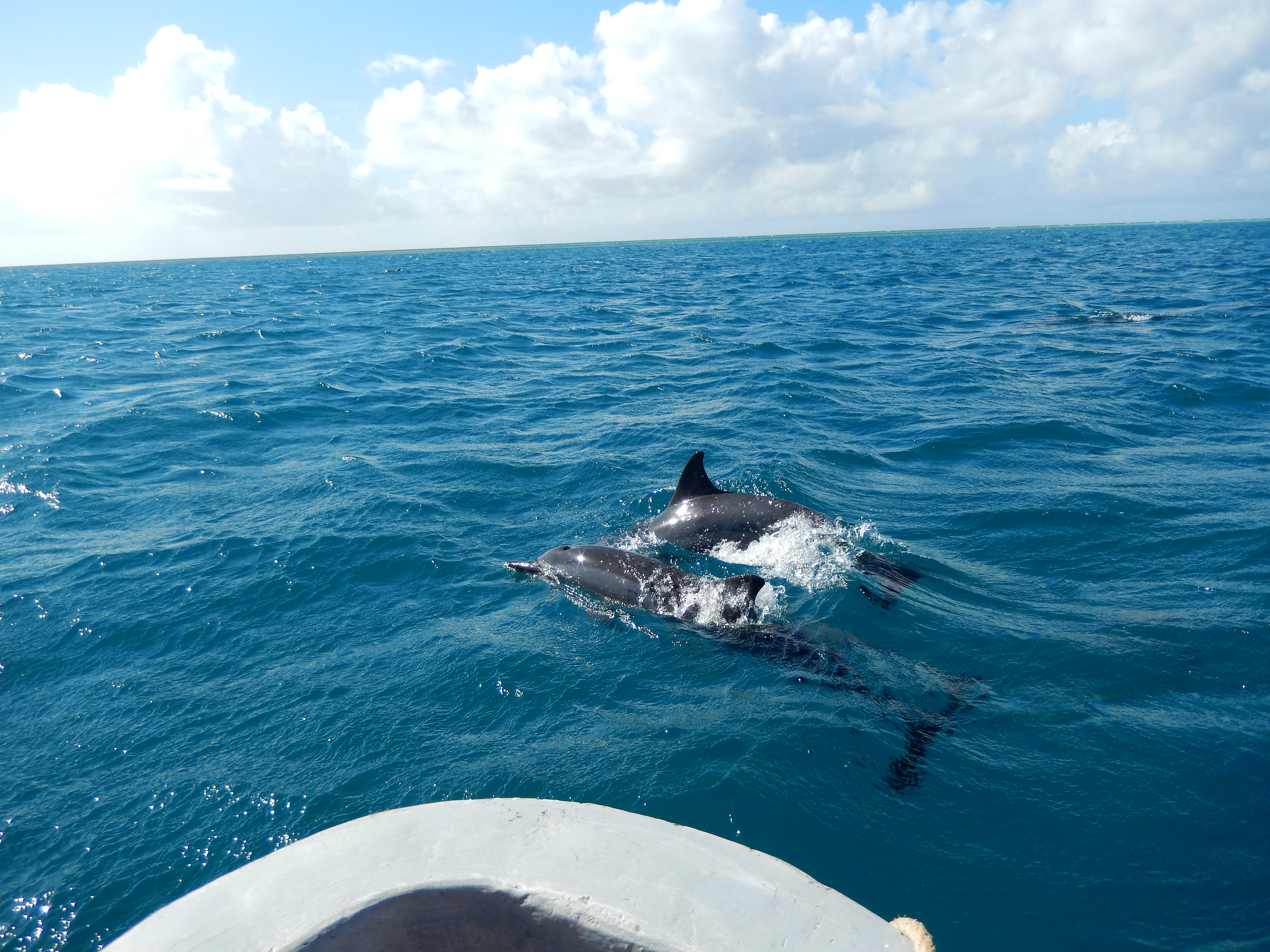
However, the horrific commute is quickly forgotten when we arrive at the reef and these guys are there to greet us:

The white on the right of the picture is the bow of "Bruiser".

The white on the right of the picture is the bow of “Bruiser”.

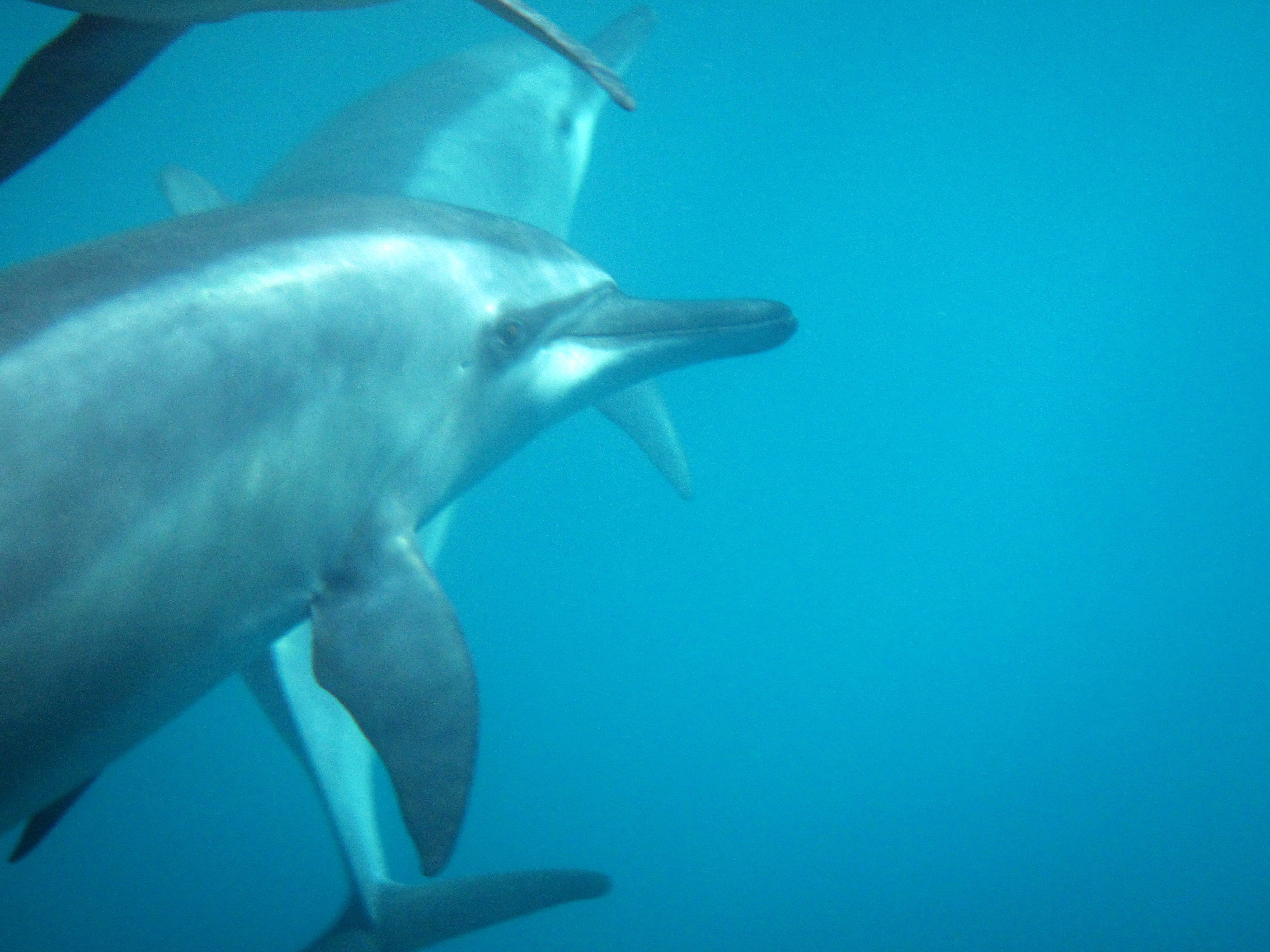
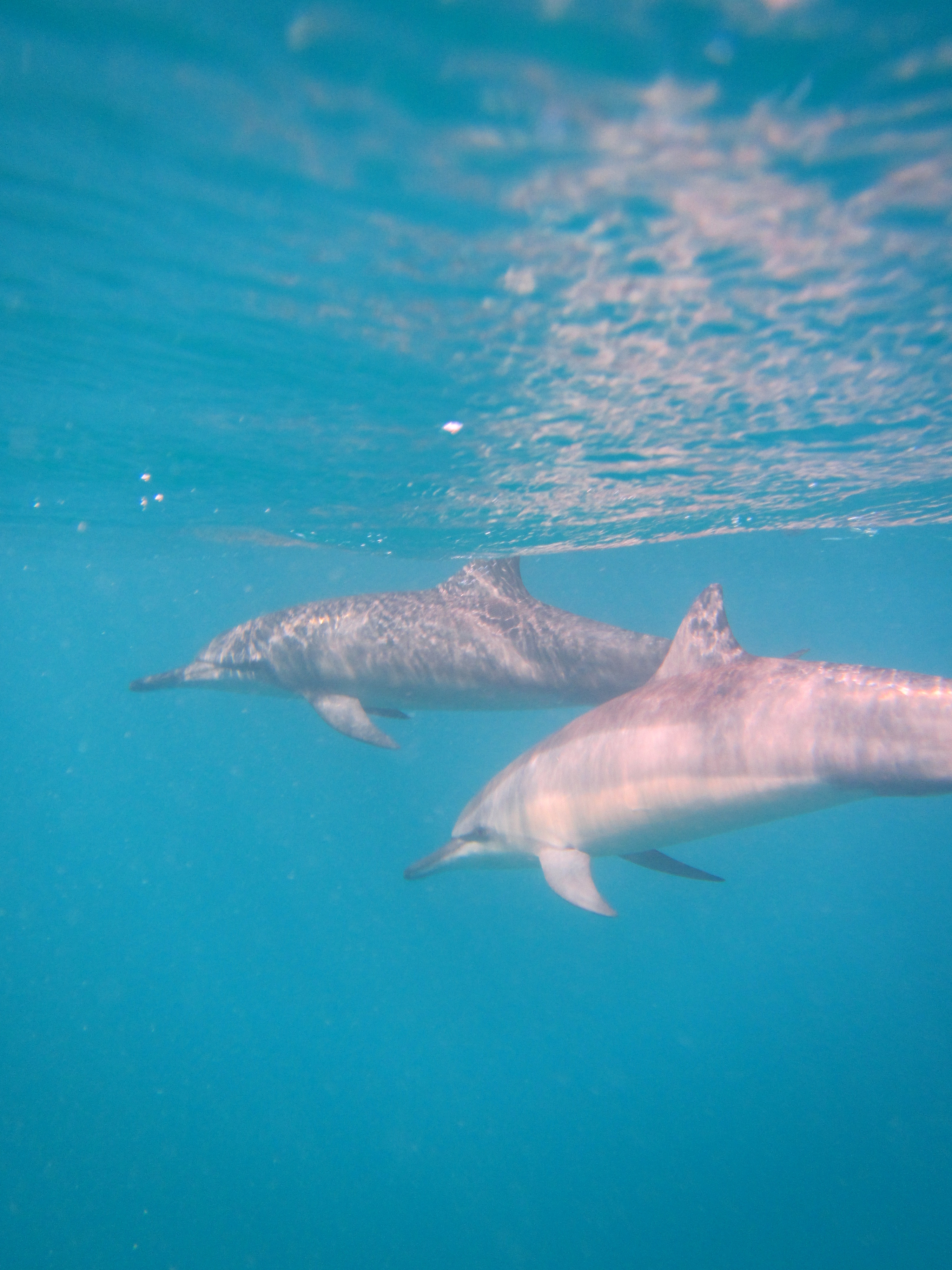
sparkle dolphinsThe following two pictures are not mine. They are borrowed from a friend with an underwater camera. She simply leaned over and put her arm in the water. Yes…they do come that close! The dolphins will occasionally approach the boat out of curiosity or to ride the wake for a bit. That is the magic of a population of intelligent organisms left un-touched by tourism!

How awesome is this?!!

How awesome is this?!!

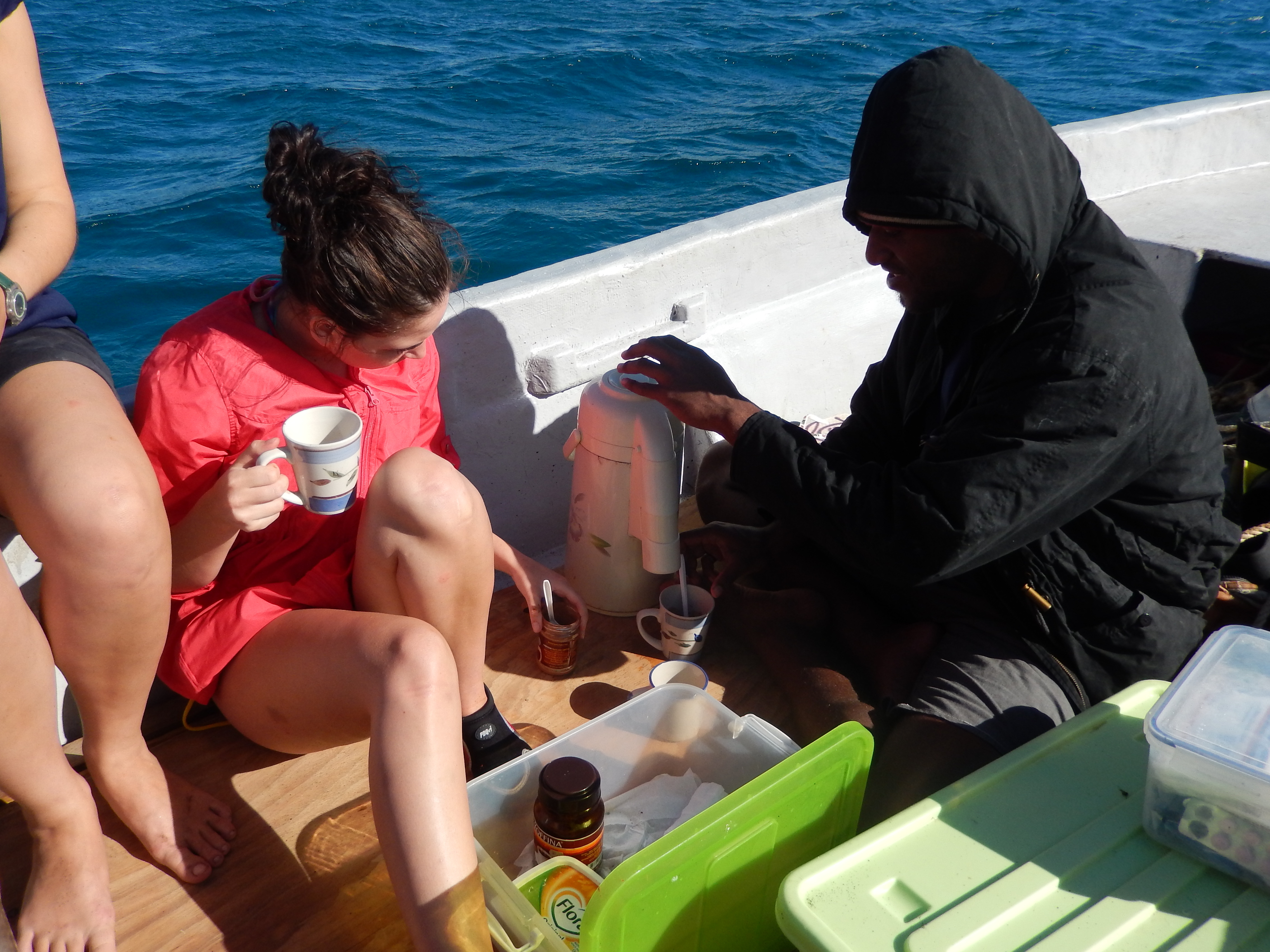
underwater swimmingAnother plus: Moon Reef Cafe! The ladies in the kitchen send us out every day with a waterproof “goodie box” and a thermos!

Moon Reef Cafe

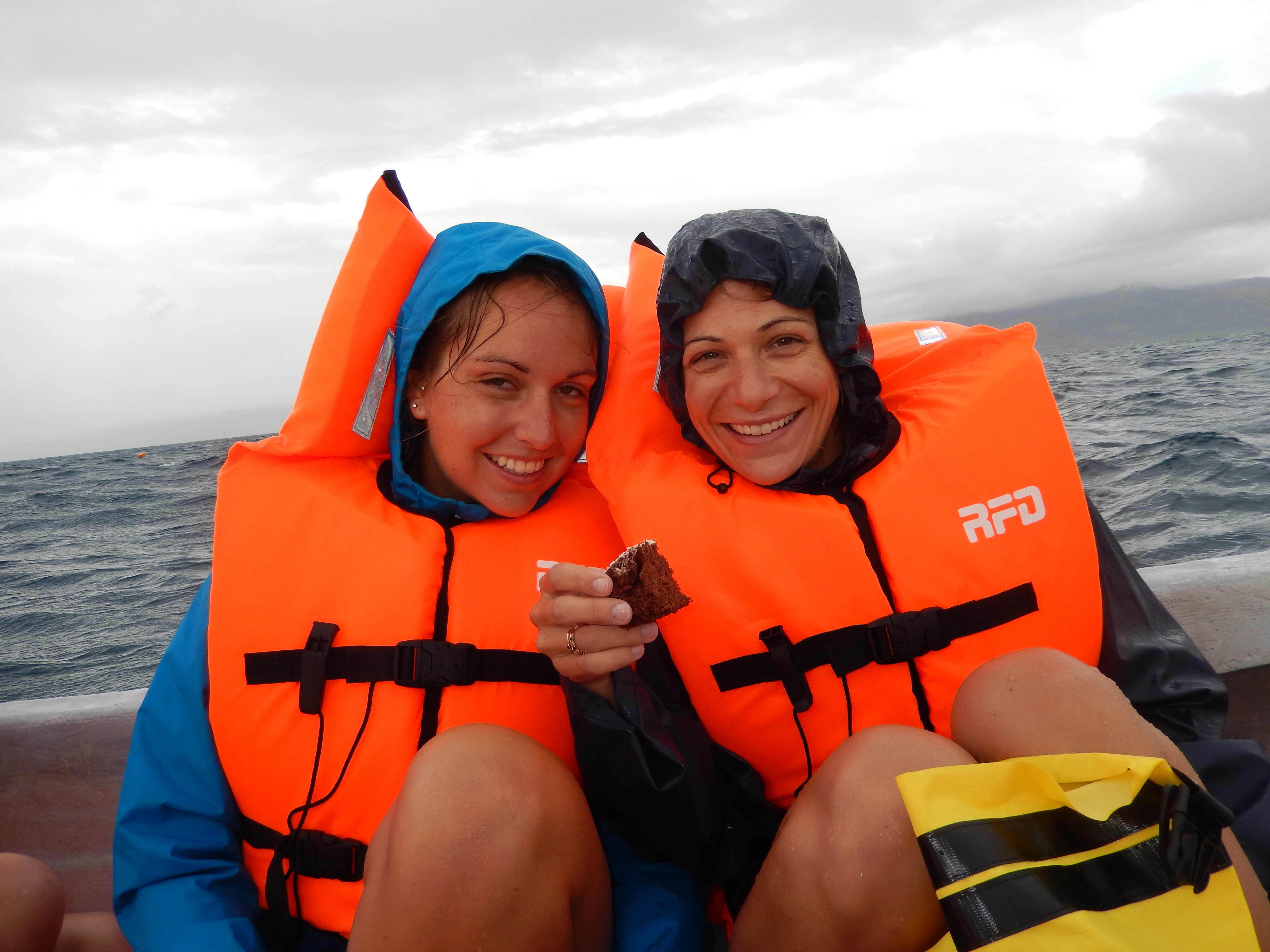
It is pretty awesome to have cake and hot drinks for breakfast in the middle of a remote reef off the coast of Fiji while dolphins swim around the boat. Even if it is simultaneously pouring rain.

rainy breakfast

And it is pretty amazing to end a workday with this, even if it means more rain is on the way…

rainbow

Ok dolphins, see you tomorrow…if I survive the commute!