Things Unknown

If there is one thing I have learned during this Olmsted journey, it is how much I don’t know: about languages, about history, about the world and its people. I have, however, learned valuable lessons about myself and what I value in other people: humility and the courage to say, “I don’t know.”

I don’t know everything that happened today or why. I can’t and won’t pretend to. However, if experiences are the best teachers in life, then I learned a lot today. I spent the day with a college girlfriend at the Struthof-Natzweiler Concentration Camp in Natzweiler, France.
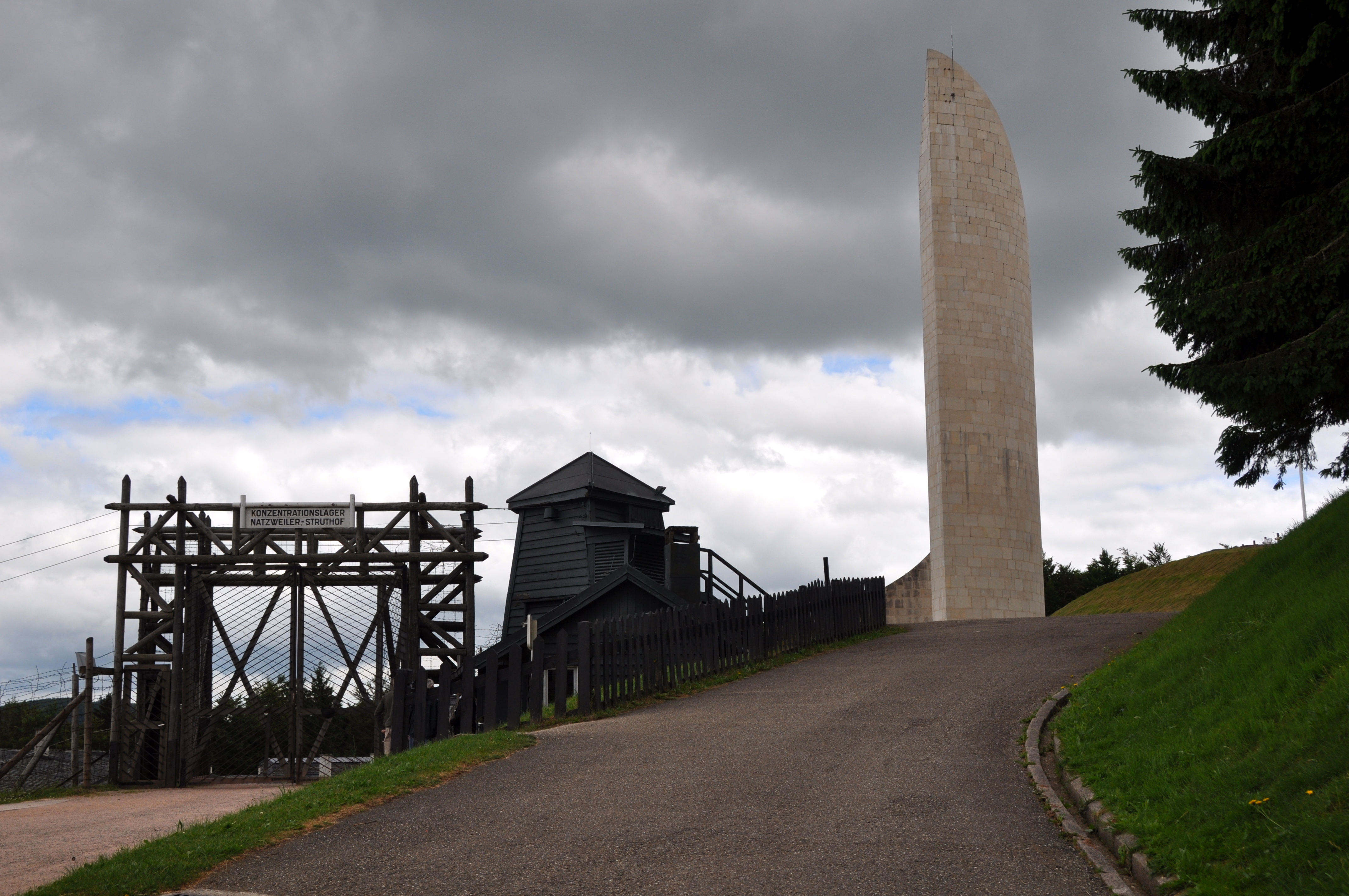
gate

In operation from May 1941 to September 1944 and hidden high in the Vosges Mountains, Struthof was actually where 107 Allied troops were executed.  I don’t know which word would suit it best – juxtaposition, irony, torture – but the view looking out from the site was wonderful.
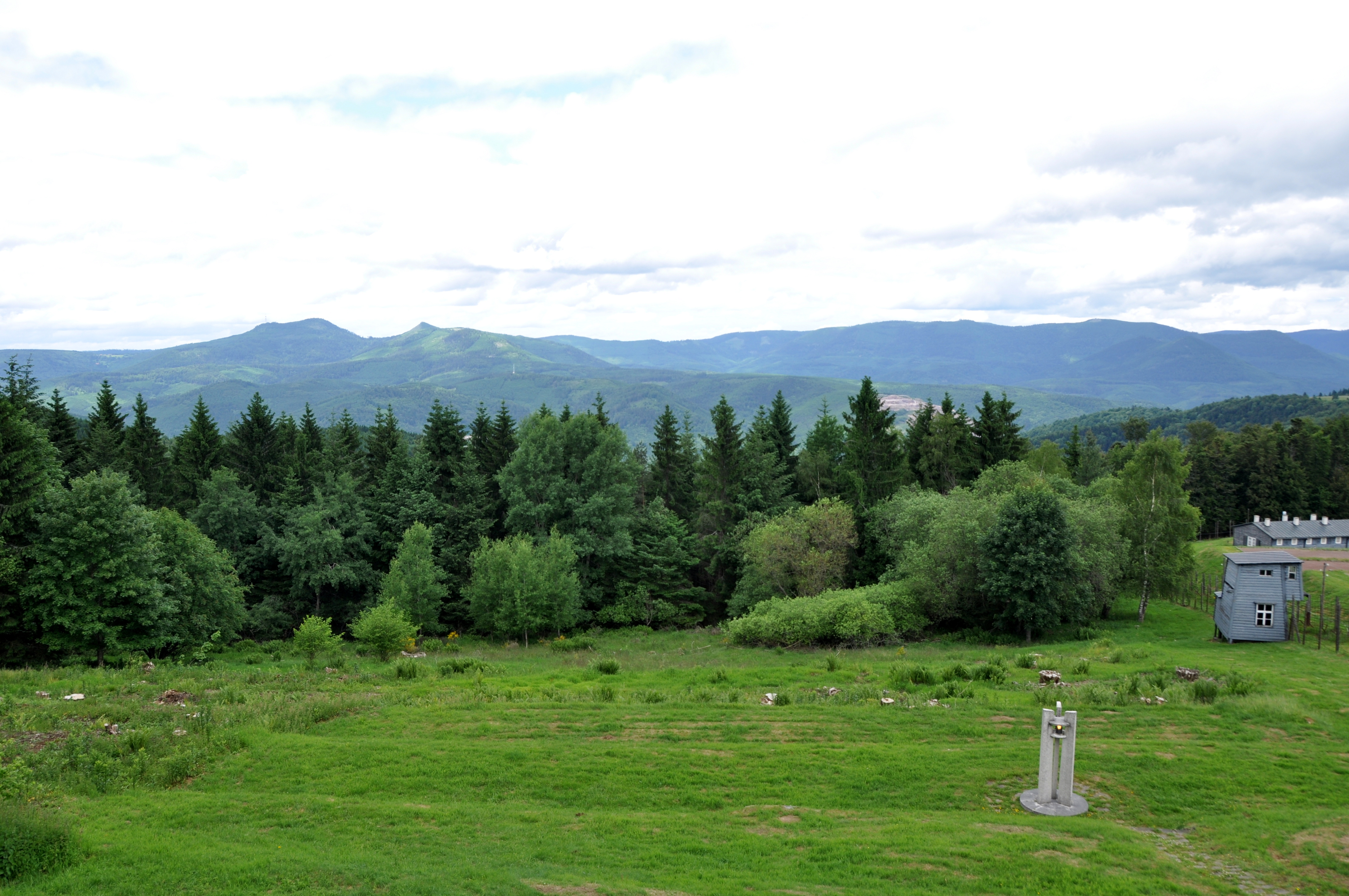
scenery

The area used to be a popular winter recreation and skiing resort, until it came into the hands of the Nazis in 1940. I can only hope that prisoners were able to catch a quick glimpse of the beautiful Vosges landscape each day and experience even the shortest moment of reprieve or glimmer of joy.
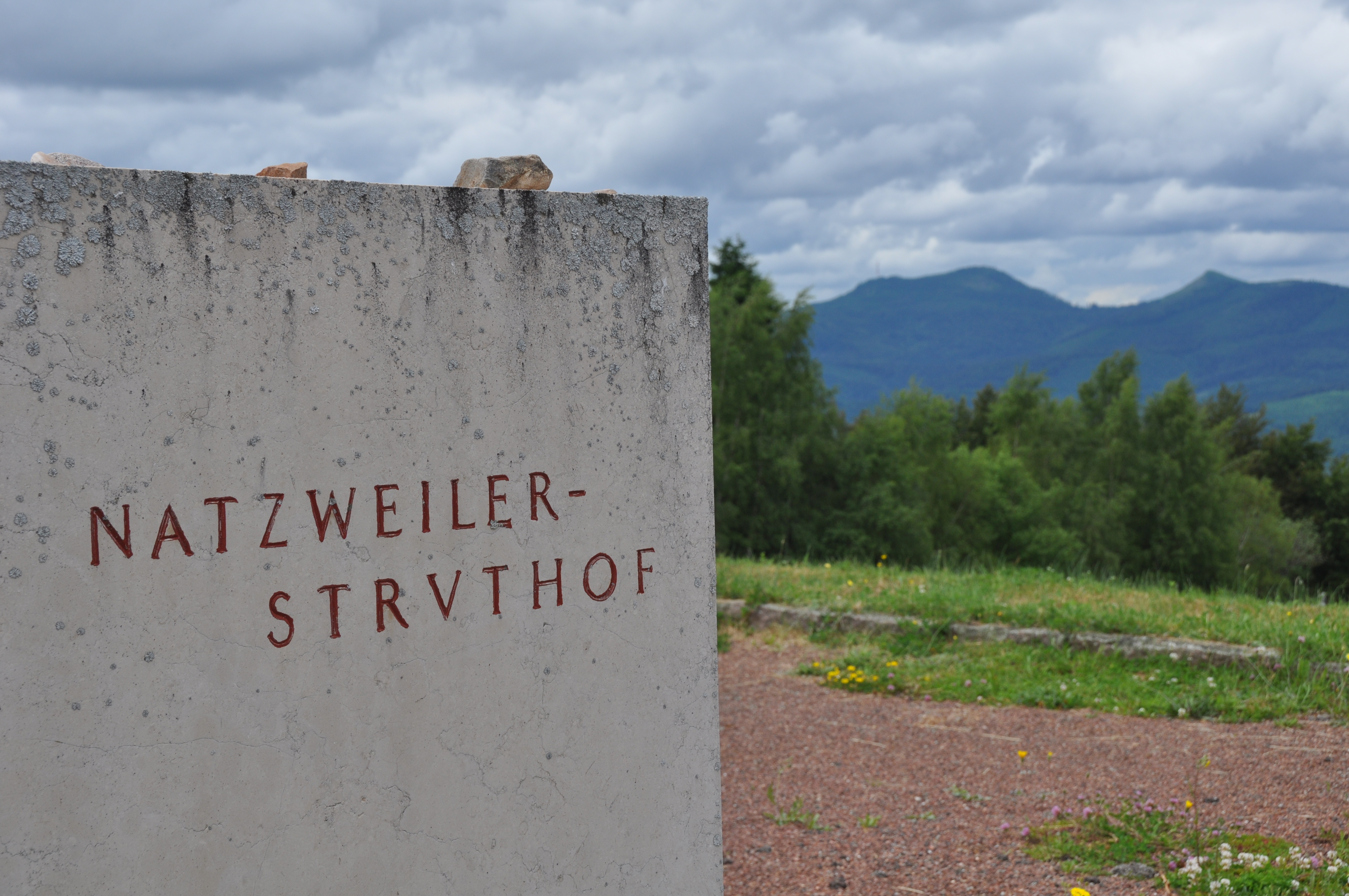
memorial

We stayed late into the evening to observe the Memorial Vigil that has been taking place each year since 1960. It honors the burial of an unknown deportee in the crypt the night before General de Gaulle inaugurated the Deportation Memorial. There is another commemorative ceremony tomorrow, as well as one in September, which observes the evacuation of the camp’s deportees to Dachau.

The ceremony began with a parade of participants walking from the camp gate to the memorial. They brought torches and lit the Flame of Remembrance, as three trumpeters played a somber song. Two of the trumpeters were out of view, echoing the hymn through the camp, and hopefully the mountains beyond.
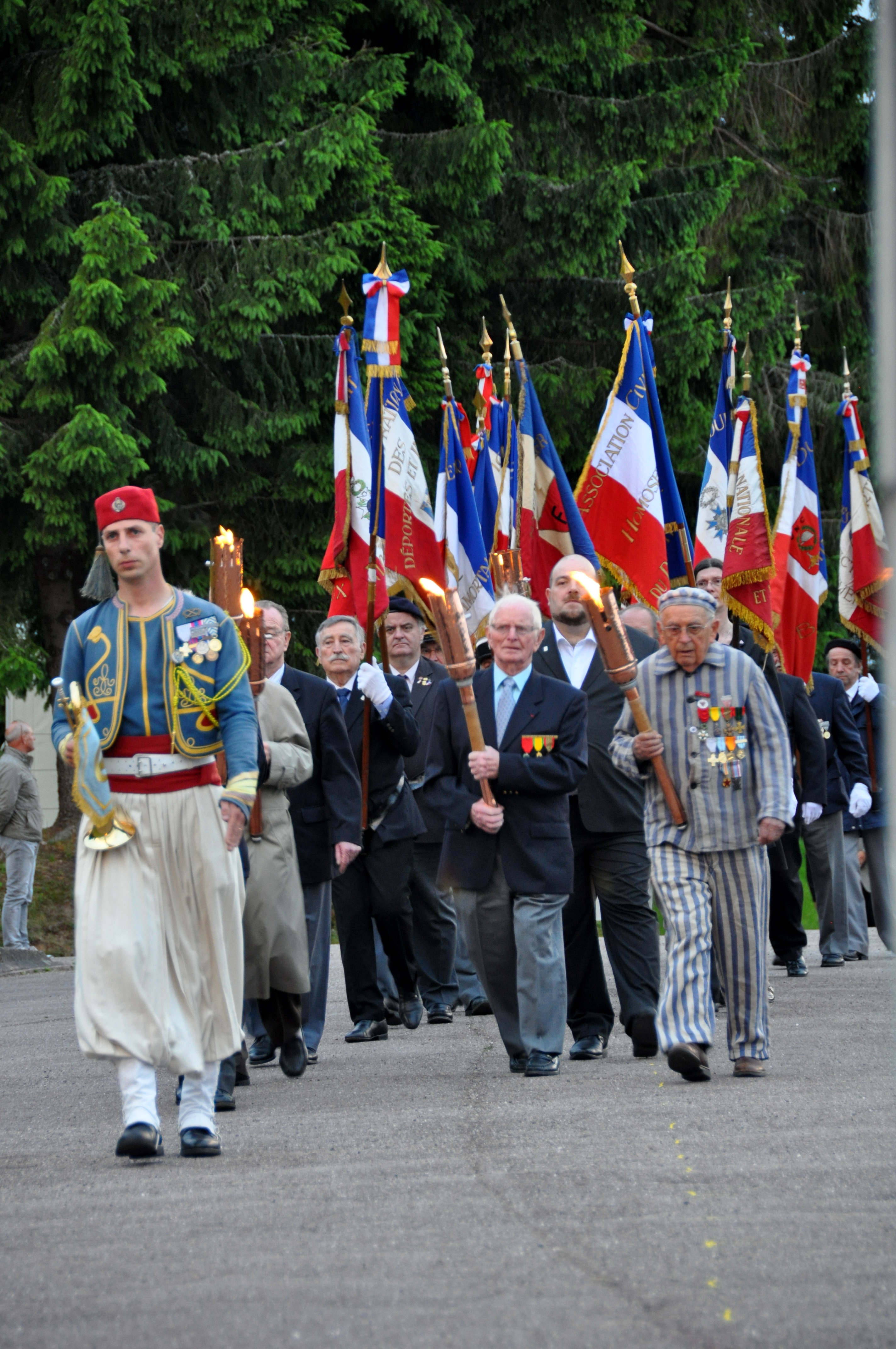
parade

We stood quietly as one trumpeter signaled the passing of torches from person to person, man to woman, old to young.
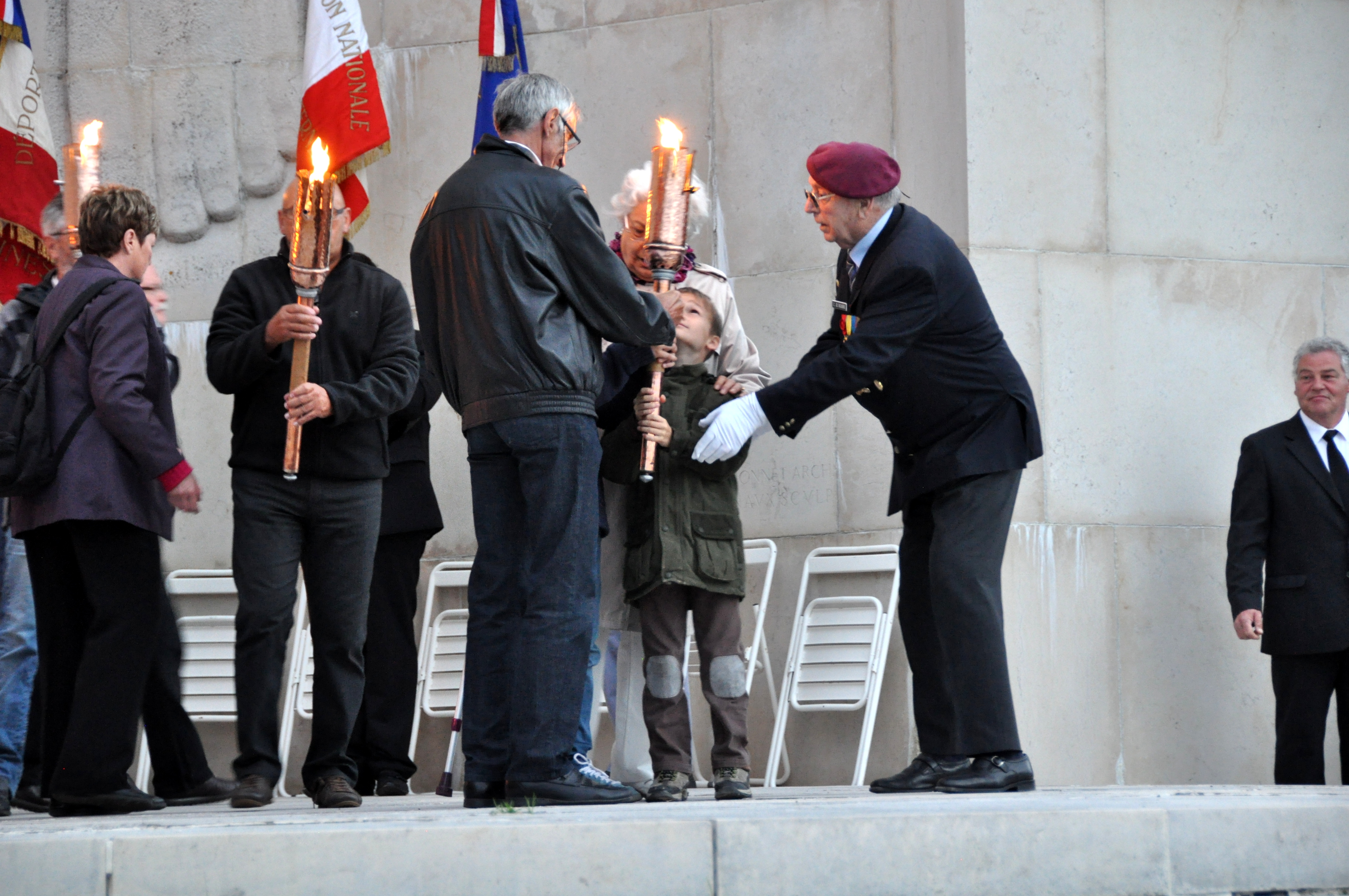
passing torch

I don’t know who each individual was or how their life’s journeys brought them to this place, but I do know that several of them saw the horrors of WWII and the Struthof – Natzweiler Concentration Camp with their own eyes.
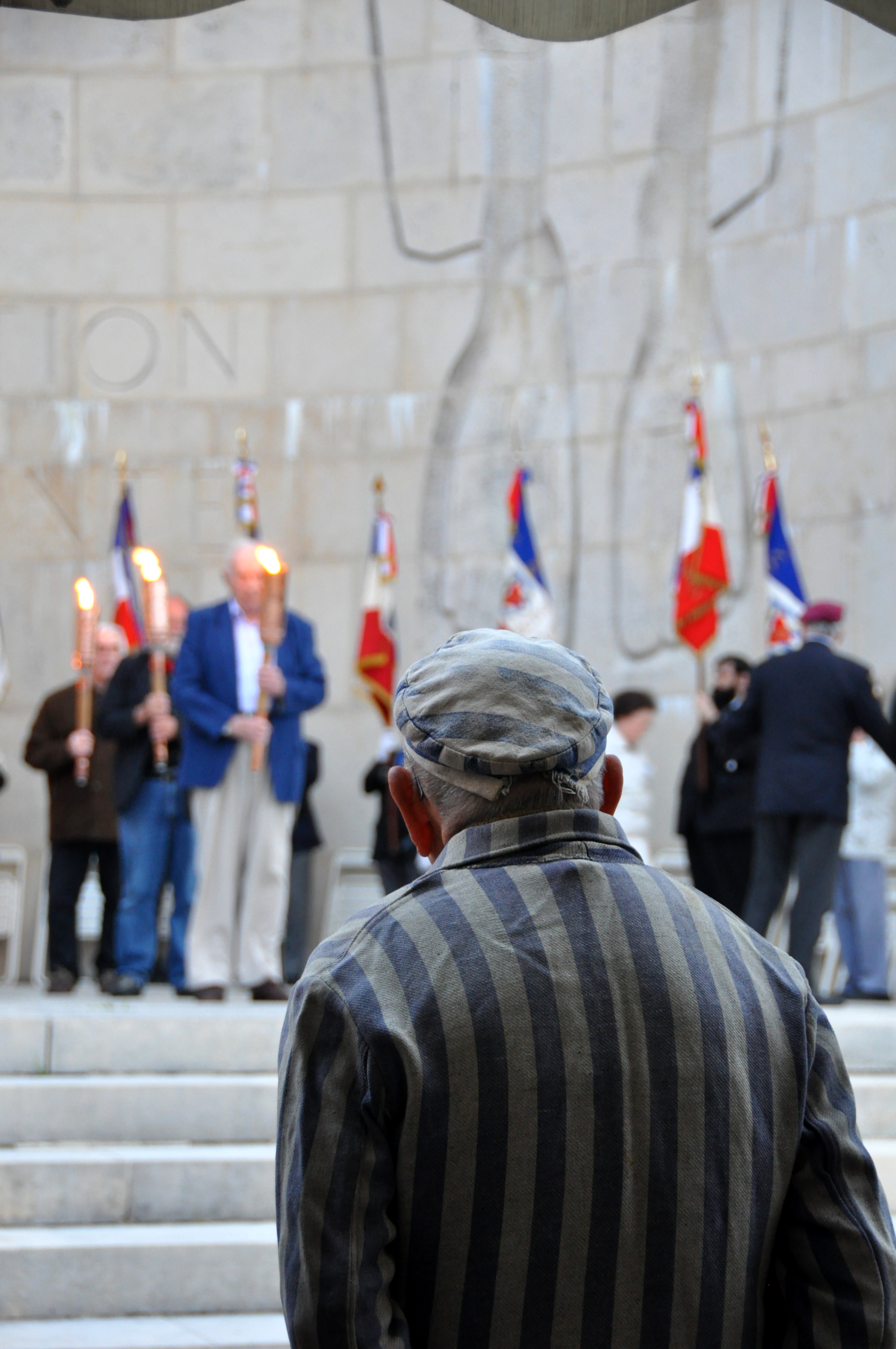
view of ceremony

After the passing of the torches, this man in the striped prisoner uniform sang a song in French. Armed with his prisoner number, color and notations of his ‘triangle’, and the Internet, I set out to learn who he was. After hours of research, I ended up right where I started…without an answer. It wasn’t time wasted though, because I read dozens of first-hand accounts from both survivors and victims of Struthof. The most inspiring was reading about survivors who have dedicated their lives to telling the stories of those who no longer can, such as Pierre Rolinet.

So, I still don’t know who the man in the striped uniform is, or his story, but as I listened to his song accompanied by the faint weeping of the woman standing next to me, I knew that there was a lot going on here that I didn’t understand: not in language, nor life experience.

Finally, as the sun marked the final minutes of the solstice, the torch bearers lined up to give their passing remarks to survivors, participants, and observers. Why some comrades stood in the receiving line, while others walked through it, I also don’t know.
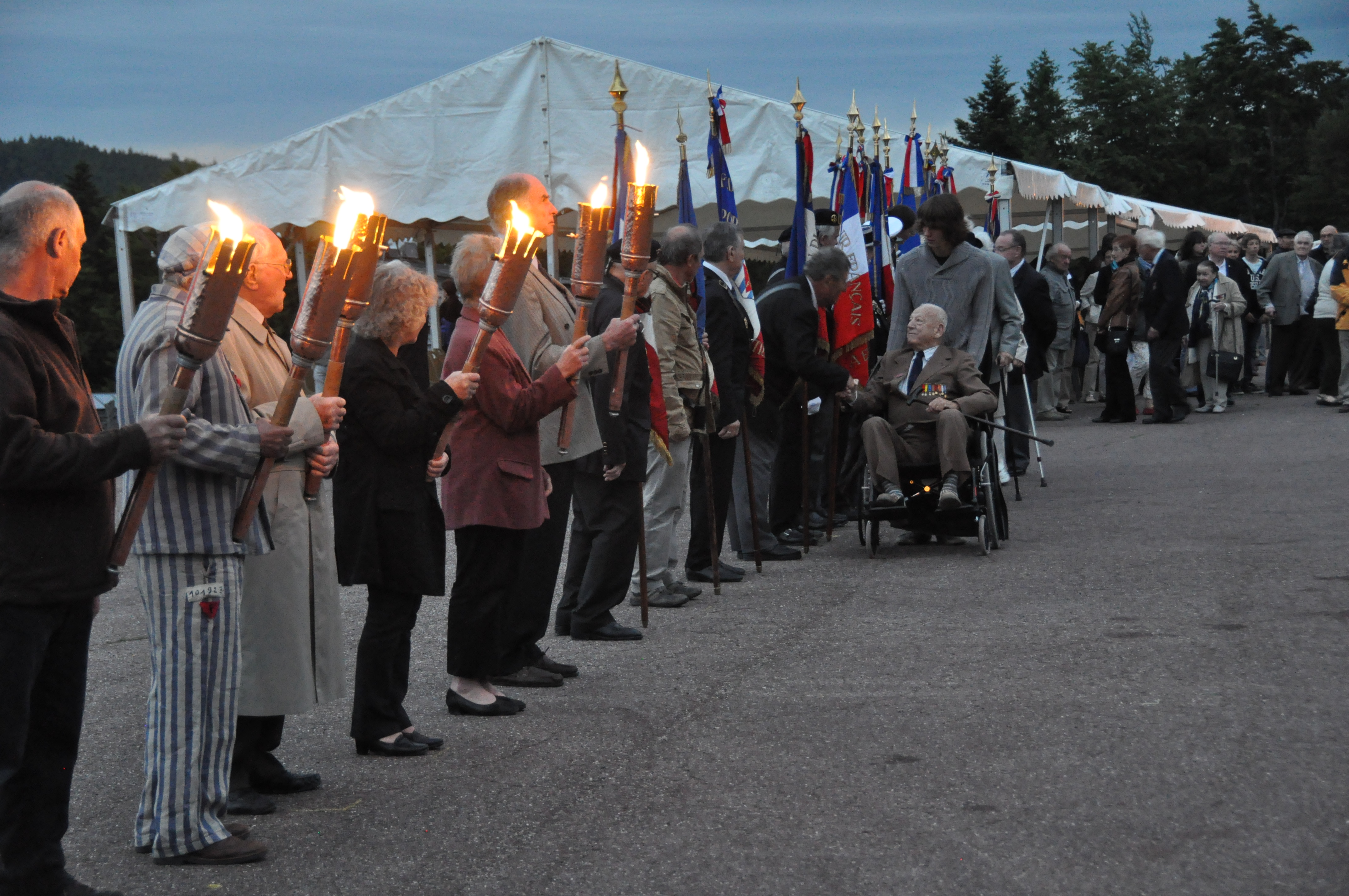
receiving line

Regardless of what is known and what is not, there are still many stories from WWII to be told and living souls to do it. What I do know, is that being a very small part of remembering history today was an experience I never dreamt I would have, even if I didn’t understand a single word.

The only true wisdom is in knowing you know nothing. ~Socrates
My buddy on the track team…

One of my earliest memories of Joe was when I saw him while driving down Ponce De Leon Blvd in Coral Gables in my Jeep. He was running on the sidewalk in the horrid south Florida afternoon heat and humidity, wearing a UM Track & Field shirt. It was drenched in sweat. I thought to myself, “Hey, that’s the guy who tried to pick me up during SCUBA class last night.”

Needless to say, after uncountable tries, I finally agreed to give him more than a few minutes of my time. And with a simple “Sure, I guess I’ll go out with you”, began a lifetime of “My buddy on the track team…” stories.

The catch is…these “track buddies” were so enigmatic that I began to believe they didn’t exist. However…ever so slowly…they began to show their actual faces: in Manhattan bars, at Washington DC weddings, and even my own wedding day. I actually met one on an airplane between Atlanta and Miami and didn’t even know it. Here is how that “buddy on the track team” conversation went:

Joe: How was your flight?

Trysta: Good, except the guy in the seat next to me was laying it on thick the entire time.

Joe: Oh really?

Trysta: Yeah, don’t worry though. I snuck a peak at his boarding pass, so you can beat him up later.

Joe: Oh really? What did it say?

Trysta: Aaron, with two A’s. He was wearing a fat UM ring too.

Joe: Wait. Aaron with two A’s? Aaron Moser? That’s my track buddy. Did you tell him I was your boyfriend?

Trysta: Ummm….no. How was I supposed to know some random dude in the airplane seat next to me was your “track” friend?

Joe: Come on Trys. I’ve told you…


Yeah, that’s for sure.

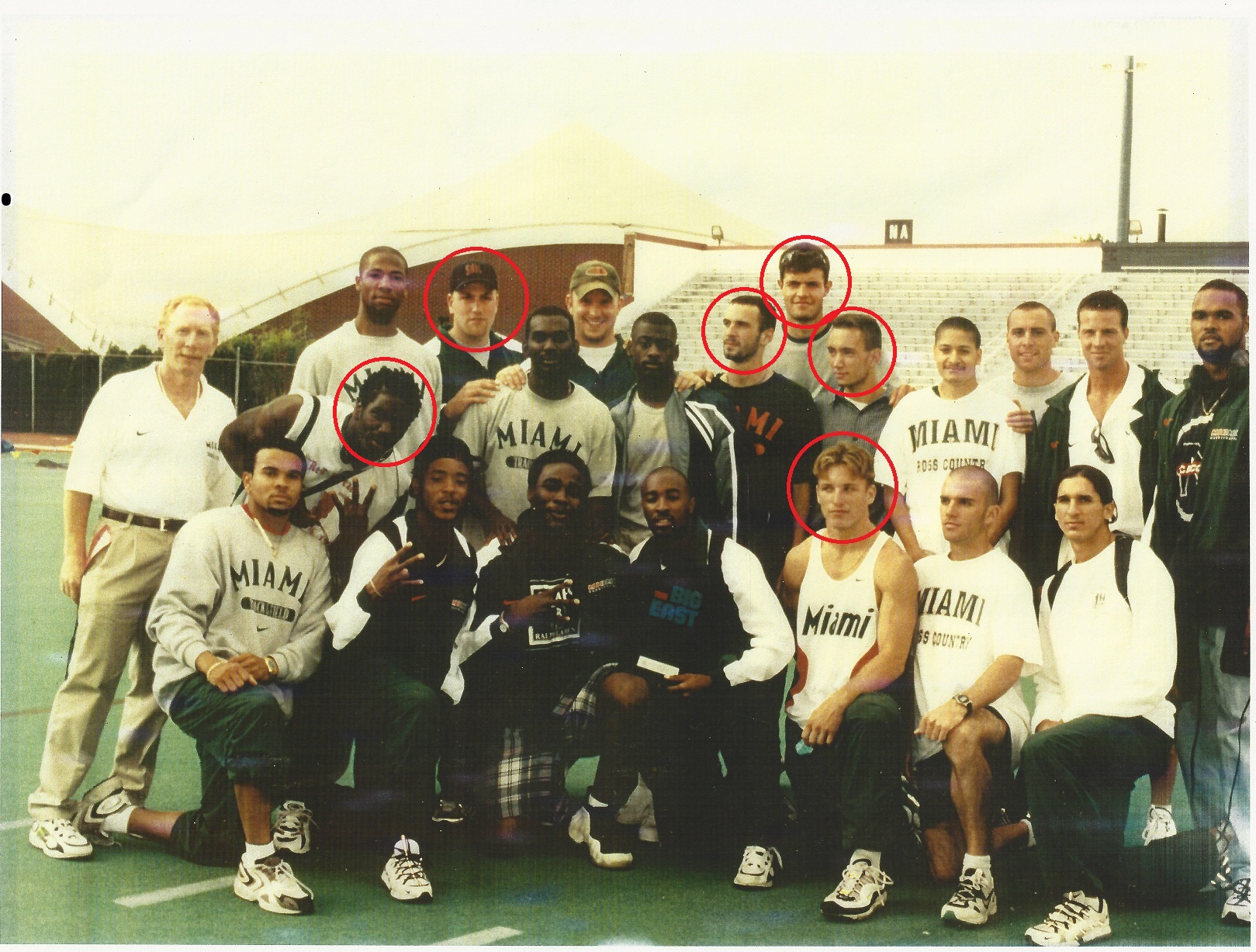
Here are the ‘track buddies’…back in their heyday.

Top left to right: Joe, CJ, Pedro, Nick. Bottom left to right: Dirty Ed Reed, Aaron

Top left to right: Joe, CJ, Pedro, Nick. Bottom left to right: Dirty Ed Reed, Aaron

Slowly, each one of them has substantiated the stories I have been hearing for years. Except for Pedro. You see, Pedro is Spanish, and henceforth lives in Spain. This “track buddy” was also a roommate (think 10 x 10 foot dorm room), which meant über-ridiculous closeness and stories. (We did all go to University of Miami, remember?) As we were preparing for this Olmsted journey (and still to this day), I often heard and continued to hear: “Oh good, we can visit Pedro” or “We should just stop in at Pedro’s” and even, “Maybe we could just move in with Pedro.”

Well…what better reason to head to Marbella, Spain (and meet the infamous Pedro) than a wedding….Pedro’s wedding!

Here are some of the ‘track buddies’…reliving the heydays.

Pedro, Nick, Aaron, Nick. In absentia: CJ

Pedro, Nick, Aaron, Nick. In absentia: CJ

And here’s the beautiful couple, sharing their first kiss as we look out over the Strait of Gibraltar.

kissing

So…finally…the stories have come full circle. (Almost) every team member present and accounted for. (Almost) every story verified by a second source. Except for Dirty Ed Reed. I am still waiting for him to show his face. I guess he is a little busy in Houston, but there are still a few “track buddy” stories I need to discuss with that guy.

The Gibraltarians

With 30,000 residents, of which 20,000 are “Gibraltarians” (people born and raised on Gibraltar), Europe’s most famous rock is an interesting mix of Spain, the United Kingdom, and North Africa.

For hundreds of years, Gibraltar has been an important asset, militarily as well economically speaking. It still is, to this day, because whoever controls Gibraltar controls the Strait. Hundreds of ships move through the Strait each day.

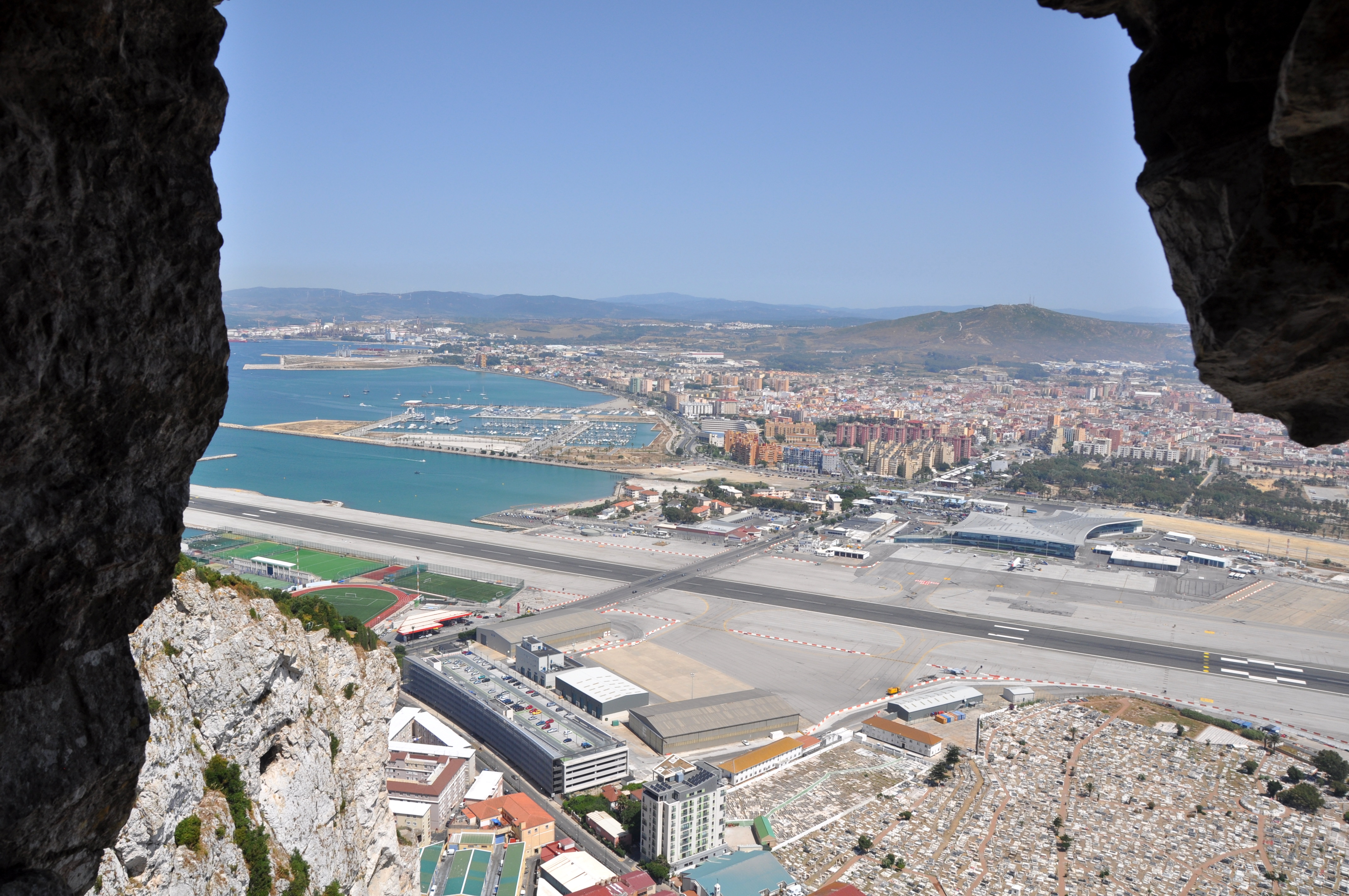
View of Gibraltar from inside the siege tunnels. Any flat land on Gibraltar is actually reclaimed land.

View of Gibraltar from inside the siege tunnels. Any flat land on Gibraltar is actually reclaimed land.

Gibraltar has belonged to the United Kingdom since 1704, with 14 sieges in its sordid history. The Great Siege in 1779 lasted 3 years, 7 months, and 12 days! Between the tunnels created during the sieges and the natural caves, it is a wonder the hollow-like rock is still standing today!

St. Michael's Cave has evidence of Neanderthal men living here in 40,000 BC!

St. Michael’s Cave has evidence of Neanderthal men living here in 40,000 BC!

Listening to our tour guide was quite interesting because he provided a lot of insight into what life as a Gibraltarian is really like–things we would never have learned from just seeing the sights. Gibraltarians really feel like they live in their own country and are their own people. There is still oppression from Spain, yet they feel quite distant from the Queen. The use of Gibraltar as an entry point for North Africans to smuggle Hashish causes an entirely different set of problems and feelings. Many Gibraltarians can’t keep up with the steadily increasing cost of living but don’t want to leave the rock because they don’t feel at home anywhere else.

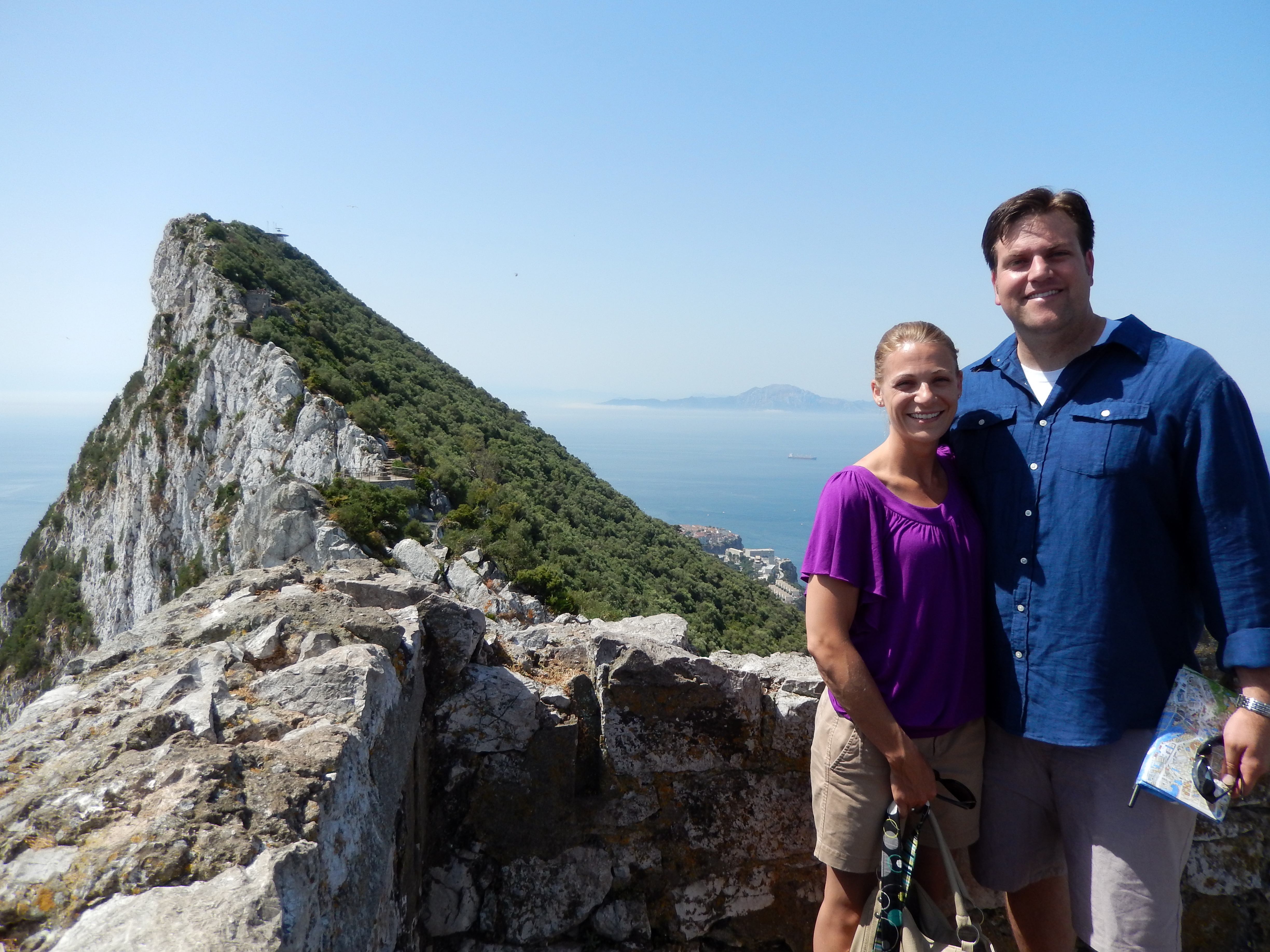
Highest point of Gibraltar and Morocco in the distance.

Highest point of Gibraltar and Morocco in the distance.

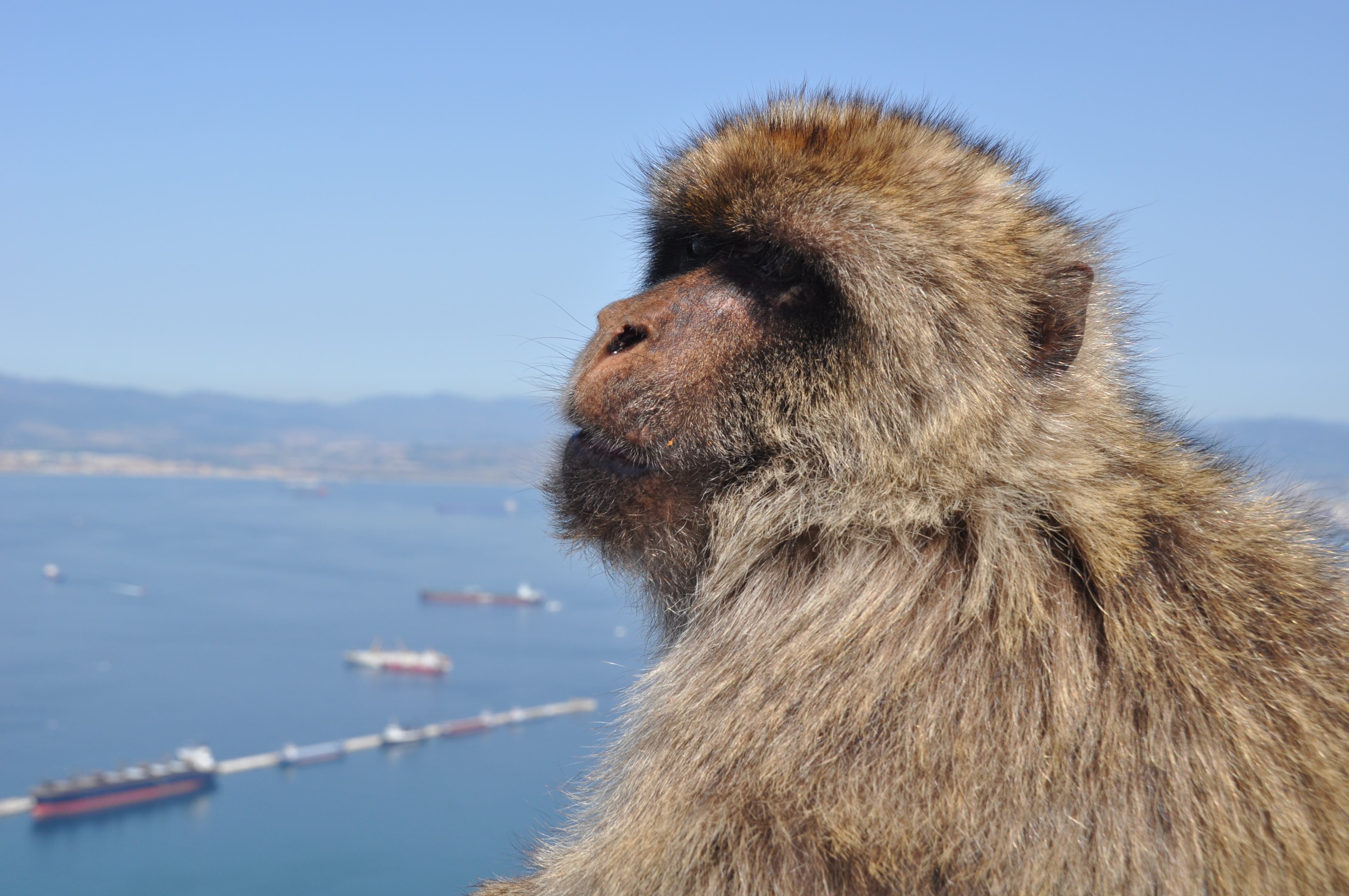
And then there are these Gibraltarians…the 207 macaques that have come across the Strait from Morocco, which is only 14km/9 miles away. They are the only remaining free roaming primates in Europe.
monkeyA perfect example of what happens when the line between humans and animals becomes too thin, the macaques are unnerving/frightening thieves who could also be considered dangerous. The Parliament of Gibraltar has talked about removing the entire population from the island, but they view the monkeys through green, tourist-dollar-colored glasses.
Jason & monkeyEven though it is illegal to feed them, they don’t really need your handout. They will take…and do…whatever they please. Just ask my friend Denise’s ice cream. Actually, that ice cream is long gone. Better ask Joe, he has a good story!

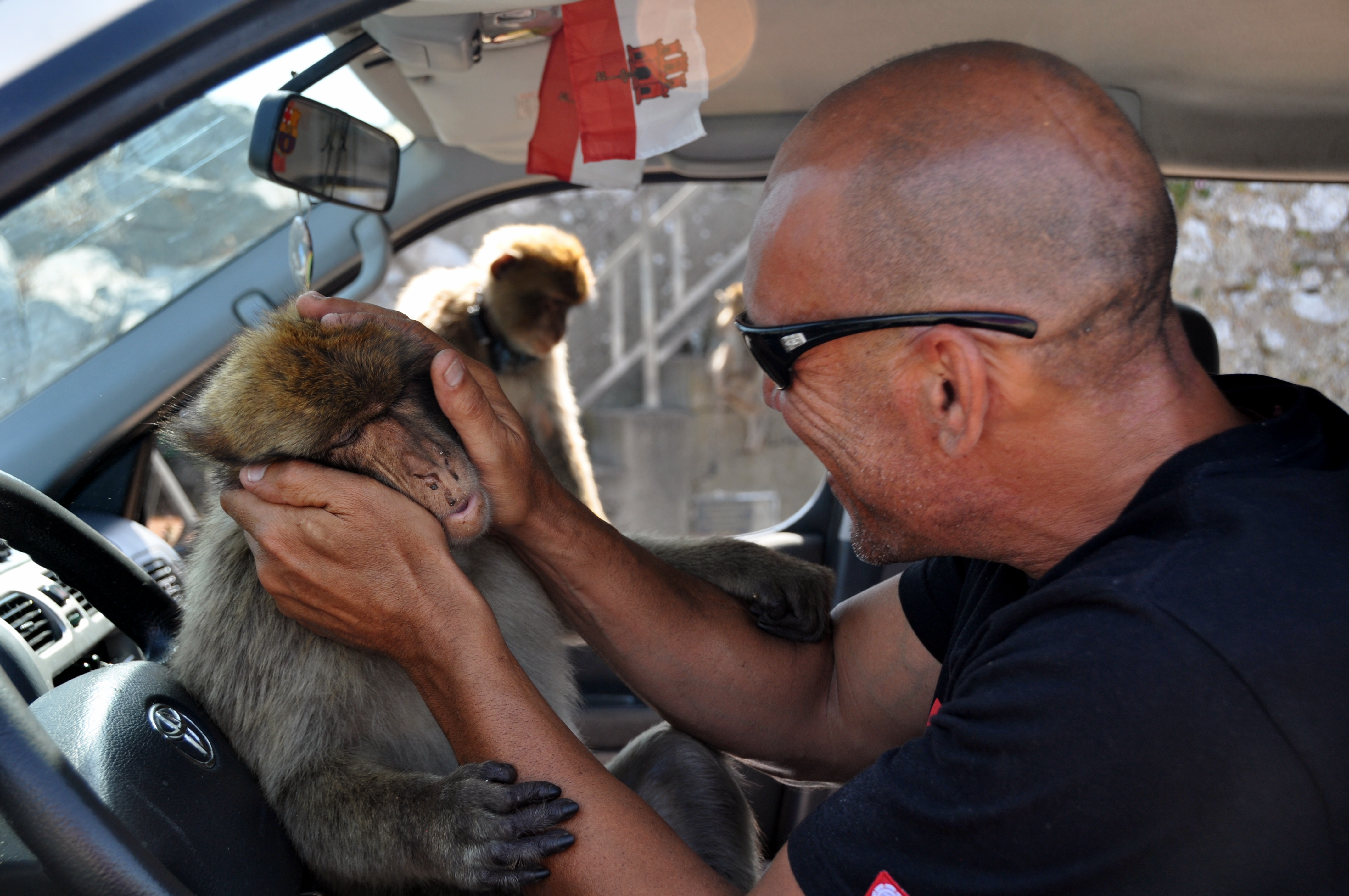
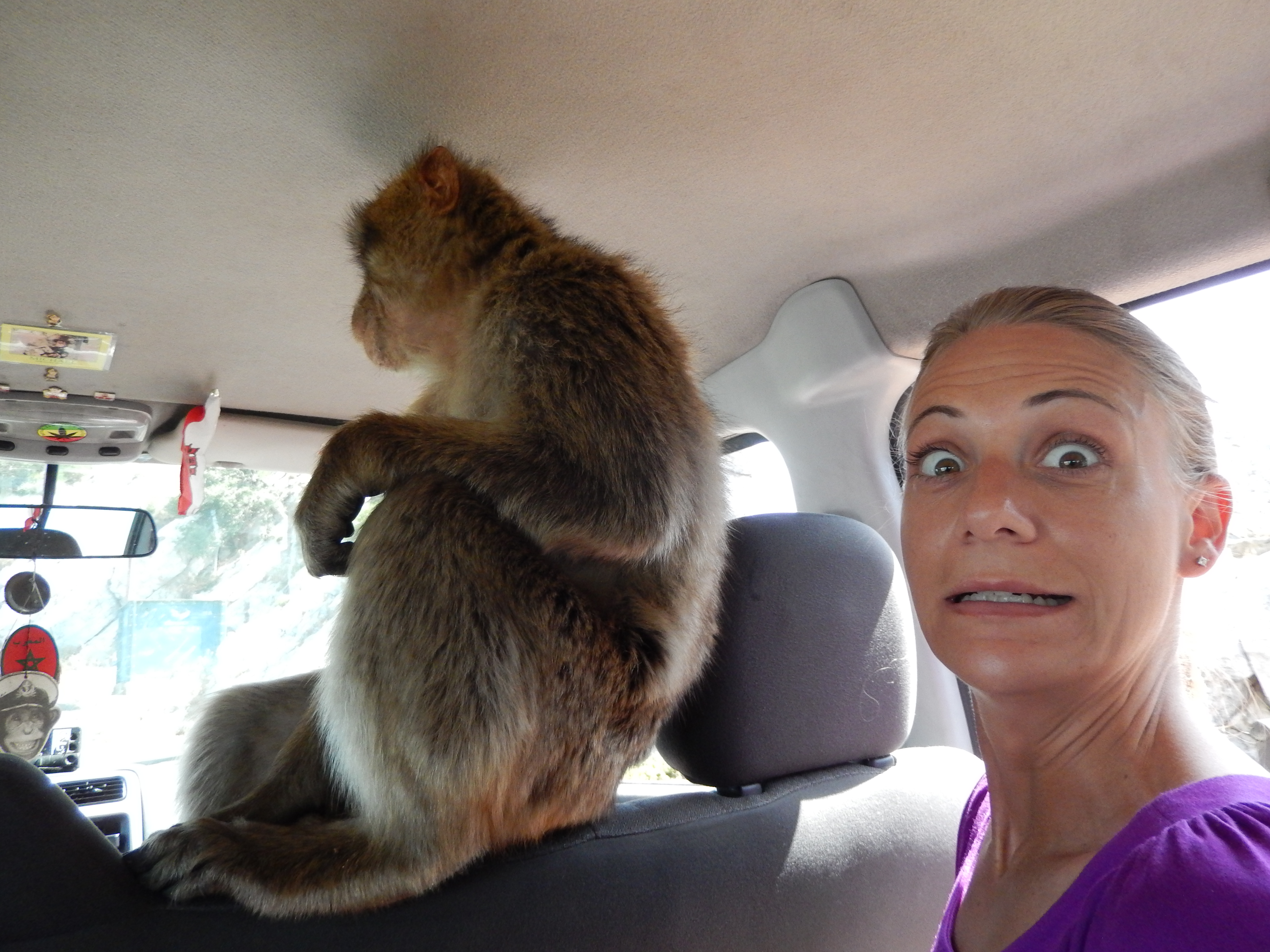
Achtung! Monkey in the vehicle!

Achtung! Monkey in the vehicle!

Regardless of our run-ins with the macaques, it was a beautiful day in the UK!