meine Lieblingsfreizeitbeschäftigungen

Yes, that is a real German word.

Translation: my favorite free time activities

Too bad I didn’t have any after I was finished translating this word! Actually, my teacher wrote it up on the board this afternoon. That is why I know it is bona fide Deutsch, and not just a figment of my delirious imagination.

Today was my graduation from Day #17 of language training. The ceremony consisted of a solitary bike ride home. I was met with applause of screeching, yelping, a wide K9 smile, and the twinkle of 16 little toe-nails on hard-wood. I was gifted with a new level of utter confusion, neatly gift-wrapped and tagged: “für Trysta, liebe von Deutsch”.

I decided several years ago, in a small mountain-town of Peru, that to be a good traveler meant one could not judge a country by the standards of another. I had to adopt this principal in order to swallow beef heart and guinea pig for dinner. To say that the German language is illogical and border-line ridiculous would be to judge it by standards of the English language. This, I know, goes against the principals I work toward every time I leave my home country.

So, to rectify, I will just say that learning German is a challenge. Let me present my arguments:

1)      ARTICLES – In German, there are three: der (masculine), die (feminine), and das (neutral/neuter). Every single noun in the world had an article. Learning Spanish, it was fairly reasonable. There are only two (el and la)  and most of the nouns end in feminine vowels or masculine vowels to help you out. Not the case in German. One of the text books Joe was reading said to just memorize them all. Great…I’ll get right on those 30,000+ nouns! To top that off, half of the other words in your sentence depend on the gender of the noun. So if you guess wrong….you are really wrong.

2)      PAST TENSE – In order to say anything in the past tense, you actually have to use the present tense of “to have” or “to be” in the beginning of the sentence and then end the sentence with the past-tense verb. Let’s use the following sentence in English as an example: Yesterday, I bought eggs, milk, and cheese in the market. When you put the German sentence together, what you are literally saying is: Yesterday, have I eggs, milk, and cheese in the market bought. (Gestern habe ich Eier, Milch, und Käse in der Markt gekauft.) As my teacher likes to say (in German), “Surprise, its past-tense!” He tries to lighten the mood when we are all frustrated because the listener/reader doesn’t find out until the end of the sentence whether the action is occurring now, or already did!

3)      WORD COMBINATION- The title of this post is a doozy for sure. The combination of German words is usually amusing, but poses many challenges, in accordance with argument four below. If you put a shoe (Schuh) on a hand (Hand)….you obviously get a glove (Handschuh). However, what do you get when you put snow (Schnee) and a broom (Besen) together? No…not a shovel…that would be absurd! You get a whisk (Schneebesen)!! To learn something (lernen) is really important, as is to know something (kennen). To meet someone, however, is to learn know them (kennenlernen)!

Oh gosh, my teacher would be so disappointed. There is not an article in that entire paragraph.

der Schuh, die Hand, der Handschuh, der Schnee, der Besen, die Schneebesen

4)      WORD SEPARATION – Once you think you’ve got a handle on the articles, the word combinations, and waiting on the edge of your seat to determine if the sentence is present or past tense, then comes the icing on the Black Forest Cake. Verbs that separate! Yes, one verb separates and makes a new home at the beginning and end of the sentence. So now, not only do you have to wait until the end of the sentence to get the tense, but you also have to wait to get the rest of the word!! For example, in English: In the mornings, I get up at six thirty. What the German sentence is literally saying in English is: Mornings get I at half seven up. “To get up” is one verb: aufstehen. The German sentence is: Morgens stehe ich um halb sieben auf.

Remember the verb “to meet”? kennenlernen   Lets pretend you want to say, “We are meeting your mother quickly in the morning in Freiburg.” The literal translation of the German sentence is: We learn morning in the early quickly in Freiburg your mother know. German sentence: Wir lernen morgen in der Früh schnell in Freiburg deine Mutter kennen.


German makes perfect sense to all the millions who have learned it before me. The trick is to put aside everything I know about English sentence construction. In the words of mein Lehrer (who actually does say this in English, just to drive the point home), “Stop thinking. Just be a grammar machine and put the sentence together according to German rules!”

Yes, I learn slowly good German Mr. teacher.  Ja, ich lerne langsam gut Deutsch Herr Lehrer.

I will German with the standard of English not judge. Ich will Deutsch mit der Standard von Englisch nicht richten. 

(Sidenote added on Jan 15, 2012: I am looking back at these sentences, with an additional three months of German classes under my belt, and realizing how poorly they are written. I am not going to change them though. I am going to leave them exactly as they are, and enjoy them as a documentation of progress made!)
die Übersetzung (the translation)

We have had our household goods for nearly a month now. We have had Internet installed for over a week. However, we are still without television. The first time the Deutsch Telekom gentlemen were here they were unsuccessful at getting the cable to work correctly on the TV. They returned a second time and came to the conclusion that it is not their problem because the cable connection is working….and it is our TV that is “broken”.

Sadly, they are right. If we connect the cable set-up to the 15 inch, $99, Walmart-special, TV we can watch perfect cable…in German. When we connect the big, expensive, TV we get nothing! After hours of researching (is it a HDMI issue? PAL conversion problem? Do we even want to watch TV again? Do we have to buy a European television too?) we settled on ordering a converter from Amazon. Hopefully we will actually have our hands on it in 60-90 days!

All these headaches lead us to the fun discoveries in the electronics department of the local department store. Without television, we figured we would start watching movies in German with English subtitles. We bought a region-free DVD player and then headed to the movie section.

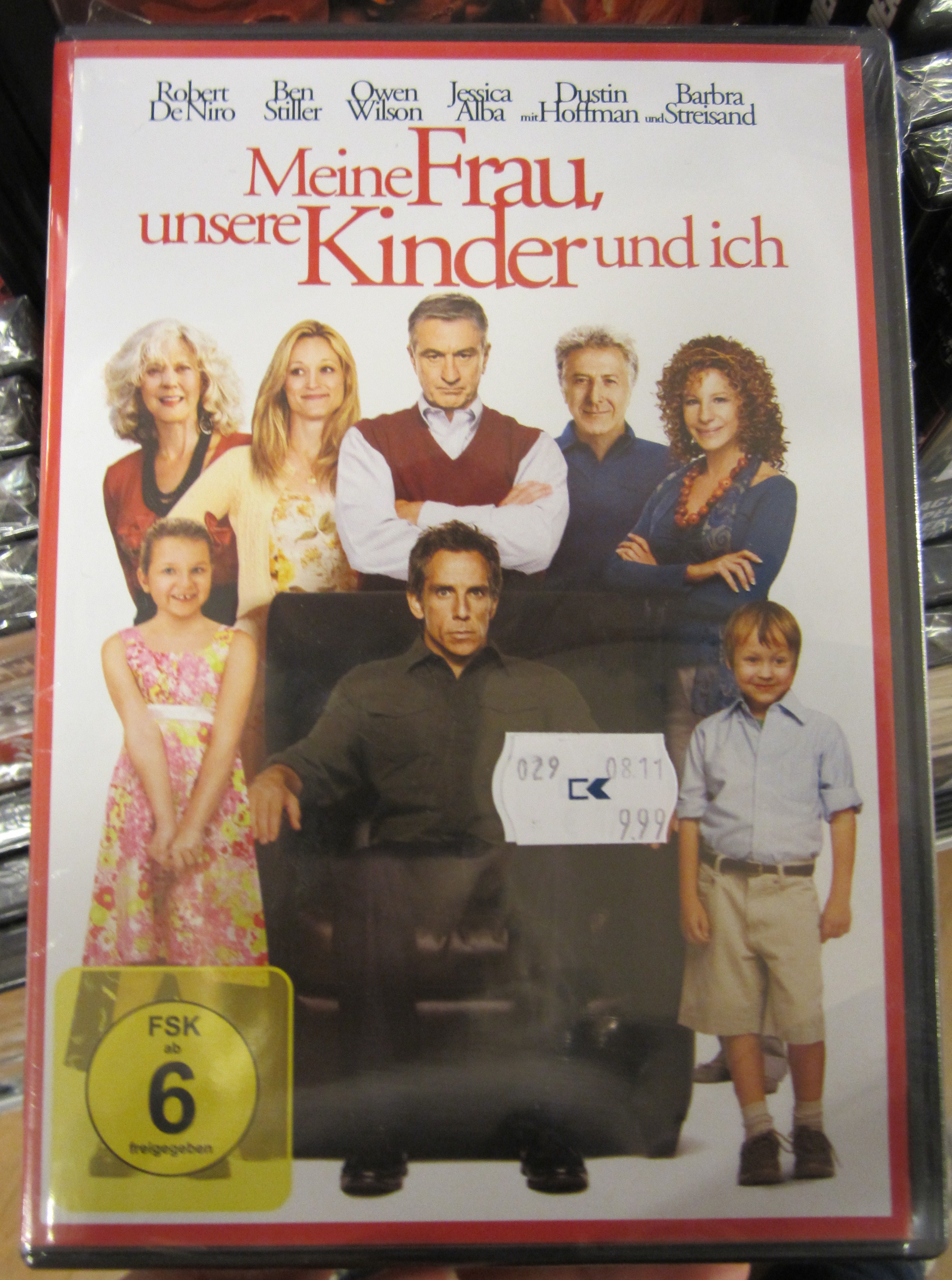
The covers of the movies are generally the same as in the US. It was “Little Fockers” that tipped me off to differences in translation. An entire three weeks of Intensive German classes means that I can actually understand every single word of the title of “Little Fockers”! Yeah!! However, it definitely doesn’t translate directly.

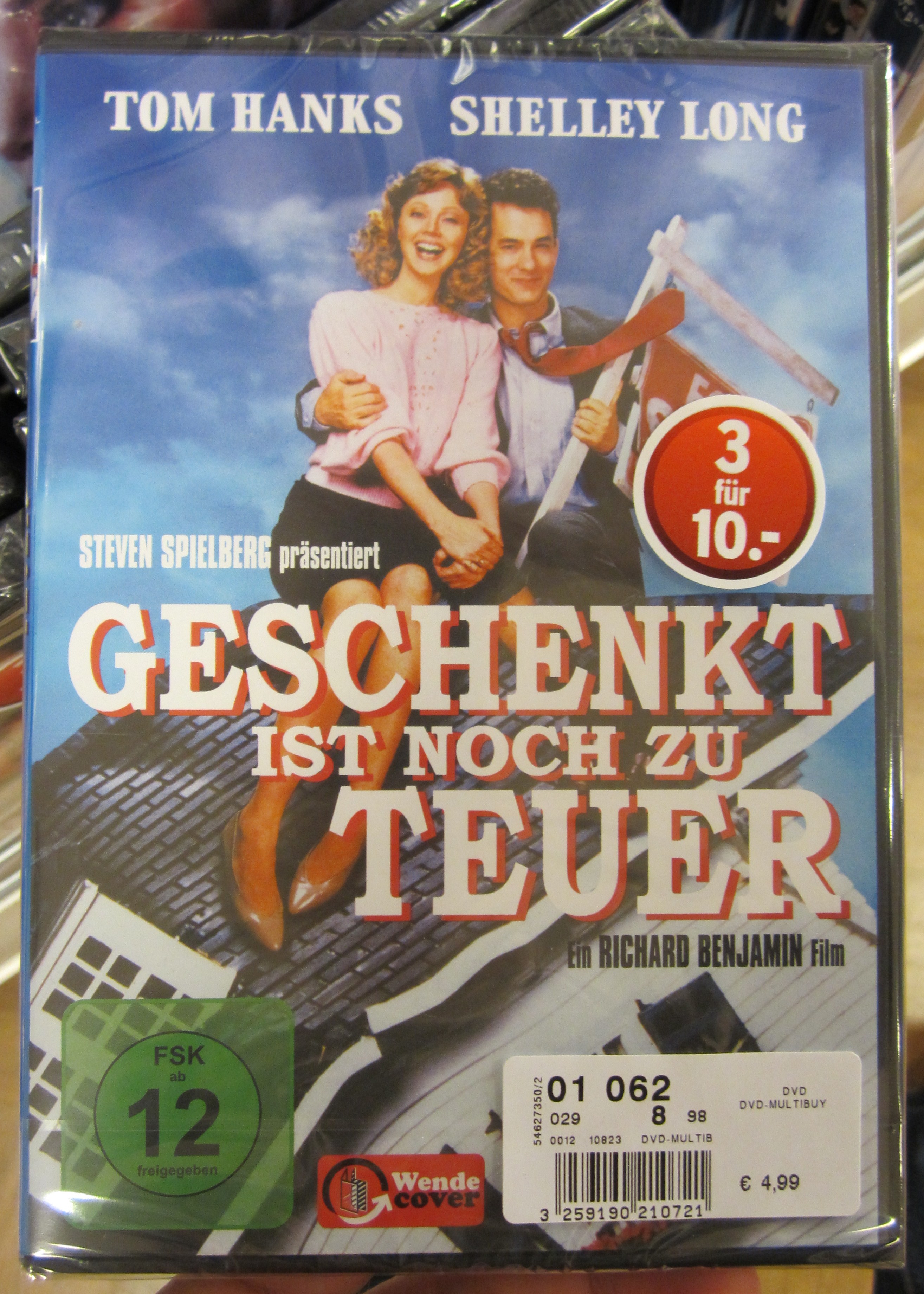
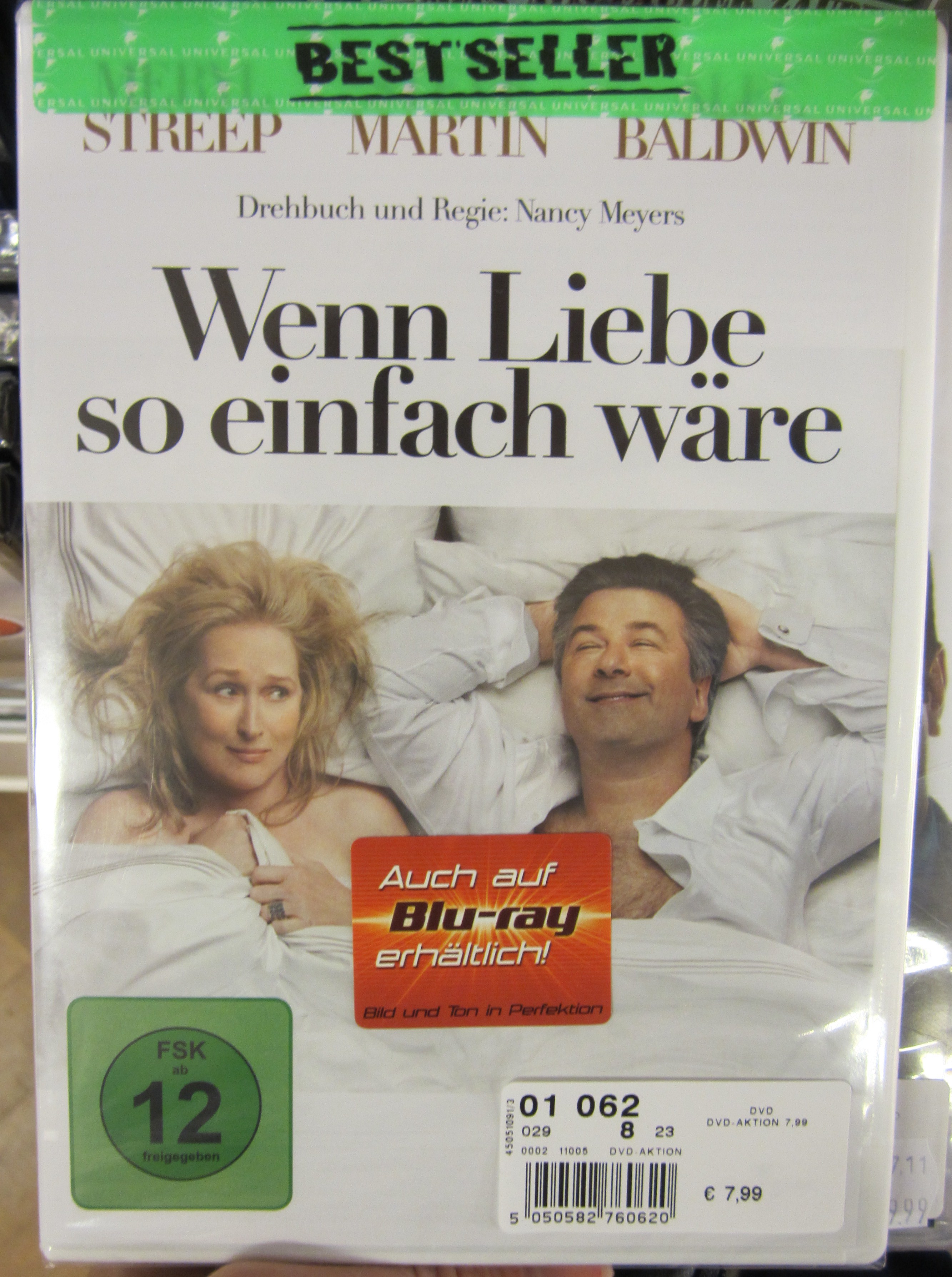
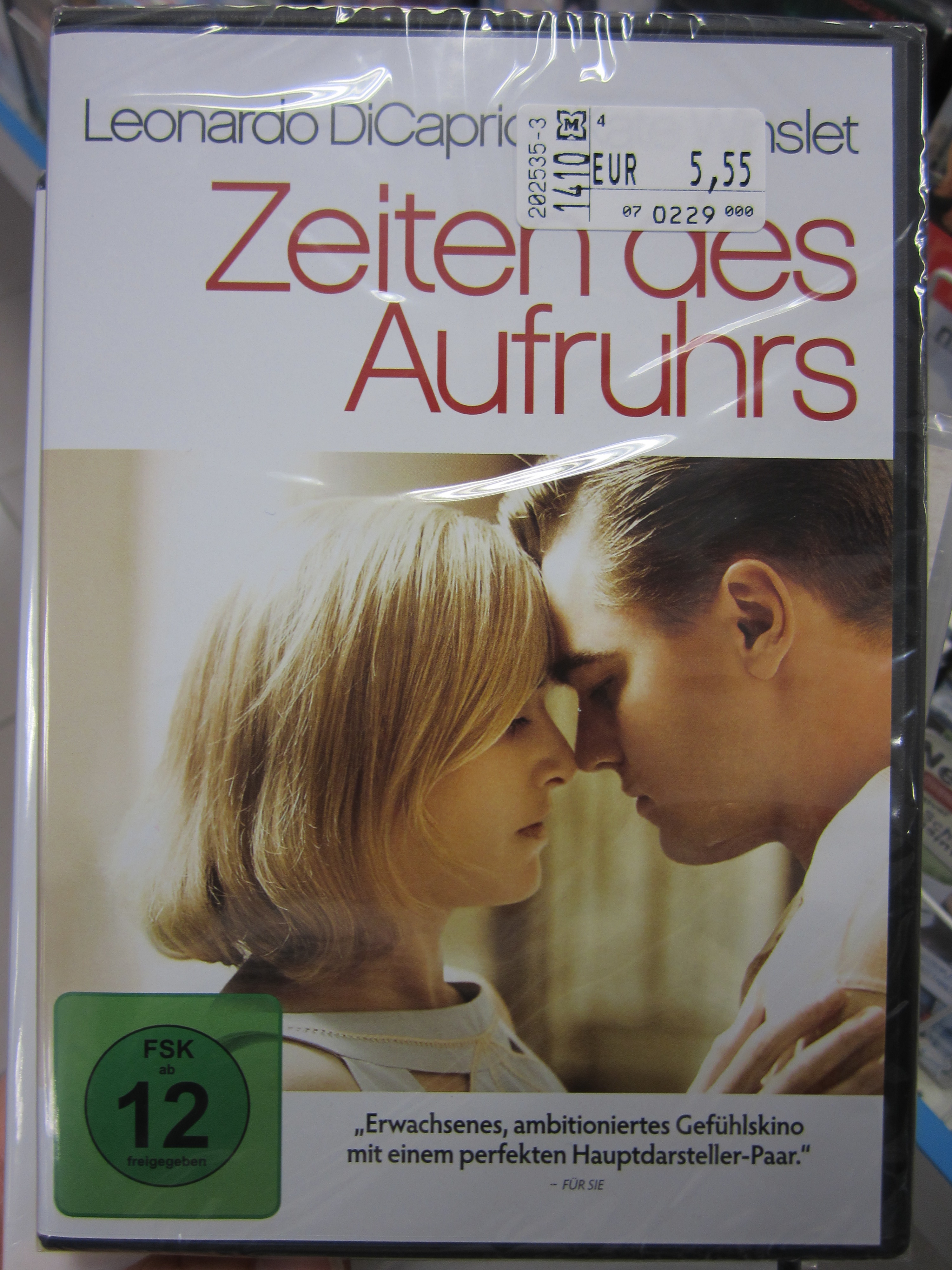
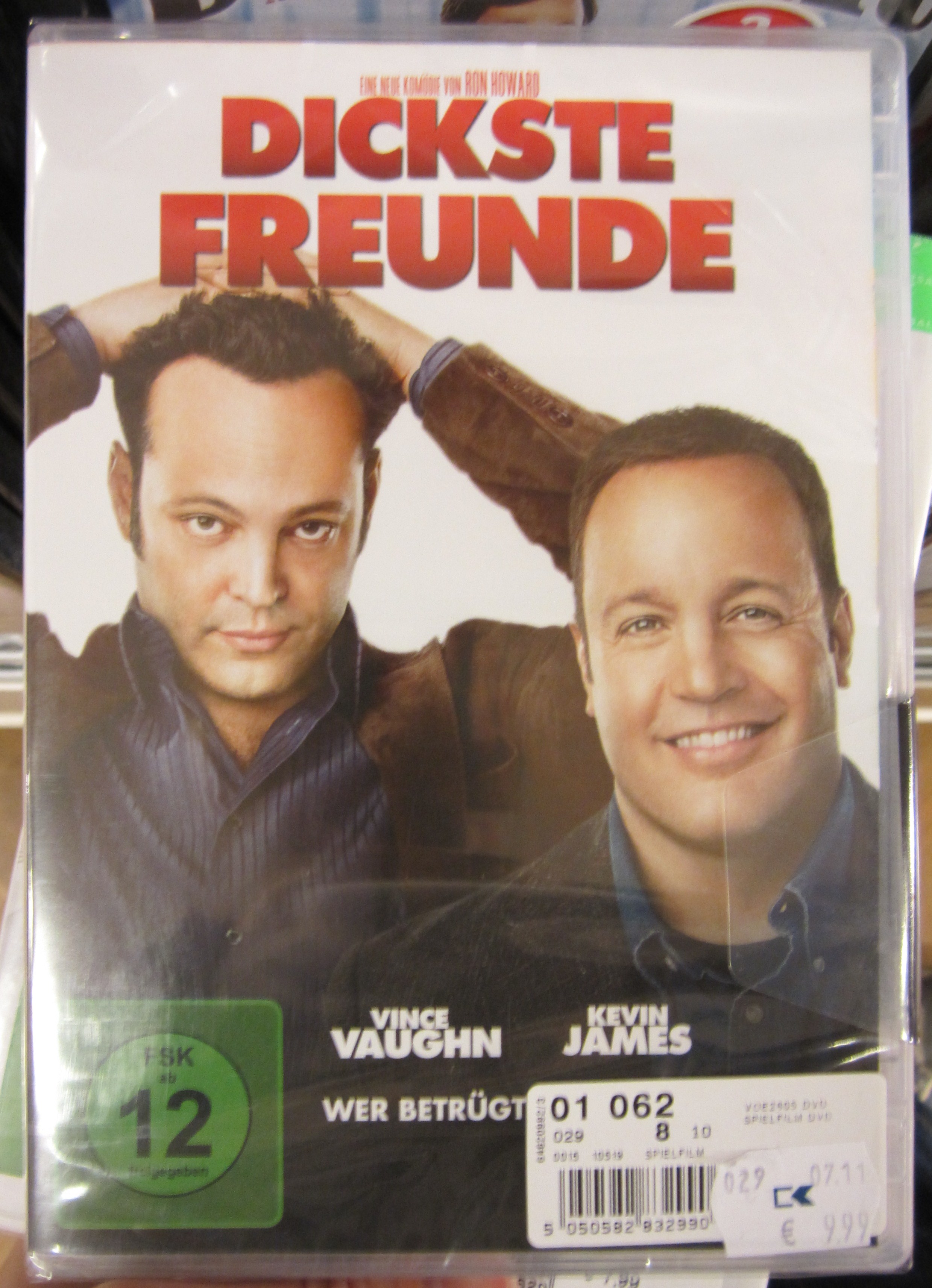
Joe and I wandered around all the movies and laughed at the titles that got lost in translation. “Money Pit” is my favorite! The German title of “The Dilemma” should have some familiar words too!! Check out these beauties below….

Movie Cover

German Title

Translation

English Title

     Meine Frau, unsere  Kinder, und ich  My Wife, Our Kids, and I  Little Fockers
  Mein Schatz, unsere Familie und ich My Sweetie, Our Families and I Four Christmases
  Freundschaftplus Friendship Plus Friends with Benefits
   Jungfrau(40), männlich, sucht…  Virgin (40), male, searches…  The 40 Year Old Virgin
   Geschenkt ist noch zu teuer  Gift is still too expensive  Money Pit
   Wenn Liebe  so einfach wäre  If love would be so simple  It’s Complicated
    Zeiten des Aufruhrs  Times of turmoil  Revolutionary Road
   Dickste Freunde  The Thickest Friends  The Dilemma


der Kalender

Oh my goodness, I can not even explain the craziness of the last 2+ months! I know that lots of other people have done this with ease, but it has been a challenging adventure for us. To list all of the to-do items, legalities, frustrations, and logistical nightmares would take me countless hours and bore you into never returning to read. If you are really interested, you can reference Joe’s reports for the Olmsted Foundation for the next three years.

I want to give my family and in-laws a special Shout Out – thank you for listening, supporting, and doing everything in your power to make the challenges and changes easier. Surprisingly, Kenny said it best when he discovered me on the stairs in an overwhelming moment of tear-filled realization: “This is a good thing.”

Yes…it is. Thanks Dad.        

Here is a synopsis of the calendar:

  • June 24 – July 29: Institute craziness (Trysta working 12 hrs/day)
  • July 15 – 16: Travel toVirginia
  • July 17: Organize and prep for movers and packers
  • July 18: First day of living out of suitcase
  • July 19 -21: Movers, packers, storage and household goods shipments
  • July 20: Partridge renter visits for first time
  • July 25: Ship car
  • July 28: Lease finalized with renter
  • July 29: Joe leaves New Jersey for Ohio
  • July 31: Joe leaves Ohio for Florida
  • August 1: Trysta moves out of Partridge and onto base, renter moves into Partridge
  • August 3: Trysta drives New Jersey to Wayne, IL
  • August 4: Joe arrives in Wayne from Florida
  • August 9: Joe and Trysta drive Wayne to University of Kentucky
  • August 11: Joe and Trysta drive Kentucky to Tennessee
  • August 14: Joe and Trysta driveTennessee to Wayne (via Kentucky)
  • August 15: Joe drives Illinois to New Jersey and moves onto base TLF (Temporary Lodging Facility)
  • August 20: Trysta flies Illinois to Virginia, Joe drives New Jersey to Virginia
  • August 21: Trysta, Joe, & Stickford drive Virginia to New Jersey
  • August 23: East Coast Earthquake (Trysta at work in Philly, Joe at TLF in New Jersey)
  • August 26: Trysta & Joe last trip to New York City
  • August 27-28: Hurricane Irene sweeps eastern seaboard
  • August 31: Depart for Stuttgart, Germany
  • September 1: Arrive Stuttgart, move into Army Post hotel, car is here!
  • September 5: Drive Stuttgart to Freiburg for apartment walk-through and key pick-up
  • September 7: Joe and Trysta pass German driving test and finally get possession of car
  • September 8: Leave Stuttgart, arrive Ramstein Air Force Base to drop off Joe’s pilot records
  • September 11: Leave Ramstein AFB, arrive Freiburg im Breisgau…..finally!
  • September 13: Washer and dryer arrive from Stuttgart, household goods are not yet in-country
  • September 15: After 5 trips to T-Mobile, we finally have cell phones
  • September 17-21: Munich trip
  • September 29: Household goods finally arrive!….very late
  • October 4: Language training starts
  • October 7-9: Anniversary trip to Bodensee
  • October 11: Internet and phone installed in apartment….after six weeks of waiting.

A huge thank you to my brother for all his help with this blog. I don’t know what I would do without your technical expertise! Vielen dank, Bruder!